Understanding complexity to drive innovation.
In an age where technology platforms must navigate complex, dynamic environments, traditional approaches to system design and management often fall short. Chaos Theory offers an alternative/complementary framework for understanding and leveraging unpredictability, complexity, and interconnectivity. Originating in mathematics and physics, Chaos Theory examines how small variations can lead to vastly different outcomes, an idea captured in the concept of the “butterfly effect”. This theory, once confined to natural sciences, now applies to a range of industries where unpredictability is a constant, including technology.
As digital ecosystems grow in complexity and scale, they face challenges like fluctuating user demands, variable data flows, evolving threats, and rapid changes in the market. Whilst the current hype trend of AI is driving organisations to adopt new technologies, it is also bringing with it considerable risks and uncertainties that have yet to manifest. Chaos Theory provides a way to anticipate and manage these factors, helping technology platforms become more resilient, adaptable, and capable of navigating uncertainties.
What is Chaos Theory in Technology?
Chaos Theory in the context of technology platform design is the study of how small, seemingly insignificant changes in a complex system can lead to massive, unpredictable outcomes (the "Butterfly Effect"). Rather than trying to eliminate randomness, Chaos Theory encourages architects to build anti-fragile systems that are designed to handle—and even thrive—under turbulence.
By embracing Chaos Theory, technology leaders focus on:
Resilience Engineering: Building systems that fail gracefully rather than catastrophically.
Observability: Implementing deep monitoring to catch "noise" before it turns into a system-wide outage.
Experimental Design: Using "Chaos Engineering" (like Netflix's Chaos Monkey) to intentionally stress-test environments.
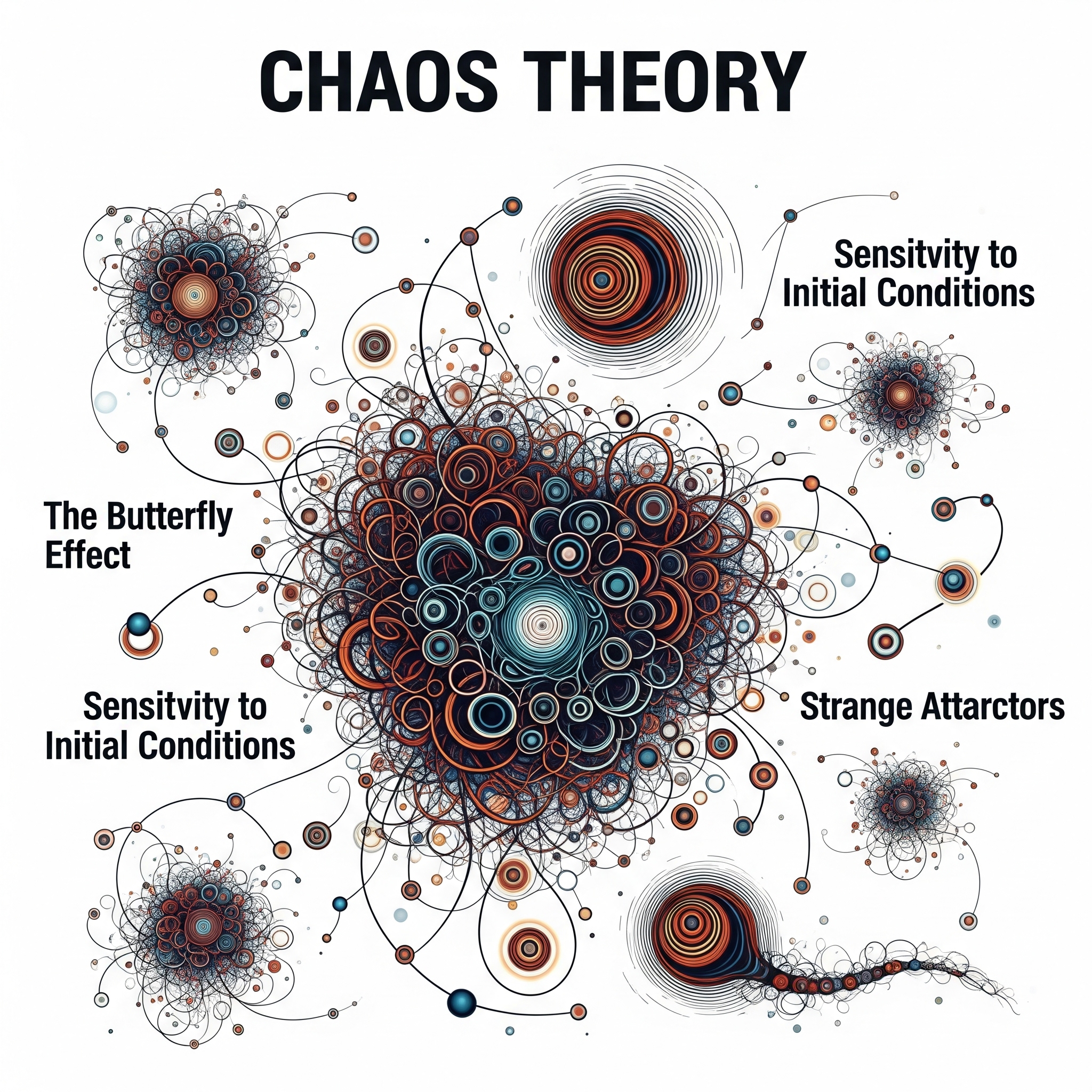 Chaos Theory and Its Core Principles
At its essence, Chaos Theory explores the behaviour of complex systems where small initial changes can lead to vastly different outcomes. Often, these systems appear random, yet they follow deeper, underlying patterns that can be observed and used to our advantage. For technology platforms, understanding Chaos Theory’s principles is key to designing systems that can handle rapid changes and complex interactions while maintaining stability.
Instead of attempting to control every detail within a system, Chaos Theory invites us to understand the broader patterns and relationships that drive system behaviour. This is especially relevant in technology, where platforms must adapt to countless variables, from user interactions to system performance under load.
Core Principles of Chaos Theory
Sensitivity to Initial Conditions: Often illustrated by the “butterfly effect”, this principle explains that small changes in the starting conditions of a system can lead to vastly different outcomes. For technology platforms, this sensitivity could manifest in how minor adjustments to server configurations impact overall system stability or how small user interface changes alter user engagement patterns. Even a minor shift at the start of a process can lead to a large change in outcome. For technology platforms, this principle highlights the need for careful initial design choices, as they can have profound effects on performance and user experience.
Self-Organisation and Emergent Patterns: Chaos Theory recognises that complex systems can self-organise, forming structured patterns over time. In a technology platform, user behaviour may seem chaotic initially, but over time, distinct usage patterns emerge. Recognising these patterns helps platforms predict demand, optimise resources, and refine the user experience.
Fractals and Scale-Invariance: Fractals are self-similar structures found in chaotic systems, meaning patterns repeat at different scales. In network infrastructure, for example, fractal-like patterns can appear in data clusters or server loads, helping to identify scaling inefficiencies. Understanding these patterns allows platforms to optimise for performance at both micro and macro levels.
Feedback Loops: Feedback loops drive change within chaotic systems. Positive feedback amplifies changes (potentially destabilising a system), while negative feedback works to stabilise it. Platforms that monitor user feedback or performance metrics can utilise these loops to correct issues or capitalise on positive trends before they escalate. Feedback loops are critical in guiding system behaviour over time.
The principles of Chaos Theory reveal that even the most complex systems can follow predictable patterns and respond to subtle adjustments. By understanding these core principles, technology platforms can better anticipate the effects of small changes, leverage feedback for continuous improvement, and recognise patterns that enhance decision-making. This approach lays the groundwork for designing platforms that don’t just cope with complexity but thrive within it. Understanding these core principles of Chaos Theory provides a foundation for managing complexity within technology platforms.
 Applicability of Chaos Theory in Modern Technology Platforms
Technology platforms today face an environment of constant change from fluctuating user demand to the evolving nature of cyber threats and rapid shifts in infrastructure needs. Chaos Theory provides a valuable lens and strategic framework through which platforms can analyse, manage, and even embrace these uncertainties. By recognising and leveraging the patterns that emerge in chaotic systems, platforms can enhance their resilience and scalability while optimising for performance and security.
Applications of Chaos Theory in Technology
- Network Traffic Management: Internet traffic is inherently chaotic, as thousands of users access resources simultaneously, creating fluctuating demands on network infrastructure. By applying Chaos Theory, network engineers can identify patterns in traffic flow, allowing for more effective load balancing, dynamic bandwidth allocation, and congestion management. For example, identifying daily or seasonal traffic spikes can inform adaptive resource allocation strategies.
- Cybersecurity and Threat Detection: Cyber threats emerge unpredictably and are constantly evolving. Chaos Theory helps security teams recognise patterns within chaotic data, aiding in the detection of anomalies that may signify security threats. By focusing on deviations from expected patterns, platforms can detect and respond to suspicious activities early, improving threat management in complex security environments.
- User Behaviour Analysis: User actions on a platform may appear random, but Chaos Theory reveals that these behaviours often follow patterns based on feedback loops (e.g. how user interactions influence other users or features). By analysing these patterns, platforms can improve engagement strategies, personalise experiences, and optimise content delivery based on user behaviour trends.
- Supply Chain and Logistics: For technology platforms that rely on global supply chains, events like natural disasters or geopolitical instability introduce chaos into logistics and inventory management. Chaos Theory supports better risk assessment and demand forecasting, allowing platforms to build contingency plans, allocate resources more effectively, and improve response times in disruptive scenarios.
- System Scalability and Performance: In highly scalable systems, such as cloud-based platforms, small shifts in demand can lead to large fluctuations in resource use. By applying Chaos Theory principles, these platforms can anticipate when they will need to scale resources up or down, minimising downtime and improving cost efficiency.
Chaos Theory’s applications in technology platforms highlight its value in creating systems that adapt to change, respond to unexpected challenges, and leverage patterns within seemingly chaotic behaviours. Whether in network management, cybersecurity, or user experience, Chaos Theory equips platforms to operate with agility and resilience in complex environments. By viewing unpredictability as a source of insight rather than disruption, platforms can make more informed decisions and foster greater system stability.
The applicability of Chaos Theory across these areas demonstrates its power to drive stability, efficiency, and adaptability in technology platforms. Rather than treating chaotic elements as risks to be minimised, Chaos Theory empowers platforms to work with, rather than against, complexity. This shift enables platforms to turn unpredictability into a strategic advantage, improving both operational performance and user experience.
 Benefits of Chaos Theory in technology Platforms
Embracing Chaos Theory in technology platform design allows for a shift in how platforms handle unpredictability and complexity. Instead of trying to eliminate chaos, Chaos Theory encourages us to work with it, leveraging its patterns to build platforms that are adaptable, resilient, and aligned with user demands. This mindset shift has practical benefits for both platform operations and user experience.
Applying Chaos Theory in the design and management of technology platforms transforms unpredictability from a threat into an asset. By embracing complexity, platforms can become more adaptable, resilient, and responsive to user needs, making Chaos Theory a valuable tool for today’s digital environments. The following benefits illustrate how platforms can leverage Chaos Theory to create more robust and innovative ecosystems.
Key Benefits
- Enhanced Resilience: By identifying feedback loops and understanding sensitivity to initial conditions, platforms can be designed that adapt to disruptions without compromising service quality. This resilience makes it possible to sustain operations during unexpected events, such as traffic surges or system failures.
- Improved Anomaly Detection: Chaos Theory allows platforms to detect anomalies by analysing patterns in seemingly random data, enabling better detection of irregular activities, including potential cyber threats. Recognising deviations from normal patterns helps platforms address issues proactively, bolstering security and reliability.
- Greater Scalability: Platforms that incorporate Chaos Theory are more adaptable to fluctuations in demand, allowing them to scale resources in response to unexpected spikes. This adaptability is crucial in industries like e-commerce and streaming services, where demand can change rapidly and is essential for platforms that experience seasonal or event-driven surges.
- Optimised Resource Allocation: Identifying leverage points within a system enables platforms to use resources more effectively. For example, knowing when to deploy additional computing power in response to demand spikes can minimise operational costs while maintaining performance, reducing costs and enhancing stability.
- User-Centric Design: By identifying patterns in user behaviour, Chaos Theory supports the creation of more personalised, adaptable user experiences. Platforms can use these insights to anticipate user needs, adjust content, and refine services, ultimately enhancing user satisfaction.
The benefits of applying Chaos Theory in technology platforms extend beyond operational efficiency, it fosters adaptability, scalability, and a deeper understanding of user needs. By leveraging chaos as an asset rather than a threat, platforms can improve resilience, enhance user experiences, and optimise resource allocation. This holistic approach transforms complexity into a source of strength, enabling platforms to evolve and thrive amid the unpredictable demands of the digital landscape. As platforms continue to evolve, the ability to turn chaotic elements into strategic advantages will be critical for driving both innovation and stability.
 Challenges of Applying Chaos Theory in technology Platforms
While Chaos Theory offers valuable insights into managing complex systems, its application in technology platforms is not without challenges, understanding and managing chaotic systems can be complex, and missteps can exacerbate rather than resolve unpredictability. Modelling chaotic systems accurately requires sophisticated tools and often demands significant computational resources. Additionally, implementing Chaos Theory principles may require a cultural shift toward embracing uncertainty, something that can be difficult in environments that prioritise stability and control.
This section explores some of the significant challenges technology platforms face when applying Chaos Theory, offering considerations for overcoming these hurdles.
Challenges
- Complexity in Modelling: Modelling chaotic systems accurately requires detailed data, as even minor inaccuracies can lead to divergent outcomes. For platforms relying on precise performance metrics, this sensitivity to initial conditions can complicate efforts to build accurate predictive models.
- Data Overload: Analysing chaotic systems demands processing massive datasets to identify patterns, requiring significant computational resources and advanced data management strategies. Managing and interpreting this data is essential but can be resource-intensive and technically challenging.
- Difficulty in Prediction: While Chaos Theory helps identify patterns, it does not eliminate unpredictability. Platforms must be prepared for unexpected outcomes, as even small fluctuations can lead to large-scale effects. This means investing in adaptability, not just prediction, is essential.
- Resistance to Change: Implementing Chaos Theory often challenges traditional thinking and requires a cultural shift toward embracing complexity and uncertainty. Organisations accustomed to traditional, linear approaches may resist this change, necessitating education and buy-in from stakeholders across levels.
- Potential for Over-Adaptation: Constantly adapting to chaotic elements can lead to over-adjustment, where systems become overly reactive, sacrificing stability. Striking a balance between adaptability and consistency is crucial for platforms that rely on user trust and experience.
While the challenges of applying Chaos Theory are real, they are not insurmountable. By investing in strategic planning, robust data infrastructure, fostering a culture that embraces complexity, and balancing adaptability with stability, technology platforms can mitigate these risks. When managed effectively and by acknowledging and addressing these challenges, Chaos Theory offers a transformative approach to handling complexity, empowering platforms to navigate unpredictable environments with confidence, transforming potential obstacles into opportunities for improved adaptability and innovation. When managed thoughtfully, Chaos Theory’s complexity becomes an asset rather than a barrier.
 Opportunities of Chaos Theory in Modern Technology Platforms
In a rapidly evolving digital landscape, Chaos Theory presents unique opportunities for technology platforms to innovate, personalise user experiences, and proactively manage risks. By embracing the dynamics of chaotic systems and the unpredictability inherent in digital ecosystems, platforms can leverage Chaos Theory to develop adaptable, data-driven solutions that stay relevant in dynamic markets. In a world where technology must continually adapt to shifting landscapes, Chaos Theory equips platforms to stay ahead of change.
Opportunities
- Proactive Risk Management: By analysing feedback loops and initial sensitivities, platforms can develop proactive risk management strategies that address potential issues before they escalate. For instance, monitoring early warning signals in system performance helps anticipate downtime and service interruptions.
- Next-Generation Cybersecurity: Chaos Theory could lead to innovative approaches in cybersecurity by focusing on dynamic pattern recognition. Platforms can develop adaptive security systems that adjust in real-time to evolving threats, providing a more resilient defence against cyberattacks.
- Personalised User Experiences: Recognising chaotic patterns in user behaviour allows platforms to create personalised experiences that adapt in real-time. This dynamic personalisation improves engagement by tailoring content and interactions based on user behaviour trends.
- Innovation in Scalability: By understanding demand fluctuations as chaotic elements, platforms can develop new methods for scaling resources in response to user needs, creating systems that are both flexible and cost-effective.
- Cross-Industry Applications: The principles of Chaos Theory extend beyond technology and apply to sectors like finance, healthcare, and logistics. This cross-industry applicability enables technology platforms to expand into new verticals, offering adaptive, scalable solutions based on chaotic pattern analysis.
Chaos Theory provides a rich field of opportunity for platforms that embrace complexity as an asset rather than a limitation. From proactive cybersecurity to personalised user experiences, the applications of Chaos Theory allow platforms to turn unpredictability into an advantage. As digital ecosystems continue to grow and evolve, platforms that leverage Chaos Theory are well-positioned to lead in innovation and responsiveness, offering solutions that meet the demands of an unpredictable future. By capitalising on these opportunities, platforms can operate with greater agility, confidence, and adaptability in an ever-evolving digital landscape. Those that embrace Chaos Theory position themselves as leaders in responsiveness and resilience, equipped to meet the demands of tomorrow’s dynamic environment.
Conclusion
Chaos Theory challenges us to view complexity and unpredictability not as obstacles, but as opportunities for growth and innovation, fundamentally reshaping how we understand and manage complex systems, offering a powerful framework for technology platforms navigating unpredictable digital landscapes. By embracing the core principles of Chaos Theory, technology platforms can harness complexity, transforming it from a challenge into a strategic asset. As technology continues to advance, platforms that apply Chaos Theory will be better equipped to deliver adaptable, resilient, and user-centric experiences in an era of constant change.
In an environment where the only certainty is change, Chaos Theory provides a roadmap for building robust platforms capable of thriving amid unpredictability. By leveraging these insights, technology platforms can foster innovation, build resilience, and create dynamic ecosystems that meet the needs of today while preparing for the complexities of tomorrow.
This article has outlined the core principles of Chaos Theory, explored its applicability in technology, and highlighted the benefits, challenges, and opportunities it presents. As digital environments become increasingly complex, Chaos Theory provides a roadmap for navigating unpredictability, fostering systems that are robust, user-centric, and aligned with long-term goals.
Final Thought
In a world where change is constant, embracing Chaos Theory enables technology platforms to leverage complexity as a competitive advantage. By fostering adaptability, enhancing resilience, and developing innovative solutions, platforms can meet the demands of today while preparing for the uncertainties of the future. Chaos Theory isn’t just a theoretical framework it’s a practical tool for building the next generation of technology platforms that are ready to evolve, adapt, and lead in an unpredictable world.
Articles: Architecture
- How to design for the unpredictable: Embracing Chaos: Building Anti-Fragile Platforms
- moving beyond components to holistic design: Systems Thinking: Designing Integrated Ecosystems
- Prioritising the flow of events in real-time: Time-Based Architecture: Mastering Temporal Data