Time the Final Frontier
In a world where speed is a competitive advantage, my paper Time-Based Architecture explores a crucial shift in how we design technology. It's an argument that time is not just a dimension to be managed, but the central, structural element of every system. By focusing on metrics like Time to Action, Time to Insight, and Time to Value, this paper outlines a new framework for building architectures that are not only efficient but also hyper-responsive, preparing businesses to thrive in a real-time world.
What is Time-Based Architecture?
Time-Based Architecture is a software design paradigm that treats time as a primary, first-class dimension rather than a secondary attribute. While traditional architecture focuses on the static state of data (the "what" and the "where"), Time-Based Architecture prioritises the temporal flow and the precise sequence of events (the "when").
By designing systems around a "Time-Continuum," architects can better manage:
Event-Driven Dynamics: Real-time responses to data as it arrives.
State Reconstruction: The ability to "travel back" and understand exactly how a system looked at any specific millisecond.
Latency-Aware Processing: Identifying and mitigating delays in complex, distributed ecosystems.
In a world of high-frequency data and instant user expectations, moving to a Time-Based model allows for greater predictability in otherwise chaotic environments.

Time architecture
Time is the invisible force that dictates the success or failure of every business, every decision, and every system we create. It is not just a measurement of change, it is a competitive advantage, a forcing function, and a forging function that shapes industries, disrupts markets, and defines the architecture of the future.
Yet, despite its overwhelming influence, most businesses and technology architectures are still designed without fully considering time as a structural element. Organisations focus on efficiency, scalability, and security, but they rarely ask:
- How quickly can we react when something changes? (Time to Action)
- How long does it take us to turn data into insight? (Time to Insight)
- How rapidly can we learn from events and apply that knowledge? (Time to Knowledge)
- How fast can we deliver meaningful results? (Time to Value)
These are not abstract questions, they are the defining factors of whether businesses thrive, struggle, or collapse in an increasingly real-time world.
Architects are not just methodical thinkers, we are futurists and soothsayers, responsible for designing models that anticipate the unknown. Every architectural decision we make must be built around time, because everything we design, from business models to technology ecosystems, is about the future. We do not simply build for today; we architect for what is coming.
As the pace of business accelerates exponentially, companies that fail to embed time into their architectures will fall behind. The world no longer operates in predictable cycles, it moves in event-driven, real-time feedback loops where businesses must sense, react, and execute in milliseconds.
In this article, I explore how Time-Based Architecture (TBA) can be the foundation of modern business and technology. I will examine:
- How event-driven architectures are redefining business operations.
- The role of time as both a forcing function (pushing businesses to evolve) and a forging function (enabling entirely new industries to emerge).
- How macro, micro, and nano-level time pressures shape the evolution of industries and business models.
- Why businesses that master time will dominate the future, while those that ignore it will struggle to survive.
- How the hyper-future of quantum AI, autonomous enterprises, and time-driven marketplaces will reshape the global economy.
The final frontier of business and technology is not just AI, automation, or digital transformation, it is the mastery of time itself. Those who architect for real-time intelligence, instant adaptability, and predictive decision-making will not just keep up with the future, they will shape it.
The Cost of Ignoring Time in Architecture
History is littered with examples of once-dominant businesses that failed to recognise the importance of time, specifically, how their architectures needed to adapt to accelerating market expectations, technological shifts, and consumer demand for instant gratification. The failure to architect for time has led to disruptions, obsolescence, and, in some cases, complete collapse.
Consider the retail industry. Traditional brick-and-mortar stores relied on static supply chains, manual stock checks, and slow, outdated inventory systems. Then, Amazon arrived, architected entirely around time. Their real-time inventory management, same-day logistics, and predictive analytics-driven recommendations allowed them to anticipate and fulfil customer needs faster than any traditional retailer could. The result? An industry-wide shift where legacy retailers had to scramble to retrofit their architectures, many of them too late.
Banking provides another example. Traditional banks operated on batch-processing architectures, where transactions were processed in scheduled cycles rather than in real time. When FinTech startups emerged, offering instant payments, real-time fraud detection, and AI-powered lending decisions, banks found themselves crippled by slow, outdated systems. Those that could not rapidly modernise their architectures lost market share to digital-first challengers.
Even the media industry has seen this play out. The transition from physical media (CDs, DVDs, printed newspapers) to streaming and digital content happened faster than many companies anticipated. While Netflix and Spotify built time-based architectures capable of delivering content on demand, legacy media giants struggled with their slow licensing models and rigid distribution networks, leading to mass layoffs and closures.
The lesson is clear: businesses that fail to architect for time will always be overtaken by those that do. The challenge is no longer about whether to adapt, it’s about how quickly organisations can evolve before irrelevance catches up to them.
The Psychological Impact of Time on Customer Experience
Time does not just affect business operations and technology infrastructure; it directly impacts consumer psychology. In a digital-first world, patience is shrinking. Consumers now expect instant gratification, seamless interactions, and frictionless experiences. When businesses fail to deliver on time, customers disengage, abandon purchases, or switch to faster competitors.
Neuroscience tells us that humans are wired for immediate reward. Delayed response times, whether in a website loading, a customer service reply, or a transaction confirmation, trigger frustration and disengagement. Research shows that even delays in website load time can reduce conversion rates, while slow response times in online chats drive customers elsewhere.
Digital fatigue is another challenge. Customers are bombarded with endless notifications, choices, and interactions. Decision paralysis sets in when systems take too long to respond or present too many options. Amazon’s "Buy Now" button is an example of a time-based architecture solution, it eliminates unnecessary friction in the buying process, reducing the risk of consumers second-guessing their decisions.
The growing demand for personalisation in real time is driving businesses to rethink their architectures. Consumers expect hyper-relevant recommendations, instant customer support, and personalised offers at exactly the right moment. AI-driven systems are now being designed to analyse behaviour and anticipate customer needs in real time, shifting the focus from reactive service to proactive engagement.
Companies that fail to align their architectures with the psychology of time will struggle to retain customers and compete in an era where speed and convenience are non-negotiable.
Temporal AI: When Machines Understand Time
AI has already transformed how businesses operate, make decisions, and engage with customers. But the next evolution, temporal AI, will redefine how organisations interact with time itself. Instead of merely processing past data, AI systems will be designed to anticipate future events and react in real time.
Predictive decision-making is one of the most powerful applications of temporal AI. Consider financial markets: AI-powered trading systems already analyse vast datasets to detect patterns and execute trades in milliseconds. In the future, these systems will evolve to anticipate market fluctuations before they happen, allowing firms to adjust strategies proactively rather than reactively.
Event-based AI workflows will also become standard. Today, businesses still rely on manual intervention to process key decisions, such as approving loans, detecting fraud, or managing supply chain disruptions. Temporal AI will enable self-adjusting, event-driven architectures, where systems autonomously respond to triggers in real time, from reallocating stock in retail to preventing cyberattacks in cybersecurity.
Perhaps the most transformative application will be digital twins and AI-driven simulations. Instead of testing products or urban planning designs in the real world, architects, engineers, and city planners will use AI-powered virtual models to simulate outcomes before implementation. Imagine a smart city where AI anticipates traffic congestion before it occurs, dynamically adjusting road infrastructure in response.
The transition to AI-driven, real-time decision-making will mean that businesses don’t just process time, they master it.
Quantum Time: The Next Frontier in Computation
Quantum computing promises to redefine how we process time-sensitive events. In classical computing, even the fastest processors are bound by the limitations of linear calculations. Quantum systems, however, can process multiple possibilities simultaneously, making them ideal for time-based architectures that require near-instantaneous insights.
One major application will be real-time cryptography and security. As cyber threats become more sophisticated, businesses will require quantum encryption methods that adapt instantly to new threats. The traditional approach of patching vulnerabilities retroactively will no longer be viable.
AI and quantum computing will also combine to enable hyper-accurate predictions. Imagine supply chain logistics where quantum-powered AI models predict demand surges weeks in advance, allowing businesses to adjust inventories and prevent shortages before they occur.
The businesses that invest in quantum time architectures today will be decades ahead of their competitors in processing speed, security, and AI-driven foresight.
Time Wars: Competing on Speed & Efficiency
The race for time dominance is already underway. Businesses are competing not just on price, quality, or innovation, but on how quickly they can respond, adapt, and deliver value.
- Financial markets battle for microsecond trading advantages.
- Retailers fight to offer the fastest delivery times.
- Streaming platforms optimise for instant content access.
Governments and policymakers will struggle to keep up with AI-driven economies that operate at speeds beyond human comprehension. Regulatory bodies will have to grapple with ethical challenges, should an AI be allowed to make life-altering decisions in real time? If AI determines who gets a mortgage, a job, or medical treatment, how do we ensure fairness in an age of instant decision-making?
Businesses that fail to build architectures that prioritise time will become obsolete, while those that optimise for speed, intelligence, and adaptability will dominate.
Mastering Time is the Ultimate Competitive Advantage
The businesses and technologies that win the future will be those that master time. Whether it’s event-driven architectures that react in real time, AI systems that predict the future, or quantum computing models that process infinite possibilities instantly, the race to control time is underway.
The firms that embed time into their architecture, from Time to Action, to Time to Insight, to Time to Value, will not just survive the next wave of disruption. They will define it.
Because in the end, time is the final frontier, and those who master it will shape the future of business, technology, and human experience.
 Architecting for the Future: Time as the Core Principle
Business and technology architecture are often seen as structured, methodical disciplines, built on frameworks, standards, and best practices. Yet architects are also futurists, soothsayers, and enablers of change. Their role is not just to create order, but to predict the unpredictable and ensure businesses are equipped to thrive in uncertainty.
Time is the defining factor in architectural resilience and relevance. Every decision, whether about system design, business models, or customer interactions, must consider not just the present, but the future trajectory of change. This is where Time-Based Architecture emerges as a necessity, not just a concept. A truly time-aware architecture must account for:
Time to Action: The Speed of Response
How quickly can an organisation detect a change, process the information, and execute an action? In the age of automation, AI, and event-driven architectures, milliseconds matter. Businesses operating in financial trading, cybersecurity, logistics, and customer service rely on architectures that can react in real time.
For instance, in cybersecurity, an attack detection system that takes minutes instead of milliseconds to respond could mean a massive data breach. In e-commerce, a personalised recommendation engine that takes too long to generate insights loses the customer’s attention. Speed is survival.
Time to Insight: From Data to Decision
Data is useless without insight, and insight is only valuable if it is delivered in time to make a difference. Traditional data architectures often focus on storage and processing, but the real challenge is how quickly insights can be extracted and acted upon.
Consider healthcare: AI-powered diagnostics need to process medical scans instantly, alerting doctors to anomalies before symptoms worsen. Or supply chain management, where predictive analytics must identify potential disruptions long before they affect delivery schedules. Time to Insight defines business intelligence success.
Time to Knowledge: Learning from Events
Insights alone are not enough, organisations must learn and evolve. How quickly does an architecture allow businesses to turn insight into knowledge, and knowledge into strategy? This is particularly crucial in AI-driven ecosystems, where learning from past events allows for automation, prediction, and proactive decision-making.
For example, fraud detection in banking must adapt in real time to new fraud techniques. A system that detects fraud today but cannot learn from it will fall behind, leaving banks vulnerable. The ability to learn from time-based patterns is a key differentiator for future business models.
Time to Value: The Business Impact Clock
No architecture is successful unless it delivers value within the right timeframe. Organisations often embark on multi-year digital transformation projects, only to find that by the time they finish, the world has moved on. The future demands incremental, fast-to-value architecture models that allow businesses to pivot, adapt, and continuously evolve.
In this paradigm, modular, event-driven, and cloud-native architectures provide the agility needed to deliver value as fast as possible. Companies that once required years to launch a new service must now do it in weeks, or even days or hours.
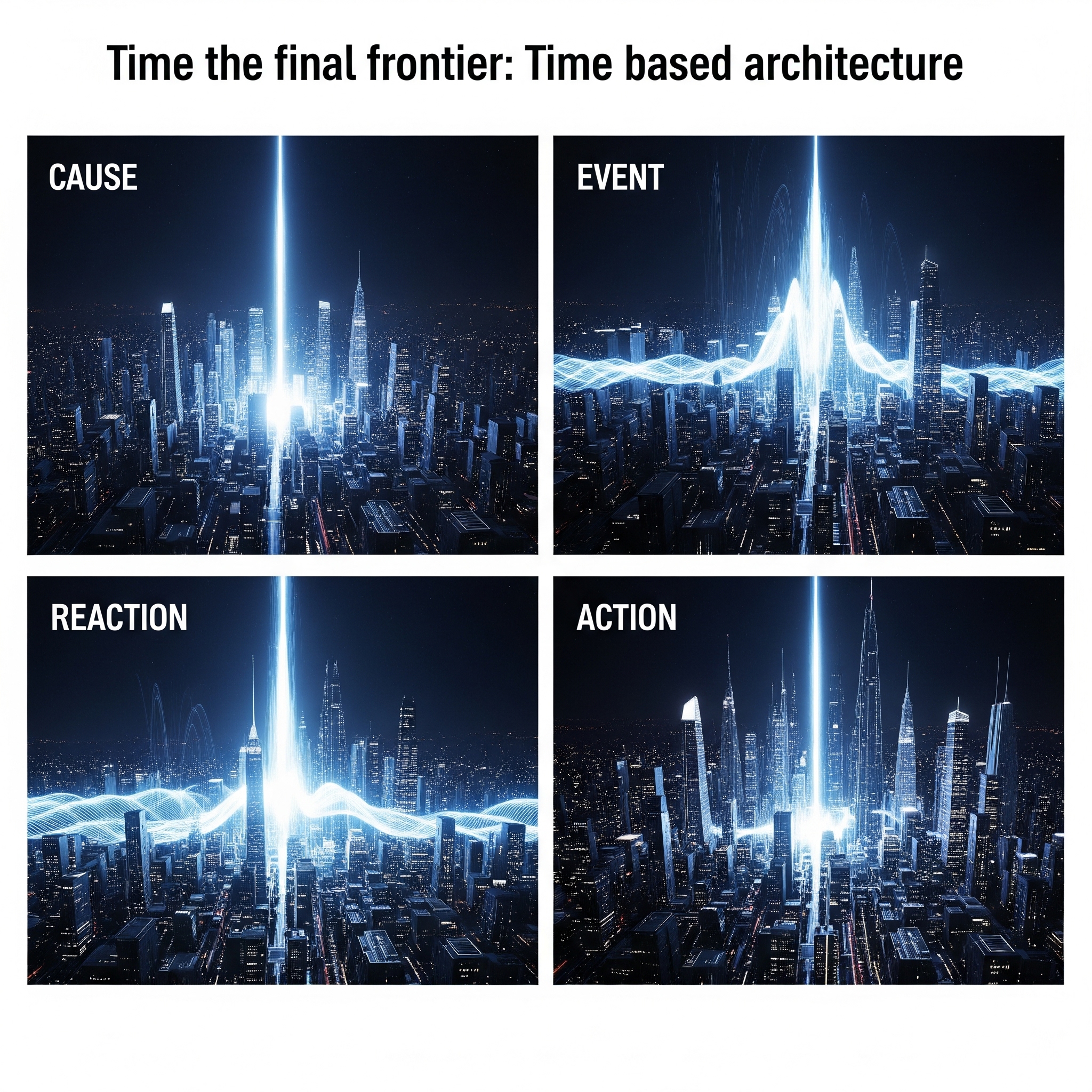 Time-Based Architectures: Cause, Event, Reaction, Action
At the heart of any dynamic system, whether in business, technology, or the natural world, lies the principle of cause and effect. Nothing happens in isolation; every event is the result of a preceding cause, triggering a chain of reactions that ultimately lead to an outcome. My thinking on Time-Based Architecture (TBA) is built upon this fundamental truth, structuring business and technology ecosystems around the ability to detect events, process them, and act upon them in the shortest time possible.
In a traditional, static business model, organisations often operate in a linear fashion, plans are made, strategies are deployed, and results are measured over extended cycles. However, in a world where markets shift in real-time, customer expectations are immediate, and threats can emerge without warning, this outdated approach leaves businesses vulnerable to slow reaction times and missed opportunities. Time-based architecture flips this model on its head, ensuring businesses and systems are event-driven, responsive, and adaptable to change as it happens.
The Four Phases of Time-Based Architecture
To build an architecture that truly aligns with the speed and unpredictability of the modern world, businesses must follow a structured model of cause, event, reaction, and action, each stage forming a critical link in an organisation’s ability to operate in real-time.
Cause: The Trigger That Sets Everything in Motion
Every event starts with a cause, a shift in market conditions, a change in customer behaviour, an operational failure, a cyber threat, or an economic fluctuation. The challenge businesses face is not only recognising these causes but anticipating them before they materialise. In a time-aware organisation, AI-powered predictive models and real-time analytics continuously scan historical data, live feeds, and external conditions to identify the triggers that could lead to significant business or technological impacts.
For example, in retail, a sudden surge in demand for a specific product could signal an upcoming shortage. In cybersecurity, an unusual spike in traffic to a server could be the early sign of a DDoS attack. In both cases, the ability to detect the cause early sets the foundation for a proactive response.
Event: The Moment of Change is Detected
Events are the signals that something has happened, a stock price changes, a machine sensor detects overheating, a customer abandons their online shopping cart, or a weather event disrupts global supply chains. Traditional architectures often fail at this stage because they process events in batches or at scheduled intervals, leading to delayed responses.
Time-Based Architectures are event-driven by design. Rather than waiting for updates at predefined times, systems are built to detect, and process events the moment they occur. This means organisations can act in milliseconds rather than minutes, hours, or days.
For example, in the financial industry, a 0.5% drop in a stock’s value could trigger an automated AI-driven trade in under a second. In healthcare, an AI-powered monitoring system in an intensive care unit could detect a patient’s declining vitals and alert doctors immediately. The faster an organisation detects and understands an event, the greater its ability to manage outcomes effectively.
Reaction: Determining the Right Response in Real Time
Once an event is detected, the next challenge is figuring out the best possible reaction, a decision that must be made at speed, without sacrificing accuracy. In human decision-making, this process is often slow because context needs to be analysed, multiple factors weighed, and approvals sought. But in a world driven by AI, automation, and machine learning, reaction times can be drastically improved.
Time-based architectures integrate AI-powered decision engines, rules-based automation, and contextual awareness to enable rapid reaction cycles. If a banking system detects fraudulent activity, it doesn’t wait for human intervention, it freezes the transaction and flags it for review. If a smart factory identifies a failing machine component, it doesn’t wait for scheduled maintenance, it orders a replacement part and redirects production automatically.
The key to a strong reaction phase is ensuring that decision-making is decentralised, automated where possible, and adaptable to changing conditions. A system that takes too long to react is as ineffective as a system that doesn’t detect events in the first place.
Action: Executing the Response Before It's Too Late
The final stage of Time-Based Architecture is execution, doing something based on the detected event and chosen reaction. This is where many organisations struggle, not because they don’t know what to do, but because they can’t act fast enough.
In traditional business and IT models, execution is often slowed down by manual intervention, approvals, legacy systems, and bureaucratic processes. In a time-aware system, the architecture is designed to carry out actions immediately, without bottlenecks or unnecessary delays.
For example:
- In logistics, when an AI system predicts a supply chain delay, it doesn’t just alert managers, it automatically reroutes shipments to alternative suppliers.
- In cybersecurity, if an intrusion detection system spots an attack in progress, it doesn’t just issue a warning, it isolates the affected systems and blocks suspicious access attempts in real time.
- In customer service, if an AI chatbot recognises a high-value customer experiencing frustration, it doesn’t just generate a support ticket, it escalates the issue to a human agent with full context and priority status.
The faster an organisation can move from reaction to action, the greater its ability to turn challenges into opportunities, minimise risks, and capitalise on real-time intelligence.
 Deeper Dive into Time-Based Architecture (TBA)
The modern business landscape is no longer structured around fixed timelines and predefined workflows. Instead, it has become fluid, event-driven, and continuously evolving. Time-Based Architecture is the structural foundation that allows organisations to operate at the speed of change, where data, decisions, and actions happen in real time, rather than in delayed, sequential processes.
At its core, TBA is about responsiveness, adaptability, and foresight. It ensures that organisations don’t just react to events as they occur, but can anticipate, interpret, and execute actions before they become critical issues. This section explores the key principles of TBA, the technologies that enable it, and how businesses can leverage time as a structural asset rather than a constraint.
The Core Principles of Time-Based Architecture
Time-Based Architecture isn’t simply about moving faster, it’s about architecting systems that operate in synchronisation with real-world events, data flows, and business triggers. There are three foundational principles that define TBA:
Event-Driven Systems: Moving from Batch Processing to Real-Time Responsiveness
Traditional architectures rely on batch processing, where data is collected, stored, and analysed at scheduled intervals. This worked well in an era of predictable business cycles, but today’s world is dynamic and constantly shifting. Businesses can no longer afford to wait hours or days to analyse transactions, customer interactions, or system anomalies.
Event-driven systems ensure that as soon as something happens, a customer abandons their shopping cart, an IoT sensor detects an anomaly, or a stock price changes, an automated response is triggered instantly. These systems operate on a publish-subscribe model, where multiple components listen for events and react accordingly, rather than waiting for periodic updates.
- Example: Financial Markets – Trading platforms operate on event-driven models, where every price fluctuation triggers immediate recalculations and automated transactions, ensuring traders respond in milliseconds.
- Example: Cybersecurity – Instead of relying on scheduled malware scans, modern security systems use real-time threat detection, automatically isolating threats the moment they appear.
Event-driven systems allow businesses to move from a reactive stance to a proactive one, ensuring they are always in sync with their operating environment.
Real-Time Data Processing: Making Decisions in the Moment
Collecting data is one thing, making sense of it in real time is another challenge entirely. Traditional data architectures store vast amounts of information but often require manual analysis, slow queries, and delayed reporting. This leads to a gap between when data is generated and when it becomes useful.
In a TBA model, data is processed as it is generated, allowing organisations to interpret patterns, extract insights, and make decisions in seconds or even milliseconds. This is particularly critical in industries where speed equals competitive advantage.
- Example: Healthcare – AI-powered patient monitoring systems continuously analyse real-time vitals, predicting critical health events before they occur rather than waiting for routine checkups.
- Example: E-commerce & Personalisation – Platforms like Amazon and Netflix process user behaviour in real time, tailoring recommendations instantly rather than updating them on a daily or weekly basis.
Real-time data processing is the foundation of hyper-responsive, intelligent businesses that can see, understand, and react in the moment.
Predictive Analytics: Anticipating Events Before They Happen
TBA is not just about reacting to what has already happened, it is about forecasting what will happen next. Predictive analytics plays a crucial role in reducing time-to-insight and enabling faster, smarter decisions.
By leveraging machine learning, AI, and advanced statistical models, businesses can detect trends, assess risks, and pre-emptively adjust strategies before issues arise.
- Example: Supply Chain Management – AI-driven forecasting models can predict inventory shortages weeks in advance, allowing businesses to adjust orders before a crisis occurs.
- Example: Customer Retention – Companies can analyse early signals of customer dissatisfaction, proactively offering incentives or personalised engagement before a customer decides to leave.
Predictive analytics transforms organisations from being reactive to truly forward-thinking, reducing operational surprises and optimising outcomes before they even occur.
Technologies That Enable Time-Based Architecture
Time-Based Architecture isn’t just a theoretical concept, it is powered by a set of specialised technologies that allow real-time processing, event management, and intelligent decision-making. The following key enablers form the backbone of TBA ecosystems:
Message Queues & Event Streaming: The Nervous System of TBA
At the heart of event-driven architectures are message queues and event streaming platforms that allow different components of a system to communicate in real time. These tools ensure that data flows continuously between applications, services, and devices and allows business logic to be executed instantly, rather than waiting for batch processes or manual triggers.
Stream Processing Platforms: Instant Data Analysis at Scale
Stream processing frameworks allow organisations to analyse and act on real-time data streams, ensuring insights are generated in the moment, rather than after the fact eliminating data lag, ensuring real-time insights fuel immediate actions.
High-Speed Databases: Instant Read & Write Operations
Traditional databases are optimised for structured queries and batch processing, but they struggle with the demands of real-time, high-frequency transactions. Time-based architectures rely on low-latency, high-speed databases that can ingest, store, and retrieve data instantly. With real-time databases, businesses can make instantaneous data-driven decisions, rather than waiting for complex queries to execute.
TBA: The Structural Foundation of the Future
Time-Based Architecture is not just an operational efficiency improvement, it is the core foundation of modern, responsive, and intelligent enterprises. Businesses that embrace event-driven models, real-time processing, and predictive analytics will have the ability to react, adapt, and lead in the hyper-competitive digital economy.
However, TBA is not just about responding to today’s challenges, it is about building future-proof architectures that can scale, evolve, and predictively shape market trends.

Real-World: Time-Based Architecture in Action
While many businesses have struggled to adapt to time-driven pressures, others have successfully architected their operations around time, turning speed, responsiveness, and real-time intelligence into competitive advantages. These companies have not just avoided obsolescence; they have reshaped entire industries by embedding time-based principles into their architectures.
From logistics and finance to social media and retail, time-based architecture (TBA) is already proving its value across diverse industries. Here, I explore some of the most compelling real-world examples that demonstrate how businesses are harnessing time to optimise efficiency, enhance customer experience, and drive unprecedented levels of agility.
Logistics & Supply Chain: Real-Time Tracking and Optimisation
In the world of global supply chains, even the smallest delay can disrupt production lines, increase costs, and damage customer trust. The most advanced logistics companies have adopted time-based architecture to track, optimise, and adjust deliveries in real time, turning unpredictable events into manageable and even profitable opportunities.
Example: UPS & Dynamic Route Optimisation: UPS has implemented ORION (On-Road Integrated Optimisation and Navigation), an AI-driven, real-time logistics engine that continuously adjusts delivery routes based on live traffic conditions, weather, and last-minute package updates. This event-driven system saves the company millions of miles in unnecessary travel per year, reducing fuel costs and improving on-time delivery rates.
Example: Amazon’s Predictive Shipping Model: Amazon takes time-based architecture even further with its anticipatory shipping model, which predicts what customers will order before they even place an order. Using real-time data on browsing habits, regional demand, and purchasing patterns, Amazon positions products in distribution hubs closest to potential buyers, dramatically reducing delivery times and ensuring near-instant fulfilment.
The Impact:
- Reduced delivery times from days to hours through real-time tracking and AI-powered logistics.
- Minimised waste and fuel consumption by dynamically adjusting supply routes.
- Increased customer satisfaction by ensuring products arrive exactly when expected, or before.
In logistics, time-based architecture is the difference between meeting demand and falling behind competitors who deliver faster.
Financial Services: High-Frequency Trading & Real-Time Fraud Prevention
The financial industry is one of the most time-sensitive sectors in the world, where milliseconds can mean millions in profit or loss. Companies that architect for time in financial markets, payments, and security gain a significant advantage over those that still rely on batch processing and delayed insights.
Example: High-Frequency Trading (HFT): In the stock market, high-frequency trading (HFT) firms use time-based architecture to process massive volumes of transactions in milliseconds. These firms deploy:
- AI-driven predictive analytics to forecast market shifts.
- Ultra-low-latency trading platforms that execute trades before human traders can even react.
- Colocation strategies, placing trading servers physically closer to stock exchange data centres to reduce network latency.
The result? HFT firms consistently outperform traditional investors by capitalising on time-based micro-movements in the market.
Example: Real-Time Fraud Detection in Banking: Financial institutions like Visa and Mastercard leverage real-time fraud detection systems, powered by event-driven AI models that process thousands of transactions per second. When suspicious activity is detected, such as anomalous spending in a foreign country, the system automatically blocks the transaction and alerts the user within milliseconds.
The Impact:
- Billions saved in fraud losses by detecting attacks as they happen rather than after the fact.
- Traders and investors capitalise on microsecond-level market shifts, gaining an edge over competitors.
- Faster approvals for loans, credit, and payments, making financial services more efficient and responsive.
In finance, the difference between success and failure often comes down to which institution can process and react faster.
Social Media & Digital Platforms: Real-Time Content & Instant Personalisation
Social media platforms thrive on instant engagement, users expect real-time content, instant responses, and personalised recommendations. Without a time-based architecture, these platforms would be slow, irrelevant, and incapable of keeping users engaged.
Example: X (Twitter) Event-Driven Feed: Unlike traditional news outlets that publish updates on a fixed schedule, X operates on a fully event-driven model, ensuring that:
- Breaking news reaches users in real time through AI-curated timelines.
- Trending topics update dynamically, responding to sudden global events within seconds.
- Live interactions, likes, retweets, and replies, are processed instantly to keep engagement flowing.
Example: Netflix’s Real-Time Content Personalisation: Netflix does not rely on static content recommendations. Instead, it:
- Continuously analyses user behaviour in real time.
- Dynamically adjusts thumbnails and recommendations based on what the user is most likely to watch next.
- Uses event-driven machine learning models to adjust its catalogue and predict content popularity before it even launches.
The Impact:
- Higher engagement and longer user retention, as real-time experiences feel more intuitive and personalised.
- Better content recommendations and advertising models, ensuring higher conversion rates and revenue generation.
- Faster dissemination of information, making platforms indispensable in breaking news, social movements, and global events.
For digital platforms, real-time architecture is not a luxury, it is a necessity for survival.
Healthcare: AI-Powered Diagnosis & Real-Time Patient Monitoring
In healthcare, time is often a matter of life and death. Time-based architecture is revolutionising patient care by ensuring that diagnostics, monitoring, and emergency responses happen without delay.
Example: AI-Powered Diagnostics
- Google’s DeepMind AI can analyse medical imaging scans faster than human doctors, detecting early-stage cancer, retinal diseases, and neurological disorders in real time.
- AI-driven triage systems in hospitals prioritise critical patients based on real-time vital signs, ensuring the most urgent cases are seen first.
Example: Real-Time Patient Monitoring
- ICU patients are now monitored using AI-driven sensors that track vital signs and detect early warning signs of deterioration before they become critical.
- Wearable devices, like smartwatches and continuous glucose monitors, provide instant alerts to patients and doctors, reducing the risk of heart attacks and diabetic emergencies.
The Impact:
- Earlier diagnosis means better patient outcomes.
- Faster response times in critical situations save lives.
- Predictive healthcare reduces hospital admissions and improves long-term treatment plans.
For the medical industry, architecting around time is not just about efficiency, it is about fundamentally improving and saving lives.
The Competitive Edge of Time-Based Architecture
The companies leading their industries are not necessarily the ones with the best products, the lowest prices, or the biggest teams, they are the ones that have successfully embedded time-based architecture into their core operations.
Across logistics, finance, social media, and healthcare, we see a common theme:
- Faster decision-making leads to better results.
- Event-driven automation reduces inefficiencies and enhances responsiveness.
- Predictive analytics allow businesses to act before problems arise.
Those who master time will continue to dominate their industries. Those who ignore it will struggle to compete in a world that is constantly accelerating.
In the next section, I explore how the businesses of tomorrow will be built entirely around time-based decision-making, and how organisations that fail to adapt will struggle to survive in the new real-time economy.
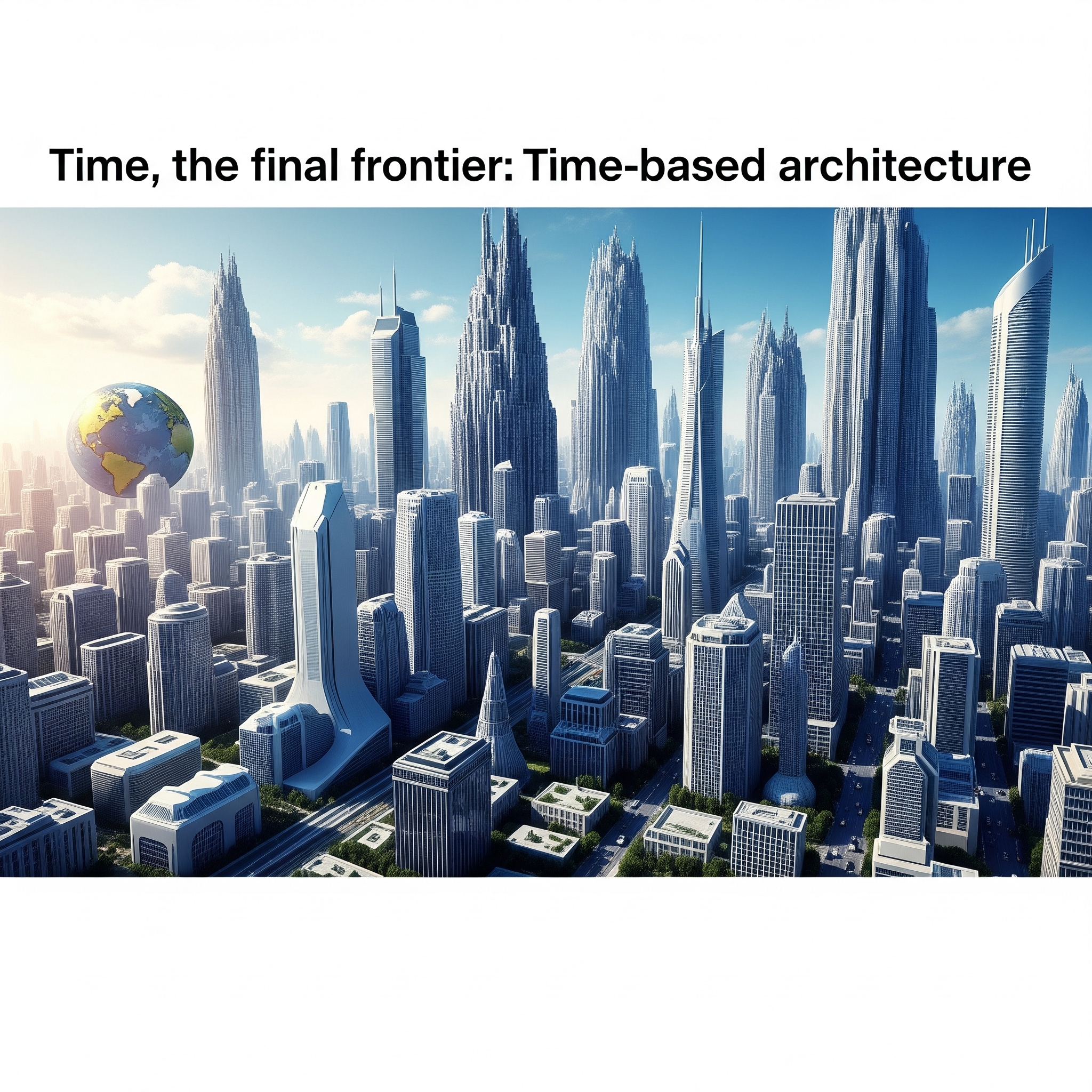 Building a Time-Based Architecture for the Future
The ability to move seamlessly from cause to event, from reaction to action is what separates highly adaptable, time-aware businesses from those that are constantly struggling to keep up. Companies that still rely on batch-processing, siloed data, and slow decision-making cycles will find themselves increasingly outpaced by competitors who architect their entire ecosystems around time-based principles.
Adopting Time-Based Architecture isn’t just about optimising operations, it’s about fundamentally rethinking how businesses function in an era where every second matters. In this section, I explore how businesses have been forced to evolve at different speeds, driven by macro-level global events, micro-level industry shifts, and nano-level individual expectations. Understanding these different time horizons is essential for building future-ready business and technology architectures that can adapt to both expected and unexpected changes.
The Evolution of Business: Time as a Forcing and Forging Function
Businesses do not evolve in a vacuum. They respond to external pressures, market demands, and technological advancements that force them to adapt, innovate, or become obsolete. Time is not just a measurement of change, it is a forcing function, pushing industries to react to macro-level global events, micro-level industry shifts, and nano-level individual expectations.
However, time is not only a forcing function, but also a forging function. Businesses that proactively understand time before they embark on costly ventures can avoid the mistakes of the past, create sustainable models, and build entirely new industries from the ground up. Those who wait for time to dictate change will always be reacting, those who architect with time in mind will be shaping the future.
To fully grasp how businesses evolve through time-based pressures, we must examine three key time horizons.
Macro Time: Global Events That Reshape Industries
Some changes happen on a global scale, affecting entire industries and economies overnight. These are the world-altering events, pandemics, financial crises, wars, technological revolutions, and regulatory upheavals, that force businesses to fundamentally rethink their models or risk becoming irrelevant.
The COVID-19 pandemic is a perfect example of macro time as a forcing function. Businesses that were architected around physical interactions and rigid supply chains struggled to adapt, while those that had digitally flexible, real-time response models thrived. Remote work, digital collaboration, telehealth, e-commerce, and AI-driven automation all saw a decade’s worth of adoption happen in less than a year.
Other macro-level forcing functions include:
- The Financial Crisis of 2008, which led to the rise of FinTech and decentralised finance (DeFi) as traditional banking models were questioned.
- The AI Revolution, which is currently forcing businesses across every industry to integrate machine learning, automation, and predictive analytics or risk being left behind.
- Climate Change & Sustainability Mandates, pushing businesses to rearchitect supply chains, invest in green technology, and move towards sustainable business models.
For businesses, the question is not whether macro events will happen, it is about how well their architecture is prepared to withstand them. Those that design for resilience, adaptability, and time-based decision-making can weather macro forces, while those that rely on static, inflexible systems will struggle to survive.
Micro Time: Industry-Specific Shifts That Define Competitiveness
While macro-level forcing functions affect entire economies, micro-level shifts occur within specific industries. These changes often happen as a result of new technologies, emerging competitors, changing consumer expectations, or regulatory reforms.
Take the automotive industry as an example. For decades, traditional car manufacturers operated on predictable production cycles and dealership-driven sales models. Then, Tesla arrived, not just as a car company, but as a technology-first, software-driven, over-the-air update-enabled ecosystem. Traditional automakers were forced to radically rethink their architecture, incorporating EV technology, software-based services, and direct-to-consumer sales or risk becoming outdated.
Other micro-level forcing functions include:
- Streaming Disrupting Cable & Media: The shift from scheduled programming to on-demand content delivery fundamentally changed media consumption habits.
- Retail's Move from Physical to Digital: E-commerce giants forced traditional retailers to adopt omnichannel architectures or close their doors.
- Cloud Computing's Impact on Enterprise IT: The rise of cloud-native companies crushed on-premise, legacy software providers who couldn’t adapt fast enough.
Micro time shifts often go unnoticed by businesses until it’s too late, but those who see the signs early, architect for time, and invest in real-time adaptability can emerge as the next dominant players.
Nano Time: The Individual’s Influence on Business Evolution
At the smallest scale, nano time represents the expectations of individual consumers, employees, and users. With the rise of instant access, hyper-personalisation, and real-time feedback loops, businesses must now respond to nano-level changes at the speed of human expectations.
In the past, businesses dictated the pace of innovation, they set release cycles, determined how products evolved, and controlled access to services. Today, the consumer dictates the timeline. Customers expect:
- Same-day or even same-hour delivery.
- Instant responses from AI-driven chatbots and human customer service.
- Personalised recommendations, real-time pricing adjustments, and predictive insights tailored to their needs.
A failure to meet these expectations results in immediate attrition. If a digital experience takes too long, users abandon the app. If customer service is slow, loyalty is lost. If a competitor delivers the same product with greater speed, flexibility, and ease of use, market share shifts instantly.
Nano time is not just about serving customers faster, it’s about architecting real-time ecosystems where businesses can anticipate, react to, and pre-emptively fulfil individual needs. Companies that master time-based personalisation, AI-driven engagement, and real-time customer experience will dominate the digital economy.
Forging Function: Creating New Businesses with Time Awareness
While forcing functions push existing businesses to evolve, forging functions create entirely new industries and business models by recognising the role of time before costly investments are made.
A business that understands time from the outset can build architectures that are:
- Designed for rapid scaling.
- Engineered around real-time, event-driven decision-making.
- Future-proofed against both known and unknown disruptions.
Consider how FinTech startups disrupted banking by recognising that financial transactions should be instantaneous, seamless, and accessible from anywhere. They architected for speed, automation, and customer-centric design, while traditional banks were still bogged down by batch-processing models.
The same is happening with decentralised finance (DeFi), AI-powered healthcare diagnostics, and autonomous logistics networks, all industries that are being forged with time-based architectures from day one.
Companies that fail to incorporate time awareness in their foundational models will find themselves outpaced before they even begin. The next wave of disruptors will be born from businesses that embed time into their DNA, designing for agility, real-time insights, and instant execution from inception.
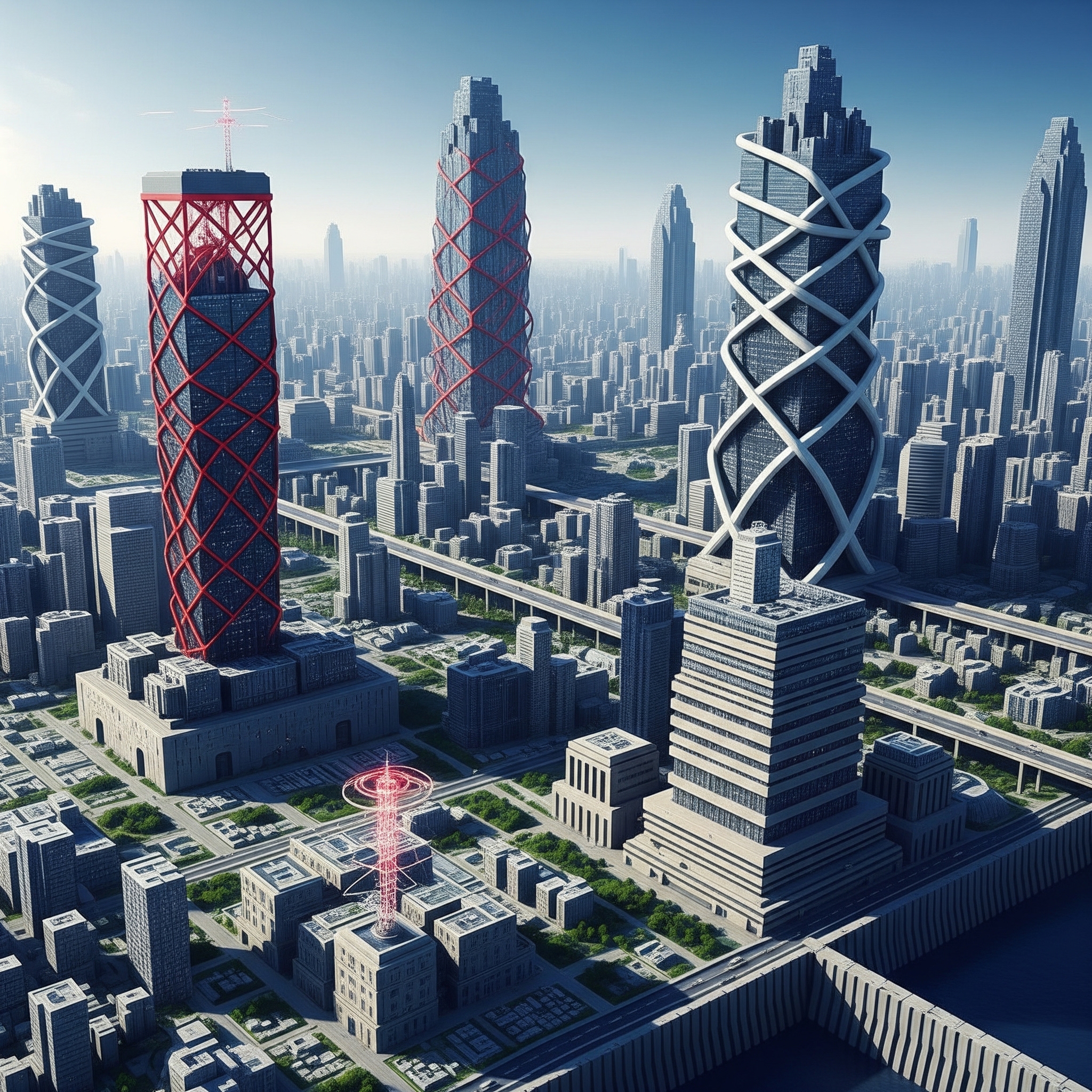 Transitioning to Time-Based Business Models
The evolution of business is a story of adaptation to time pressures, whether they come from global forces, industry-wide disruptions, or individual consumer expectations. Those that wait to be forced into change often struggle, while those that anticipate time as both a forcing and forging function position themselves as the architects of the future.
Challenges and Considerations in Implementing Time-Based Architecture
While Time-Based Architecture offers immense advantages, enabling real-time decision-making, predictive insights, and dynamic automation, it is far from easy to implement. The promise of instant responsiveness and event-driven intelligence comes with its own set of challenges and trade-offs.
Architecting for time is not just about speed, it’s about precision, reliability, security, and cost-effectiveness. Businesses must carefully balance agility with stability, real-time insights with data governance, and automation with resilience. Failure to do so can result in systems that are fragile, expensive, and vulnerable to cascading failures.
Here, I explore the key challenges and considerations businesses must address when adopting and scaling time-based architectures.
The Complexity of Designing and Building Real-Time Systems
Traditional enterprise systems are often batch-oriented, siloed, and reliant on scheduled processes. Shifting to a real-time, event-driven architecture requires a fundamental rethinking of system design, including:
- Event-Driven Microservices – Systems must be broken down into independent, loosely coupled services that can respond to real-time events rather than waiting for periodic updates.
- Low-Latency Data Pipelines – Businesses must build data ingestion and processing pipelines that can handle continuous streams of information instead of relying on static databases.
- Cross-System Coordination – Real-time architectures often involve multiple interconnected services, creating challenges in ensuring data consistency, synchronisation, and fault tolerance.
Unlike traditional architectures, where errors can be corrected retrospectively, real-time systems must be designed to function flawlessly from the outset. This requires rigorous testing, simulation environments, and predictive failure modelling to ensure stability.
The Need for High Availability, Scalability, and Reliability
Time-based systems are only as good as their availability. A real-time fraud detection system that fails during a cyberattack or a high-frequency trading platform that experiences downtime during market volatility can lead to catastrophic financial and reputational damage.
- High Availability: Systems must be redundant and failover-ready, ensuring zero downtime even if a component fails.
- Scalability: Real-time architectures must scale dynamically, handling sudden surges in demand without performance degradation.
- Reliability: Businesses must design systems that do not compromise data integrity, even when processing millions of events per second.
Achieving these capabilities requires investment in distributed cloud infrastructure, fault-tolerant architectures, and real-time monitoring tools. However, designing a system that is both instantaneous and resilient remains one of the toughest challenges in TBA.
Data Governance and Security in Real-Time Environments
Real-time systems process enormous volumes of constantly flowing data, customer transactions, sensor feeds, social media interactions, and financial trades, all of which must be protected from unauthorised access, manipulation, or breaches.
- Real-Time Data Protection: Unlike batch processing, where data is validated before storage, real-time architectures must secure data in motion, ensuring encryption and integrity at every stage of the pipeline.
- Privacy Compliance: Regulations like GDPR, and industry-specific data laws require businesses to store, process, and handle real-time data responsibly. This is particularly critical in finance, healthcare, and government systems.
- Identity & Access Management: Real-time systems need advanced authentication and role-based access controls (RBAC) to prevent unauthorised tampering of live data streams.
Without proper governance frameworks, businesses risk turning real-time intelligence into real-time vulnerabilities.
The Costs and Trade-Offs of Implementing Time-Based Architecture
The move to real-time computing comes at a significant cost, in terms of infrastructure, expertise, and ongoing maintenance. Businesses must weigh the return on investment (ROI) against the financial and operational demands of TBA.
- Infrastructure Costs: Implementing TBA often requires cloud-native, distributed architectures that can support high-throughput, low-latency processing, a shift that is far more expensive than traditional IT models.
- Development Complexity: Real-time architectures demand specialist skills in event-driven engineering, AI-driven automation, and distributed system design, which means hiring and retaining highly skilled (and costly) talent.
- Latency vs. Accuracy Trade-Offs: Faster processing does not always mean better insights. Some real-time decisions must balance speed with accuracy, ensuring that instant reactions do not lead to incorrect actions.
- Technical Debt: If not designed correctly, real-time systems can accumulate significant technical debt, requiring continuous refactoring and optimisation.
For some businesses, the question isn’t whether to adopt TBA, but rather which areas of their operations require real-time capabilities, and which can still function efficiently with scheduled or batch processing models.
The Strategic Approach to Time-Based Architecture
Successfully implementing TBA requires a strategic, phased approach, rather than an immediate overhaul of existing systems. Businesses should:
- Identify critical areas where real-time responsiveness provides the most value, fraud detection, personalised customer experiences, logistics optimisation, etc.
- Invest in foundational event-driven architectures, real-time data pipelines, and AI-driven automation before scaling across the organisation.
- Adopt a hybrid model, where some processes run in real time while others remain in optimised batch models to balance cost and efficiency.
- Prioritise security and compliance frameworks from day one, ensuring that governance scales with real-time data flows.
By approaching TBA incrementally, businesses can reduce risk, manage costs, and unlock its full potential without unnecessary disruption.
Mastering the Challenges to Unlock the Future
Time-Based Architecture is not a simple upgrade, it is a fundamental shift in how businesses operate. The challenges of complexity, availability, security, and cost are real, but the benefits of instant decision-making, real-time optimisation, and predictive intelligence far outweigh the risks for those who get it right.
Businesses that successfully navigate these challenges will not just survive but thrive in an economy where speed, adaptability, and time-to-action define success. Those that delay the transition will find themselves increasingly outpaced by competitors who move faster, think smarter, and react in real time.
In the next section, I explore how businesses that embed time into their very architecture, by leveraging event-driven models, AI-powered insights, and real-time automation, are not just responding to change, but actively shaping the industries of tomorrow.
 Hyper-Future: Time-Based Architectures as the Foundation of Tomorrow’s Business Models
The future of business will not be driven by static strategies or slow-moving transformation efforts. It will be built on real-time decision-making, event-driven ecosystems, and AI-powered predictive capabilities that enable businesses to act before change even occurs. Time will no longer be an operational constraint; it will be a business model in itself.
In this hyper-future, the ability to predict, adapt, and execute instantly will separate the leaders from the obsolete. Those who architect for time will reshape industries, define new economic structures, and fundamentally alter how businesses operate. Those who do not will be left behind in a world that waits for no one.
Time-based architectures will form the core of digital economies, self-evolving enterprises, and AI-regulated marketplaces, enabling a future where businesses no longer react to change, but orchestrate it in real time.
Quantum AI & Hyper-Predictive Decision-Making
Today’s businesses still react to market forces, using historical data to make educated guesses about the future. In the hyper-future, quantum computing combined with AI will eliminate guesswork altogether. Predictive models will no longer estimate probabilities, they will know with near certainty what will happen next.
- AI-powered financial ecosystems will adjust portfolios in real time, anticipating market shifts before they occur.
- Retail supply chains will forecast demand with perfect accuracy, eliminating stock shortages and waste.
- AI-driven cybersecurity will predict and neutralise cyber threats before an attack is even attempted.
Prediction will no longer be a function of data science; it will be the architecture that defines success.
Autonomous Enterprises: The End of Traditional Corporate Structures
The traditional hierarchical corporation, where decisions flow through layers of management, will become obsolete. Instead, autonomous enterprises will emerge, self-regulating, AI-driven ecosystems where decisions happen instantly, without human intervention.
- Smart Contracts and AI-Powered Governance will enable corporations to operate with automated compliance, real-time financial adjustments, and instant adaptation to regulations.
- Event-Driven Organisations will use AI-powered decision engines that execute strategic pivots in milliseconds, rather than over months or years.
- Real-Time Workforce Adaptation will see companies dynamically adjust their human and AI workforce based on real-time demand, skill shortages, and evolving market conditions.
The future business will not be controlled by static plans, it will be an autonomous, self-optimising entity that evolves in real time.
The Time Economy: When Speed Becomes the Currency
As businesses become more time-aware, the next competitive advantage will be measured in speed rather than cost. The ability to deliver goods, services, insights, and experiences instantly will define market leaders. In this hyper-future, companies will no longer compete on price, but on time-to-value and for our time.
- AI-driven service delivery models will replace slow human processes, automated legal, medical, and financial advisory services will deliver results in seconds.
- Zero-Latency Commerce will eliminate checkout queues, transaction delays, and fulfilment wait times, everything will be instant.
- Autonomous logistics networks will deliver same-hour global shipping, with AI-powered drones, underground freight networks, and real-time demand-based routing.
The fastest business will be the most valuable business, time will be the defining metric of success.
The Dissolution of Physical & Digital Boundaries
As spatial computing, mixed reality, and AI-powered automation evolve, the distinction between digital and physical will dissolve completely. This will create entirely new ways of living, working, and doing business.
- Smart Cities will function as self-regulating ecosystems, adjusting traffic, utilities, and services in real time based on environmental and economic factors.
- Virtual-Physical Hybrid Workforces will see employees operating across both digital and real-world environments simultaneously, collaborating through persistent spatial interfaces.
- Hyper-Reactive Consumer Environments will dynamically reconfigure retail, hospitality, and entertainment spaces based on real-time customer data.
Tomorrow’s businesses will not be bound by physical constraints, the world itself will be an adaptive, time-based system.
AI-Orchestrated Global Ecosystems
As AI systems grow more sophisticated, they will no longer just manage individual businesses, they will govern entire economies, supply chains, and market ecosystems. Time-based architecture will make global commerce entirely fluid, optimising resource distribution, market efficiencies, and decision-making at a planetary scale.
- Decentralised AI-driven marketplaces will autonomously allocate goods and services based on real-time demand, eliminating inefficiencies.
- Predictive economic models will allow governments to pre-empt recessions, policy failures, and trade imbalances before they emerge.
- Self-optimising global infrastructure will use AI to coordinate energy grids, urban planning, and food supply chains with real-time precision.
This is not automation, it is AI-driven planetary intelligence, managing business, society, and commerce at hyper-scale.
A Future That Moves Faster Than Humans Can Perceive
As time-based architecture becomes the standard, businesses will operate at speeds beyond human perception. AI systems will handle millisecond-level decision-making, orchestrating billions of micro-transactions, optimising global logistics, and executing corporate strategies in real time.
In this hyper-future:
- Companies will no longer "react" to markets, they will shape them.
- Supply and demand imbalances will be eliminated before they even arise.
- Real-time personalisation will create infinitely adaptive services and products.
- Human intervention in corporate decision-making will be drastically reduced.
Business will become an autonomous, self-evolving, time-aware machine, operating at unimaginable speeds, while those still operating on static, lagging architectures will be left behind in a world they can no longer compete in.
The Final Frontier: Mastering Time as the Ultimate Business Advantage
If businesses today are competing on price, quality, and brand, the future will be defined by who can master time most effectively. Our time is precious so ultimately it will become a value measure for us as individuals.
Time-based architecture will become the single most important factor in economic success. The companies, industries, and nations that architect for real-time intelligence, instant decision-making, and predictive adaptation will dominate the next era of human progress.
Those that fail to embed time into their very structure will simply become outdated faster than they can react.
The question is no longer if this transformation will happen, but who will lead it and who will be left behind.
 Conclusion: Mastering Time as the Ultimate Competitive Advantage
Time is no longer just a passive backdrop to business, it is the defining factor in success, innovation, and survival. The ability to anticipate, react, and execute in real time has become the difference between industry leaders and those left behind in digital obsolescence.
Throughout history, businesses have been forced to evolve by external pressures, macro-level global disruptions, micro-level industry shifts, and nano-level consumer demands. But in the coming era, the most successful businesses will not just react to time-based pressures, they will shape time itself.
Not everything is equal though, we all don’t need or have the responses of a Formula 1 driver or a fighter pilot; businesses all don’t need the complex systems it takes to launch a mission to the Moon; manufacturing don’t all need decades to build something new. Understanding Time in Context is vital to prevent over-engineering of solutions.
Time is not just about speed, or immediacy, it is about understanding and application across an appropriate and applicable horizon. For example, taking out a Pension is a long-term time based activity; creating a pathway treatment plan for a serious medical condition must have a short-medium-long term horizons that are adaptable to events. It is about this clear understanding of the end-to-end lifecycle requirements that is vital.
Time-Based Architecture: A New Paradigm for Business
To thrive in a real-time world, businesses must embed time into every aspect of their architecture. This means:
- Moving from reactive to predictive decision-making, leveraging AI and quantum computing to foresee change before it happens.
- Transitioning from static workflows to event-driven architectures, where actions are triggered automatically based on real-time signals.
- Eliminating operational lag by reducing Time to Action, Time to Insight, and Time to Value through intelligent automation and decentralised AI ecosystems.
- Building flexible, adaptive infrastructures that can scale and pivot instantly, instead of being trapped in outdated, monolithic models.
Businesses that fail to architect for time will become hostages to it, struggling to catch up while faster, more adaptive competitors move ahead. Those that embrace Time-Based Architecture will not only survive, they will define the future of their industries.
A Hyper-Future Built on Time Mastery
As we look ahead, the very concept of business models, corporate structures, and economic systems will be rewritten by the forces of time:
- Quantum AI will eliminate guesswork, enabling businesses to react at near-instantaneous speeds.
- Autonomous enterprises will replace slow decision-making hierarchies with AI-driven, self-regulating ecosystems.
- The Time Economy will emerge, where businesses compete not on price, but on speed, responsiveness, individuals time, and time-to-value.
- The boundary between digital and physical business will dissolve, with real-time spatial computing shaping our environments.
- AI-orchestrated global ecosystems will regulate commerce, supply chains, and infrastructure with precision beyond human capability.
The world will no longer operate in business cycles, it will be a continuous flow of real-time interactions, predictive decision-making, and event-driven automation. Those who fail to operate at the speed of this hyper-future will be unable to compete at all.
Time: The Final Frontier
The question is no longer whether businesses need to become time-aware, it is how quickly they can make the transition before it is too late.
Mastering time is the final frontier in business and technology. Those who can architect for speed, adaptability, and real-time intelligence will shape the future. Those who cannot, will be outpaced, outperformed, and ultimately out of time.
Articles: Architecture
- How to design for the unpredictable: Embracing Chaos: Building Anti-Fragile Platforms
- moving beyond components to holistic design: Systems Thinking: Designing Integrated Ecosystems
- Prioritising the flow of events in real-time: Time-Based Architecture: Mastering Temporal Data