A Spatial Revolution
The architecture and construction industries have long been defined by physical blueprints, manual planning, and labour-intensive execution. For centuries, architects have relied on static 2D drawings, engineers have worked with physical models, and construction teams have followed paper-based plans to bring buildings to life. While digital advancements like CAD and BIM have introduced new efficiencies, they still fall short of truly immersive, real-time, and data-driven environments.
Now, spatial computing is set to revolutionise the built environment, transforming how we design, construct, and maintain buildings. By integrating AI-driven design, augmented reality (AR), virtual reality (VR), digital twins, and IoT-enabled smart infrastructure, spatial computing merges the digital and physical worlds, allowing professionals to interact with buildings before they exist. Architects can step inside their designs using immersive VR environments, engineers can test materials and energy efficiency in real-time simulations, and construction teams can use AI-powered guidance to build with precision, all before a single brick is laid.
Beyond the immediate improvements in efficiency, cost reduction, and risk management, spatial computing lays the groundwork for the future of intelligent, self-optimising cities. Buildings will no longer be static structures but dynamic entities that adapt in real time to environmental conditions, occupancy patterns, and maintenance needs. Urban development will shift from rigid, long-term planning to AI-regulated, continuously evolving environments that respond to human needs and sustainability goals.
However, this transformation comes with challenges. High initial investment costs, regulatory uncertainties, cybersecurity concerns, and industry-wide resistance to change must be addressed for spatial computing to reach its full potential. Governments, private firms, and educational institutions must collaborate to establish new regulations, train a digitally skilled workforce, and develop robust infrastructure to support this technological shift.
Looking even further ahead, the Hyper-Future of architecture and construction envisions autonomous robotic building swarms, self-repairing materials, and AI-driven urban ecosystems that dynamically reshape themselves to accommodate population shifts, climate changes, and future human needs. The traditional concept of construction as a one-time process will disappear, replaced by buildings that evolve, adapt, and regenerate over time.
This article explores the opportunities, benefits, challenges, and future visions of spatial computing in architecture and construction. From AI-driven generative design and immersive virtual planning to predictive maintenance and smart infrastructure, we’ll examine how this technology is reshaping the industry today, and what the future of the built environment could look like tomorrow.
What is Spatial Computing in Architecture and Construction?
Spatial Computing in the context of architecture and construction is the integration of digital data into the physical 3D environment. It moves beyond traditional 2D screens, allowing architects, engineers, and site managers to interact with building models and project data as if they were part of the physical world.
Key applications include:
Immersive Design Review: Walking through a life-sized virtual model of a building before breaking ground.
Digital Twins: Creating a real-time digital replica of a construction site to monitor progress and safety.
Mixed Reality (MR) Overlay: Projecting hidden utilities (like pipes and wiring) onto physical walls for maintenance and renovation.
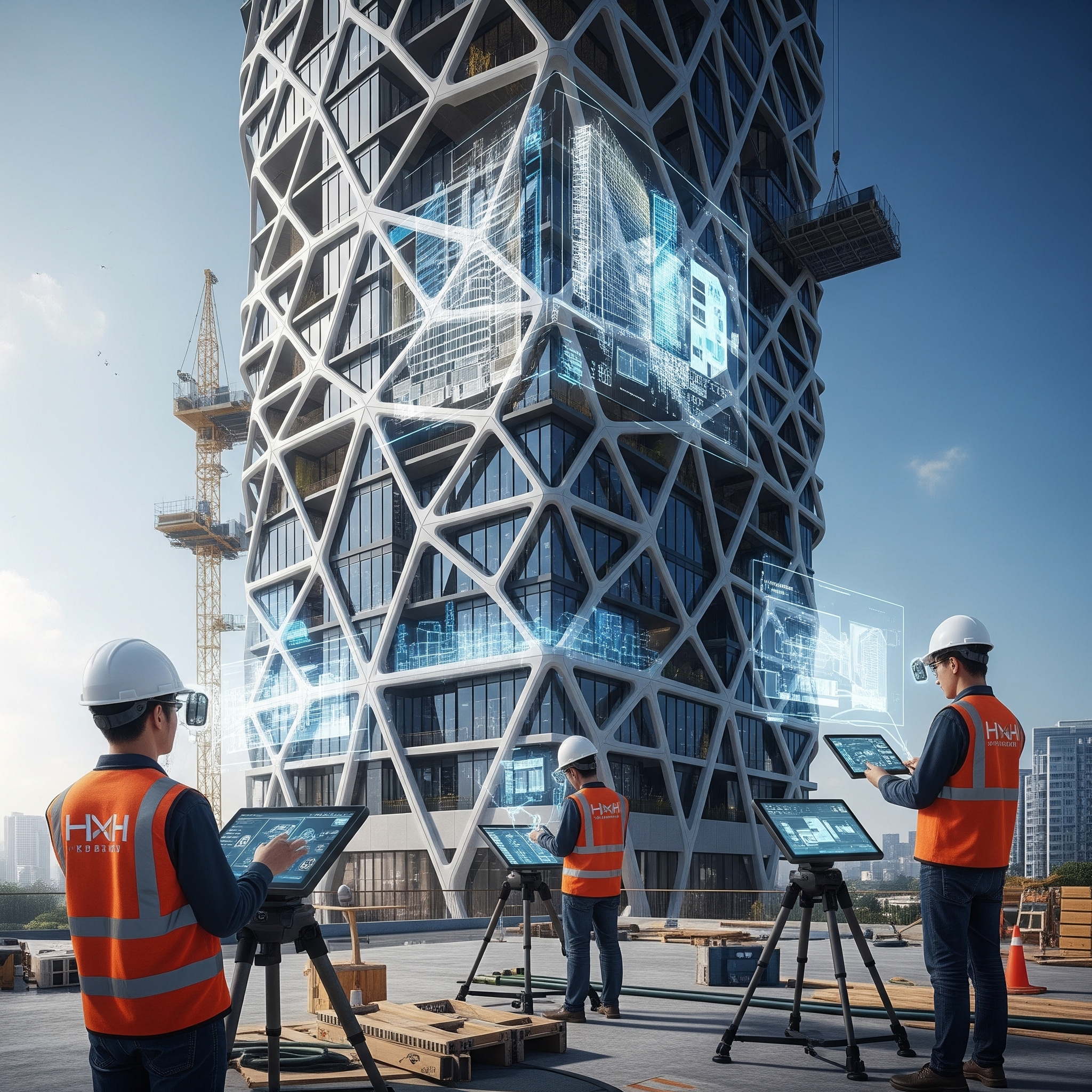 Simplifying Complexity: The Need for Spatial Computing in Architecture & Construction
The architecture and construction industries are notoriously complex, requiring the coordination of designers, engineers, builders, and regulators across lengthy project timelines. Despite technological advancements, these industries still face significant inefficiencies, cost overruns, and communication gaps that hinder productivity and drive up expenses.
Traditional architectural design relies heavily on 2D blueprints, static 3D models, and screen-based visualisations, which often fail to capture the full experience of a space before construction begins. This limitation leads to design misinterpretations, costly changes during construction, and client dissatisfaction when the final build does not meet expectations. Additionally, construction site management remains largely manual, increasing the risk of errors, delays, and safety hazards.
Spatial computing addresses these challenges head-on by providing real-time, immersive, and data-driven solutions. By integrating augmented reality (AR), virtual reality (VR), artificial intelligence (AI), and Internet of Things (IoT) technologies, spatial computing revolutionises the way buildings are designed, constructed, and maintained.
One of the biggest advantages of spatial computing is its ability to bridge the gap between the digital and physical worlds, allowing architects and builders to experience and interact with designs in a fully immersive environment. Digital twins, real-time, interactive 3D models of buildings, offer architects the ability to test layouts, materials, and lighting conditions dynamically, ensuring optimal design choices before breaking ground.
In the construction phase, AI-driven simulations can predict structural performance, helping engineers optimise material use, reduce waste, and improve sustainability. On-site, AR overlays provide step-by-step guidance to workers, reducing errors and ensuring precision in installations, wiring, and assembly. Meanwhile, AI-powered risk assessment tools monitor safety hazards in real time, preventing accidents before they occur.
Spatial computing doesn’t just benefit the design and construction process, it extends into ongoing building management. Smart buildings equipped with IoT sensors and AI-powered predictive analytics enable proactive maintenance, energy efficiency optimisation, and long-term structural monitoring, ensuring that facilities remain cost-effective and high-performing for decades.
By leveraging real-time 3D modelling, AI-powered simulations, and immersive site management tools, spatial computing enables:
- Faster project approvals through highly realistic design walkthroughs, allowing stakeholders to experience a building before construction begins.
- Minimised material waste by testing different designs, structural optimisations, and sustainability strategies in a virtual environment before implementation.
- Enhanced construction site safety, with AI continuously monitoring worker behaviour, environmental hazards, and equipment usage to prevent accidents.
- Seamless collaboration between architects, engineers, and project managers, eliminating miscommunication and design conflicts before they lead to costly delays.
- Proactive maintenance strategies, using digital twins and AI-powered insights to ensure long-term building performance and energy efficiency.
With rising urbanisation, increasing environmental regulations, and growing demands for smart infrastructure, spatial computing is no longer just an advantage, it is becoming a necessity. The firms that embrace this digital transformation will lead the industry into a new era of efficiency, sustainability, and innovation.
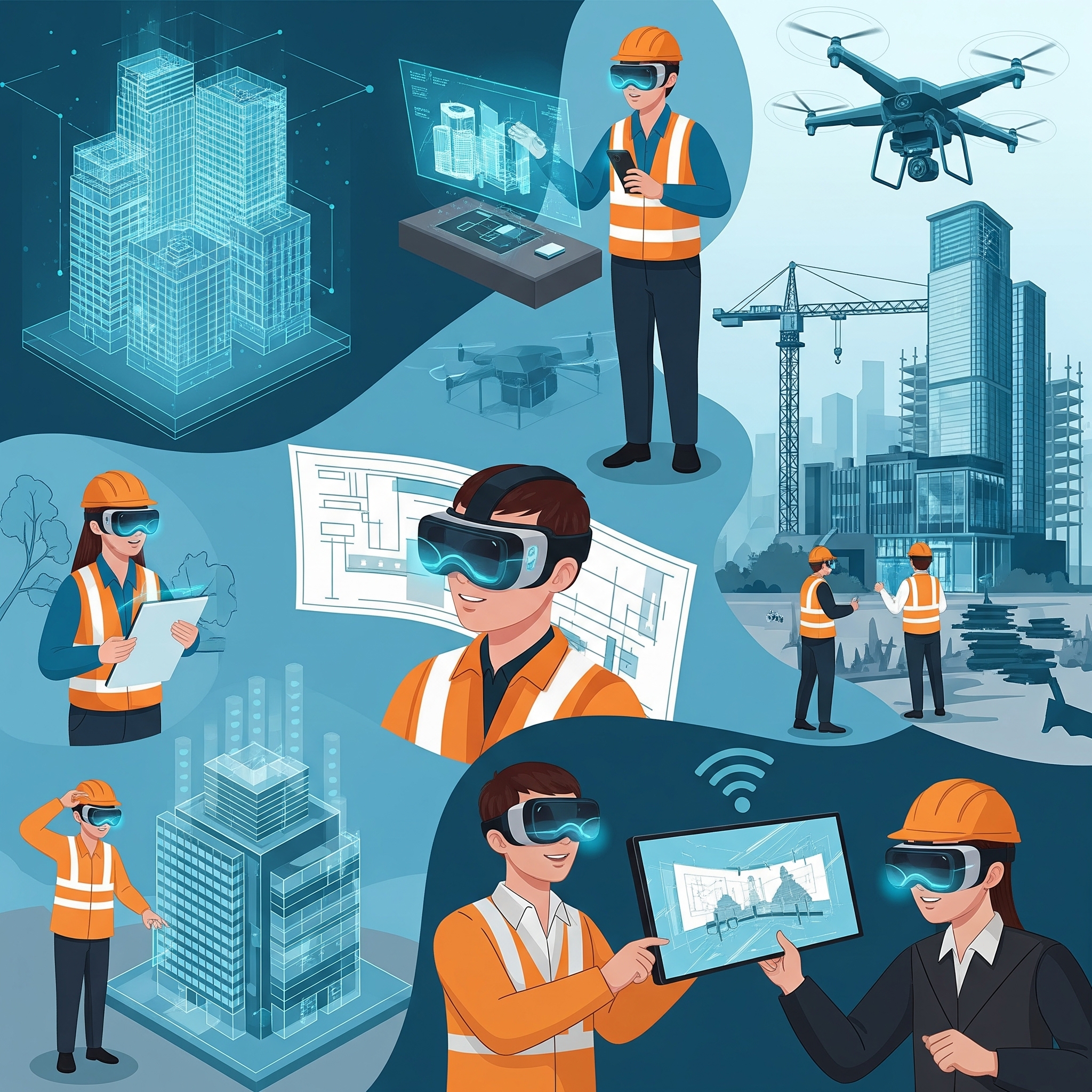 The Built Environment Revolution: Spatial Computing Opportunities
The architecture and construction industries are on the verge of a major transformation. For decades, traditional methods of design, planning, and execution have relied on static blueprints, manual site assessments, and time-consuming coordination between stakeholders. While digital tools such as Building Information Modelling (BIM) and computer-aided design (CAD) have improved efficiency, they still lack the immersive, real-time capabilities needed to fully optimise modern building projects.
Spatial computing is changing this. By blending the physical and digital worlds, it allows architects, engineers, construction professionals, and customers to visualise, interact with, and optimise projects in ways that were previously impossible. Instead of reviewing static models on a screen, professionals can now step inside full-scale virtual buildings, manipulate designs in real-time, and simulate different construction scenarios before breaking ground. This reduces errors, saves time, and enhances decision-making across every phase of a project.
Beyond design, spatial computing is revolutionising construction management and site operations. AI-driven risk assessments, AR-guided assembly instructions, and real-time digital twins are enabling construction firms to reduce material waste, improve site safety, and streamline operations. The result? Faster builds, smarter resource allocation, and higher-quality structures that meet the demands of modern urbanisation and sustainability goals.
This section explores the key opportunities spatial computing presents for the built environment, from AI-driven design and immersive visualisation to intelligent construction site management and long-term building sustainability. As these technologies continue to evolve, they are reshaping the future of architecture and construction, offering a glimpse into a world where every decision is data-driven, every process is optimised, and every structure is designed with precision, efficiency, and adaptability in mind.
AI-Driven Design & Immersive Visualisation
Designing a building has traditionally been a process of translating abstract ideas into physical spaces using blueprints, sketches, and static 3D models. However, these tools often fail to convey the full spatial experience of a structure, leading to design misinterpretations, costly revisions, and inefficiencies. Spatial computing is changing the design process by introducing AI-powered tools, real-time digital twins, and fully immersive virtual environments, allowing architects and engineers to design, test, and refine projects with greater precision than ever before.
With AI-powered generative design, architects can input key project parameters such as material costs, energy efficiency goals, and structural integrity requirements, and let AI generate thousands of optimised design variations within seconds. This shortens the ideation phase, allowing designers to explore multiple concepts simultaneously, ensuring that the final design is both functional and cost-effective.
Beyond AI-driven optimisations, immersive VR experiences and real-time digital twins allow clients, engineers, and stakeholders to step inside a virtual version of a building before construction begins. Instead of reviewing static renders, project teams can walk through rooms, test lighting conditions, adjust materials in real-time, and experience how a space will feel at full scale. These capabilities enhance collaboration, speed up approvals, and reduce costly design changes later in the process.
By integrating AI, VR, and spatial computing into the design phase, architecture is moving towards a future where every design decision is driven by data, validated in real-time, and perfectly aligned with functional and aesthetic goals before a single brick is laid.
Intelligent Construction Management & Site Safety
Construction sites are highly dynamic environments, where unforeseen challenges, miscommunications, and safety risks can cause delays, increased costs, and even life-threatening accidents. Traditional site management methods rely on manual inspections, static schedules, and reactive safety measures, often leading to inefficiencies and preventable hazards. Spatial computing is bringing a new level of intelligence and automation to construction management, improving efficiency, accuracy, and worker safety.
Through augmented reality (AR) overlays, construction workers can receive real-time, step-by-step guidance on complex installations, wiring, and assembly tasks, reducing the risk of human error. Instead of referring to paper blueprints or screens, builders can see precisely where materials should be placed, ensuring perfect alignment with design specifications.
AI-powered risk assessment systems continuously monitor on-site conditions, using IoT sensors and computer vision to detect hazards such as structural weaknesses, unsafe worker behaviour, or equipment malfunctions. These insights allow site managers to address potential dangers before they result in accidents, ensuring compliance with strict safety regulations and reducing workplace injuries.
Additionally, remote collaboration tools allow project managers to monitor construction progress in real-time from any location, reducing travel costs and increasing operational oversight. AI can also track project schedules, flag delays, and suggest workflow optimisations to keep projects on time and within budget.
By leveraging spatial computing, AR-enhanced workflows, and AI-driven risk management, construction firms can achieve higher efficiency, greater precision, and improved worker safety, ultimately transforming how projects are executed from the ground up.
Sustainable & Smart Building Development
Sustainability is no longer just a regulatory requirement, it is a necessity for the future of construction and urban development. Buildings account for a huge % of global CO₂ emissions, and reducing this environmental footprint requires smarter material choices, optimised energy use, and data-driven sustainability strategies. Spatial computing is enabling a new era of smart, sustainable architecture by providing real-time simulations, AI-driven material optimisations, and intelligent energy management systems.
Using spatial computing simulations, architects and engineers can model how a building interacts with its environment, assessing factors such as solar exposure, wind flow, and energy efficiency before construction even begins. By adjusting materials, layouts, and insulation strategies in a virtual environment, designers can optimise energy performance and reduce operational costs.
AI-powered material selection tools analyse a project’s environmental impact, recommending low-carbon alternatives, recyclable materials, and innovative construction techniques to minimise waste and emissions. With AR-enhanced supply chain monitoring, project managers can track material usage, reduce surplus orders, and ensure sustainable sourcing.
Once a building is completed, IoT-integrated smart building systems ensure ongoing efficiency by continuously monitoring energy usage, air quality, and occupancy patterns. AI can adjust lighting, heating, and cooling systems in real-time, ensuring buildings operate at peak efficiency without human intervention.
By embedding spatial computing into sustainable architecture, the industry is shifting towards a future where buildings are not just structures, but intelligent, self-optimising ecosystems that reduce environmental impact while maximising comfort and efficiency.
Predictive Maintenance & Long-Term Performance
The lifecycle of a building does not end after construction, long-term maintenance, operational efficiency, and ongoing safety assessments are critical to ensuring durability, energy performance, and occupant satisfaction. Historically, maintenance has been reactive, relying on scheduled inspections or waiting for failures to occur. This approach is not only costly and inefficient but can lead to major infrastructure issues if undetected problems escalate. Spatial computing is revolutionising building management through predictive maintenance, digital twins, and AI-driven analytics, ensuring that structures remain efficient and safe for decades.
Digital twins, real-time, data-rich 3D models of buildings, allow facility managers to monitor structural integrity, energy usage, and system performance continuously. These models integrate live sensor data from a building’s HVAC systems, electrical grids, and structural components, allowing for instant diagnosis of potential issues.
AI-powered predictive maintenance algorithms analyse historical and real-time data to anticipate equipment failures before they happen. Instead of relying on fixed maintenance schedules, facility teams can proactively replace components at the optimal time, preventing unexpected breakdowns and reducing downtime.
When repairs are necessary, AR-assisted maintenance guides enable technicians to visualise internal building systems, overlaid with step-by-step repair instructions, reducing time spent troubleshooting. This improves repair efficiency, reduces costs, and ensures that maintenance is performed accurately and safely.
By integrating AI, digital twins, and predictive analytics into building management, spatial computing is shifting facility maintenance from a reactive to a proactive model, ensuring that structures operate at peak efficiency, minimise resource waste, and deliver long-term value to occupants and investors.
A New Era for Architecture & Construction
With AI-driven design, immersive visualisation, intelligent construction management, sustainability optimisations, and predictive maintenance, spatial computing is fundamentally changing how buildings are conceived, constructed, and maintained. These innovations are not just about efficiency, they are about building smarter, safer, and more sustainable environments that adapt to the needs of modern society, urbanisation, and climate-conscious development.
As the industry embraces spatial computing as a standard, it will unlock new levels of creativity, precision, and sustainability, shaping the next generation of architecture and construction with unprecedented intelligence and adaptability.
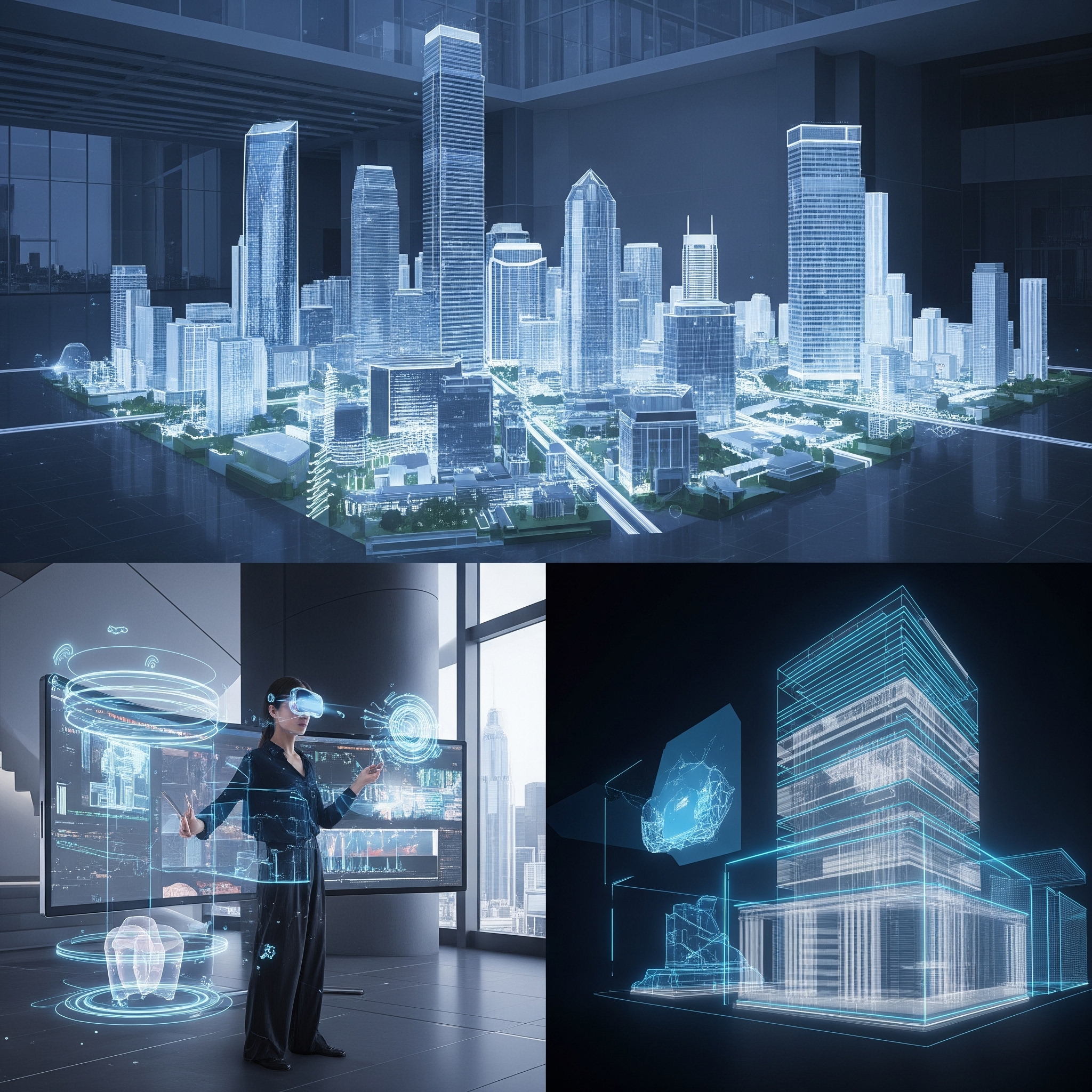 Benefit Realisation: Beyond Enhancing Efficiency
The integration of spatial computing into architecture and construction is not just about enhancing efficiency, it is about redefining how buildings are designed, constructed, and maintained. By leveraging AI, augmented reality (AR), virtual reality (VR), digital twins, and real-time data analytics, spatial computing brings unparalleled precision, sustainability, and cost-effectiveness to the built environment.
From reducing material waste and improving site safety to enabling seamless collaboration and future-proofing buildings, spatial computing offers wide-ranging benefits that will fundamentally reshape the industry.
Reduced Costs & Waste: Maximising Resources and Minimising Budget Overruns
One of the most pressing challenges in construction and architecture is waste, of materials, labour, time, and financial resources. Traditional building processes often involve estimations, adjustments, and costly rework due to design misinterpretations or unexpected site conditions. Spatial computing minimises these inefficiencies by ensuring that designs, material usage, and workflows are optimised before construction begins.
With AI-powered generative design, architects can automatically test thousands of design variations, selecting the most cost-effective and structurally sound option. AR-assisted planning tools allow engineers to pre-visualise installations and ensure material quantities are calculated with extreme accuracy, preventing unnecessary over ordering and waste.
By integrating real-time data from IoT sensors, project managers can monitor material usage on-site, track deliveries, and adjust orders dynamically, ensuring that only necessary resources are used. This not only cuts costs but also supports sustainable construction practices by reducing the industry’s significant carbon footprint.
With fewer errors, optimised resource allocation, and AI-driven efficiencies, spatial computing helps construction firms stay within budget, minimise waste, and maximise profitability.
Improved Safety & Compliance: Reducing On-Site Risks and Meeting Regulatory Standards
Construction sites rank among the most hazardous workplaces, with risks including structural collapses, machinery accidents, and human errors. Ensuring worker safety and regulatory compliance is a top priority, yet traditional safety measures often rely on manual inspections and reactive risk management.
Spatial computing introduces AI-driven risk analysis and real-time safety monitoring, ensuring that hazards are identified before they result in accidents. AR overlays provide on-site workers with step-by-step safety instructions, showing them how to operate machinery, position materials, or navigate complex installations with precision.
Computer vision technology powered by AI can detect unsafe behaviours, environmental risks, or potential equipment malfunctions, triggering automatic alerts for site managers to intervene before an incident occurs. These systems can also track worker fatigue and stress levels, ensuring that safety protocols adapt to real-world conditions rather than relying on static guidelines.
By improving situational awareness, minimising human error, and automating compliance checks, spatial computing creates a safer work environment while ensuring that construction projects meet or exceed regulatory standards.
Seamless Collaboration: Connecting Stakeholders in Real Time
One of the most persistent challenges in construction is miscommunication. With multiple teams, including architects, engineers, project managers, and on-site workers, spread across different locations, project coordination is often fragmented. This leads to delays, misaligned expectations, and costly last-minute changes.
Spatial computing eliminates these disconnects by providing real-time, immersive collaboration tools. Digital twins and VR/AR interfaces allow all stakeholders to interact with the same 3D model, no matter where they are in the world. Architects can make instant modifications to designs, while engineers and construction teams see those changes reflected in real-time AR overlays on-site.
With AI-powered scheduling and workflow optimisation, project managers can adjust timelines dynamically, track progress with precision, and ensure all teams are aligned. Even in international projects, remote site inspections can be conducted in virtual environments, reducing the need for costly and time-consuming travel.
By breaking down communication barriers, spatial computing ensures that every team involved in a project has the same up-to-date information, eliminating delays, errors, and inefficiencies.
Faster Project Approvals: Speeding Up Decision-Making and Reducing Red Tape
Securing approvals for new buildings, renovations, or urban development projects can be a lengthy, bureaucratic process. Governments, city planners, and clients often require multiple rounds of revisions, causing significant delays in project timelines. Spatial computing transforms this process by allowing approvals to happen faster and with greater confidence.
Immersive VR walkthroughs and AR-enhanced site presentations enable decision-makers to experience a project in real scale before construction begins. Instead of reviewing static blueprints, stakeholders can walk through a fully realised digital model, inspect design elements, and provide immediate feedback.
Additionally, AI-powered compliance checks ensure that designs meet building codes, sustainability goals, and safety regulations from the outset. This reduces the risk of rejections and redesigns, allowing projects to move through approval stages with minimal delays.
By giving planners and clients a clearer, more interactive way to evaluate projects, spatial computing streamlines decision-making, bringing projects from concept to reality faster than ever before.
Better Long-Term Building Performance: Enhancing Maintenance and Sustainability
The life of a building doesn’t end once construction is completed, it must be monitored, maintained, and optimised over decades. Traditionally, building maintenance has been reactive, meaning repairs are only performed after an issue has escalated. This leads to higher operational costs, energy inefficiencies, and potential structural failures.
Spatial computing introduces predictive maintenance and AI-driven building management, ensuring proactive upkeep. Digital twins continuously monitor a building’s condition, integrating sensor data from HVAC systems, electrical grids, and structural components. These insights allow facility managers to detect performance inefficiencies, schedule repairs before breakdowns occur, and optimise energy usage.
Additionally, AR-assisted maintenance tools provide technicians with real-time visual guides, reducing repair times and improving accuracy. Instead of manually diagnosing issues, maintenance workers can use spatial computing overlays to see internal systems and faults without invasive inspections.
For sustainable buildings, AI-driven optimisation dynamically adjusts lighting, heating, and cooling systems based on occupancy and environmental conditions, reducing energy waste and lowering carbon footprints.
By embedding spatial computing into long-term building management, architects and developers ensure that structures remain efficient, safe, and sustainable, maximising both operational longevity and environmental responsibility.
Unlocking the Future of Architecture & Construction
The benefits of spatial computing go beyond efficiency and cost savings, they redefine the very foundation of how we design, build, and maintain structures. With AI-driven design, immersive project planning, real-time risk assessment, and predictive maintenance, the industry is shifting towards a smarter, safer, and more sustainable future.
As spatial computing continues to evolve and integrate into the built environment, firms that embrace this technology will lead the way in innovation, efficiency, and future-proofed infrastructure. The era of digitally enhanced, data-driven construction is here, offering a more connected, intelligent, and precise approach to shaping the world around us.
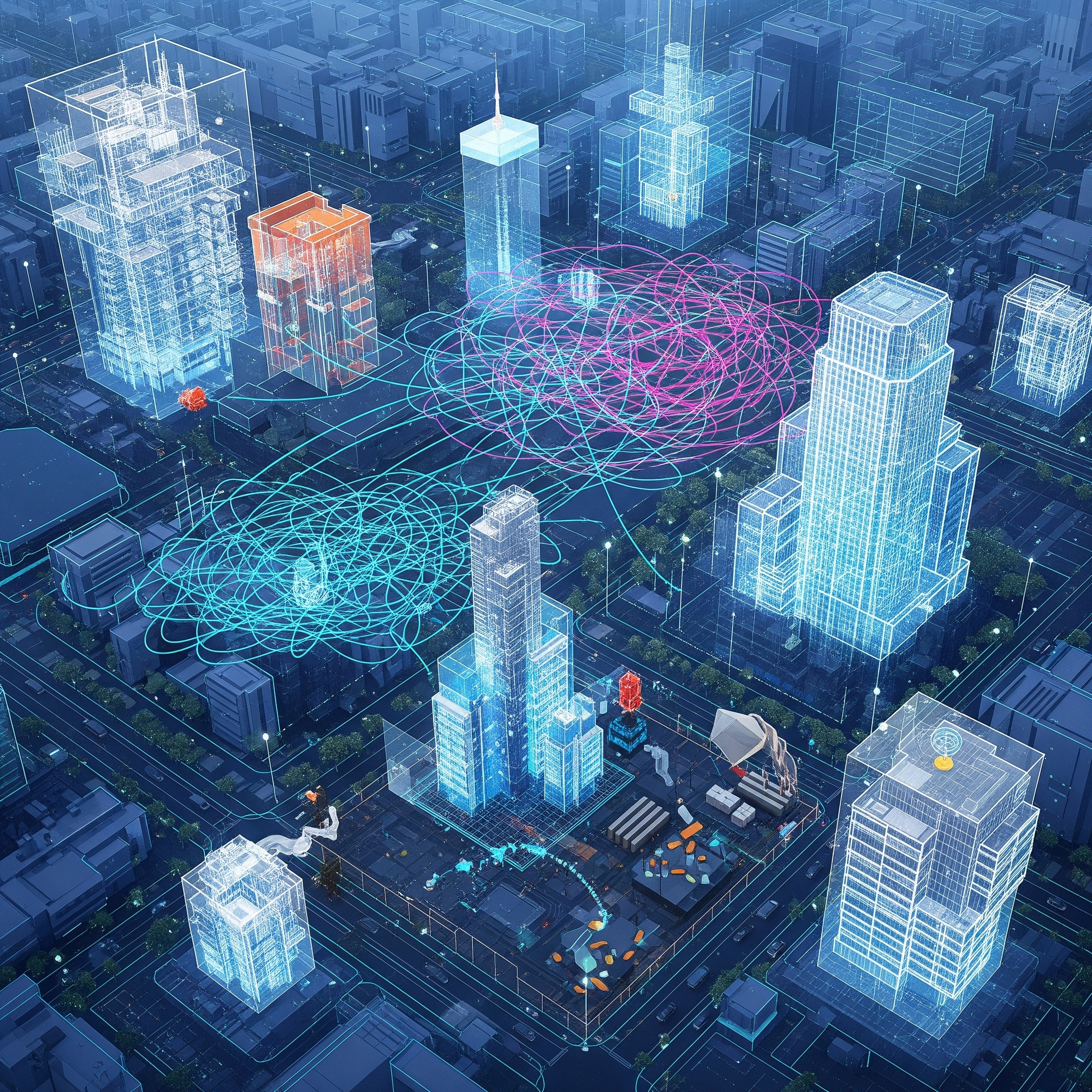 Challenges: The Roadblocks to Adoption
While spatial computing has the potential to transform architecture and construction, widespread adoption is not without obstacles. Integrating AI-driven design, digital twins, augmented reality (AR), and predictive analytics into traditional workflows requires investment, regulatory adaptation, and cultural shifts within the industry.
Many firms remain hesitant due to high initial costs, resistance to change, and a lack of digital infrastructure. Meanwhile, governments and regulatory bodies struggle to keep pace with rapidly evolving technologies, creating uncertainty around compliance and legal frameworks.
To fully unlock the benefits of spatial computing, the industry must overcome these challenges, ensuring that technology is accessible, cost-effective, and seamlessly integrated into architectural and construction practices.
High Initial Investment: The Cost of Innovation
One of the most significant barriers to adoption is the cost of upgrading to spatial computing technologies. Implementing AI-driven design software, real-time digital twins, AR-assisted construction tools, and IoT-enabled building management systems requires significant financial investment in hardware, software, and workforce training.
For smaller firms or companies operating on tight budgets, the expense of transitioning from traditional CAD-based workflows to immersive spatial computing platforms can be daunting. Many businesses hesitate to invest in new technologies without clear, short-term financial returns, even if the long-term gains include reduced material waste, improved efficiency, and lower maintenance costs.
To encourage adoption, industry leaders must advocate for:
- Government incentives and funding programs to support digital transformation in construction and architecture.
- Scalable pricing models that allow firms to adopt spatial computing gradually rather than requiring large upfront investments.
- Collaboration between technology providers and construction firms to ensure that solutions are cost-effective and directly address industry challenges.
Without a strategic investment plan, the financial barriers to entry could slow adoption and limit spatial computing’s potential impact.
Resistance to Change: The Cultural Shift Required
Construction and architecture are industries deeply rooted in tradition. Many firms rely on decades-old workflows, where 2D blueprints, physical models (including Lego models), and manual site inspections are still the norm. This familiarity with conventional methods makes transitioning to fully digital, AI-enhanced workflows challenging.
Many professionals, from senior architects to on-site construction teams, are wary of adopting new technologies that require learning complex software or changing well-established processes. If spatial computing tools are not user-friendly, companies risk low adoption rates, ineffective implementation, and operational disruptions.
To ease this transition, industry leaders must:
- Provide comprehensive training programs that help professionals adapt to digital workflows without disrupting productivity.
- Develop user-friendly interfaces for AI-driven design tools and AR site management systems to ensure seamless adoption.
- Encourage a phased integration approach, allowing firms to gradually adopt spatial computing, rather than overhauling entire processes overnight.
Bridging the gap between traditional expertise and digital transformation will be essential in ensuring that spatial computing becomes an industry-wide standard rather than a niche innovation.
Data Security & Privacy Risks: Protecting Digital Infrastructure
As spatial computing introduces real-time digital twins, AI-driven simulations, and cloud-based collaboration, architecture and construction firms become more reliant on digital data. This shift increases cybersecurity risks, including data breaches, hacking attempts, and intellectual property theft.
A firm’s entire project pipeline, design plans, material specifications, and site operations, could be vulnerable if proper security measures are not in place. Additionally, IoT-connected smart buildings and AI-driven facility management systems require ongoing data collection and processing, raising concerns about privacy, compliance, and ethical data usage.
To protect sensitive project information and maintain trust in digital systems, firms must:
- Implement robust cybersecurity protocols to prevent unauthorised access to digital twins and design models.
- Ensure regulatory compliance with data protection laws, especially when handling AI-driven analytics and cloud-stored project data.
- Educate teams on best practices for cybersecurity, ensuring that both on-site workers and architects understand how to safeguard digital assets.
Without strong security measures, the adoption of spatial computing could expose the industry to cyber threats, financial losses, and legal challenges.
Regulatory Uncertainty: The Need for Updated Policies
The legal frameworks governing architecture and construction have not yet caught up with the capabilities of AI-driven spatial computing. Building codes, safety regulations, and compliance measures were designed for traditional construction practices, meaning there is no clear guidance on how AI-powered decision-making, automated site monitoring, or digital twin-based approvals fit into existing policies.
Many governments and regulatory bodies lack the expertise or agility to update building laws quickly, leading to delays in project approvals and uncertainty around compliance. Questions remain about AI accountability, who is responsible if an AI-generated design fails to meet structural safety standards? Similarly, how should regulatory bodies evaluate AI-driven material optimisation decisions?
To ensure that spatial computing is legally recognised and safely implemented, policymakers and industry leaders must:
- Work together to update building codes to accommodate AI-driven design and predictive analytics.
- Develop clear guidelines for digital twin approvals, allowing cities and planning authorities to assess projects in virtual environments before granting permits.
- Establish accountability structures for AI-generated decisions, ensuring that architects and engineers maintain oversight and responsibility over automated processes.
Without policy adaptation, architecture and construction firms could face roadblocks in securing approvals for AI-enhanced projects, slowing down innovation and progress.
Limited Skilled Workforce: Addressing the Digital Skills Gap
For spatial computing to be fully integrated into the industry, the workforce must possess the necessary digital skills to operate AI-assisted design tools, manage AR site monitoring systems, and interpret predictive analytics. Currently, the shortage of skilled professionals with experience in spatial computing presents a significant challenge.
Many architects and engineers were trained in traditional design methodologies, with limited exposure to AI-driven workflows. Likewise, construction workers and site managers may lack familiarity with AR-assisted project execution tools. Without proper training, firms risk low adoption rates, inefficient implementation, and mismanagement of digital systems.
To bridge the digital skills gap, the industry must:
- Integrate spatial computing into architectural and engineering education programs, ensuring that the next generation of professionals is equipped with digital expertise.
- Offer ongoing training and upskilling initiatives for existing employees, helping them transition into AI-driven workflows.
- Develop intuitive, user-friendly spatial computing platforms, ensuring that complex technologies do not become a barrier to adoption.
By investing in education and workforce development, architecture and construction firms can ensure that spatial computing is embraced as a natural evolution of industry practices, rather than an overwhelming technological shift.
Overcoming the Roadblocks to Build the Future
While the challenges of adopting spatial computing in architecture and construction are real, they are not insurmountable. Through strategic investment, workforce upskilling, regulatory adaptation, and strong cybersecurity measures, the industry can ensure seamless adoption of AI-driven design, immersive project planning, and predictive maintenance technologies.
Firms that recognise and address these roadblocks now will be the ones to lead the future of architecture and construction, building a world that is more efficient, more sustainable, and more connected than ever before.
 What’s Needed for Success : More Than technological Advancement
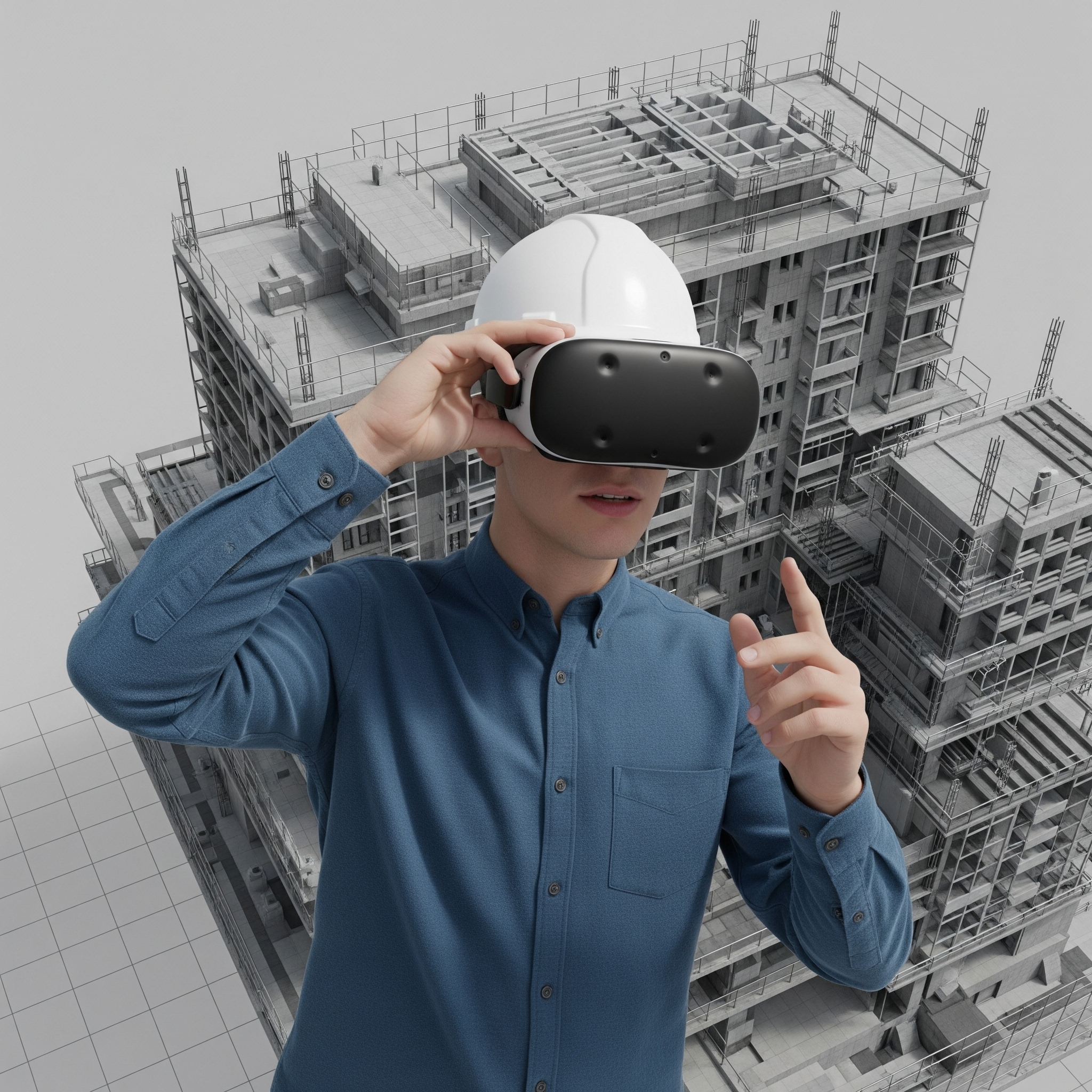
The successful adoption of spatial computing in architecture and construction depends on more than just technological advancements. While AI-driven design, augmented reality (AR) overlays, and digital twin simulations are already proving their value, scaling these innovations across the industry requires strategic investment, regulatory evolution, cross-sector collaboration, and a workforce equipped with the right digital skills.
For spatial computing to become an industry standard rather than a niche innovation, the sector must prioritise five key areas: collaboration, infrastructure, user experience, regulatory adaptation, and workforce development. Without a united effort, the potential of spatial computing risks being underutilised, leaving the industry fragmented between traditional and digital-first practices.
Cross-Industry Collaboration: Aligning Architects, Engineers & AI Developers
No single organisation or sector can successfully integrate spatial computing alone. Architecture and construction require input from multiple stakeholders, including architects, engineers, urban planners, construction firms, AI developers, technology providers, and regulatory bodies. Without a cohesive approach, there is a risk that technologies will be developed in isolation, failing to address real-world industry challenges.
For spatial computing to thrive, it is essential to create shared ecosystems where:
- Architects and AI developers work together to ensure AI-generated designs meet both functional and aesthetic goals.
- Construction firms collaborate with technology providers to develop on-site AR and AI-driven safety solutions tailored to real-world applications.
- City planners and regulatory bodies engage in discussions with tech companies and industry leaders to ensure spatial computing aligns with evolving building codes and compliance measures.
- Universities and research institutions help bridge the knowledge gap by incorporating spatial computing education into architecture and engineering curriculums.
By aligning expertise across industries, spatial computing solutions can be developed to seamlessly integrate into construction workflows, accelerate project efficiency, and drive smarter urban development.
Investment in Infrastructure & Connectivity: Building a Digital-First Industry
For spatial computing to function at scale, architecture and construction must undergo significant infrastructure upgrades. Many firms still rely on outdated IT systems, manual processes, and disconnected project management platforms, making it difficult to implement real-time digital workflows.
A spatially-enabled industry requires:
- High-speed networks and cloud-based AI platforms to ensure that real-time design simulations, AI-driven risk assessments, and digital twins operate seamlessly.
- Edge computing integration to process data-heavy spatial models directly on construction sites without latency issues.
- Standardised digital twin platforms that allow for real-time data exchange between architects, contractors, and urban planners.
- IoT-enabled smart construction sites, where sensors, drones, and automated monitoring systems track material usage, worker safety, and project progress dynamically.
Without investment in digital infrastructure, the adoption of spatial computing will remain limited to select firms rather than becoming a widespread industry transformation.
User-Centric Design: Ensuring Accessibility and Ease of Use
Technology should simplify workflows, not complicate them. One of the biggest barriers to adopting spatial computing is the perception that AI-driven tools and immersive design platforms are overly complex or require extensive training. Many seasoned architects, engineers, and construction managers are hesitant to adopt new technology if it disrupts their existing processes.
For spatial computing to be widely accepted and utilised, it must be:
- Designed with intuitive, user-friendly interfaces that require minimal technical training.
- Accessible on multiple devices, allowing workers to engage with spatial data via AR headsets, mobile devices, or traditional desktop platforms.
- Seamlessly integrated into existing CAD and BIM software, ensuring that firms can gradually transition to spatial computing rather than undergoing a disruptive overhaul.
- Customisable for different industry roles, enabling architects, engineers, construction workers, and city planners to interact with spatial data in a way that suits their expertise and job functions.
By focusing on usability, flexibility, and accessibility, spatial computing can be adopted by a broader audience, making it a practical tool rather than a high-tech novelty.
Regulatory Evolution: Aligning Policy with Innovation
The construction industry operates under strict regulatory frameworks, with building codes, safety regulations, and compliance measures shaping how projects are designed and executed. However, current regulations were created for traditional building methods, meaning AI-assisted design approvals, AR-driven site monitoring, and digital twin-based compliance checks lack clear legal recognition.
To ensure that spatial computing can be legally integrated into architecture and construction, the following regulatory updates are needed:
- AI-generated building designs must be officially recognised in planning and compliance approvals.
- Updated licensing models must allow architects and engineers to collaborate digitally across regions and jurisdictions.
- Digital twin compliance tools must be standardised, ensuring that virtual approvals and AI-driven structural assessments are accepted by planning authorities.
- AI accountability laws must clarify who is responsible if an AI-generated design results in structural failures or safety risks.
Without clear regulatory policies, many firms will hesitate to fully embrace spatial computing, fearing legal complications and compliance challenges.
Workforce Development: Bridging the Digital Skills Gap
Even the most advanced technologies are useless without a skilled workforce to operate them. The architecture and construction industries face a digital skills gap, with many professionals trained in traditional design and construction methods rather than AI-enhanced workflows and immersive digital modelling.
To prepare the workforce for spatial computing adoption, industry leaders must prioritise:
- Education and training initiatives that introduce spatial computing concepts in architecture and engineering degree programmes.
- On-the-job digital upskilling, ensuring that existing professionals can transition from manual processes to AI-driven design and AR-assisted construction.
- Incentivising tech adoption through certification programmes, where architects, engineers, and construction managers gain recognised qualifications in spatial computing.
- Creating hybrid roles, where traditional expertise is combined with AI and digital twin specialisation, ensuring a smoother industry-wide transition.
Without a trained workforce, the adoption of spatial computing will be limited to select firms, rather than becoming a widely accessible industry shift.
Laying the Foundations for a Digital Future
The architecture and construction industries stand at the threshold of a technological revolution. Spatial computing has the potential to eliminate inefficiencies, enhance precision, improve safety, and revolutionise sustainability practices, but achieving this transformation requires more than just technology.
To fully unlock the power of spatial computing, the industry must:
- Foster cross-sector collaboration, ensuring that architects, engineers, AI developers, and regulators work towards a shared vision.
- Invest in digital infrastructure, ensuring that real-time spatial data and AI-driven workflows are accessible industry-wide.
- Make spatial computing intuitive and user-friendly, ensuring widespread adoption without disrupting established workflows.
- Update regulations to reflect modern building practices, ensuring that AI-driven designs and digital twin compliance tools are legally recognised.
- Upskill the workforce, ensuring that AI-enhanced architecture and construction techniques become standard practice, not just an elite skillset.
By addressing these key areas, the architecture and construction industries can fully embrace spatial computing, leading to a more efficient, sustainable, and technologically advanced built environment. The future is not just about building smarter, it’s about transforming the very way we conceive, construct, and manage the world around us.
 Building before a single brick is laid: Living in a Virtual Construction World
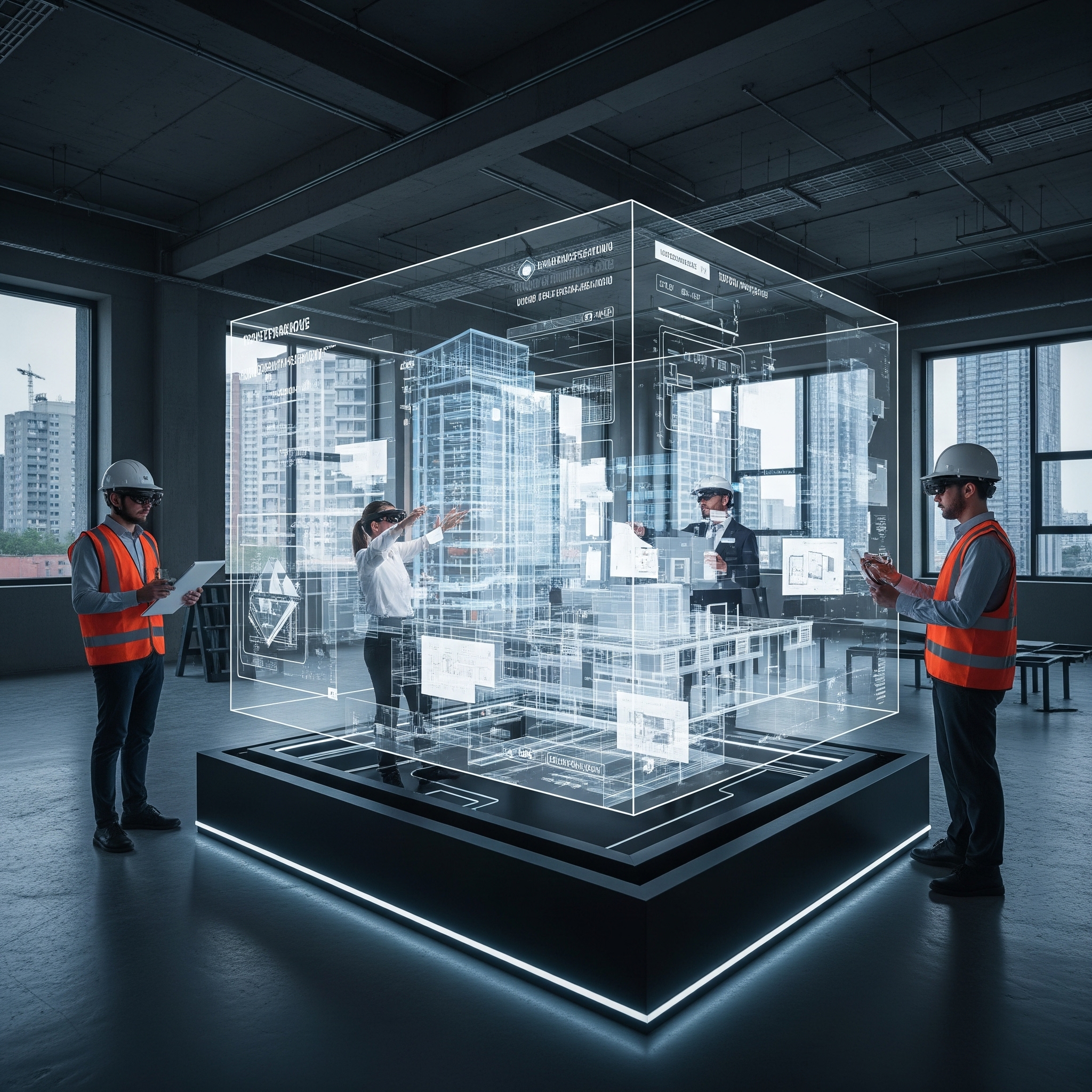
Imagine a world where buildings are no longer just designed and constructed, but simulated, tested, and even inhabited in a fully virtual space before a single material is used. A future where every aspect of the built environment, from individual homes to entire cities, is dynamically generated, optimised, and managed through an immersive digital ecosystem. This is the Hyper-Future of architecture and construction, a world in which spatial computing, AI, robotics, and real-time digital twins merge to create a seamless, intelligent, and sustainable construction ecosystem.
In this world, architects and engineers no longer work with static blueprints or CAD models, instead, they step inside a living, breathing virtual representation of their designs. Entire teams, from city planners to on-site workers, collaborate inside shared, interactive digital environments, making real-time modifications that instantly translate into AI-optimised construction sequences. Physical prototypes are obsolete because every component is tested virtually, in physics-accurate simulations, allowing materials, energy efficiency, and structural integrity to be refined before anything is built.
AI-Generated Cities: A New Era of Dynamic Urban Planning
The cities of the future will no longer be rigidly planned years in advance, they will be organically generated by AI, evolving in real-time based on population trends, environmental conditions, and sustainability goals. Need new housing to accommodate an influx of residents? AI-driven spatial simulations will predict the best locations, design optimised structures, and simulate how new developments interact with the existing environment. Entire neighbourhoods could be pre-built in virtual space, allowing urban planners and residents to walk through and experience their future communities before any physical construction takes place.
Every urban structure will be embedded with self-healing smart materials, powered by nanotechnology that can detect micro-fractures and autonomously repair damage. Roads and infrastructure will be self-adapting, capable of rerouting traffic dynamically based on AI-driven simulations of congestion patterns. Instead of demolishing outdated buildings, AI-assisted nano-machines will reconfigure existing materials at the molecular level, enabling structures to reshape and repurpose themselves over time.
Infinite Construction in a Digital-First World
Construction sites as we know them today will cease to exist. Instead of manually assembling components, autonomous robotic swarms will build structures in real-time, guided by AI-precision algorithms that allow for zero waste and minimal environmental impact. 3D-printed, AI-optimised smart materials will adapt to climate conditions, absorbing and releasing heat efficiently to reduce energy consumption.
In this future, construction workers will no longer be tied to dangerous, physically demanding environments. Instead, they will operate haptic-controlled robotic systems remotely, with AR and VR interfaces giving them full control over robotic arms, drone swarms, and self-assembling infrastructure. A single individual could oversee an entire construction site from a remote location, ensuring safety and precision while allowing for greater workforce flexibility.
Buildings will be constructed using modular, AI-fabricated components that automatically fit together on-site. Advanced quantum computing models will calculate the most efficient structural configurations, optimising for wind loads, seismic activity, and even the personal preferences of future occupants.
The Death of Blueprints: Real-Time Adaptive Spaces
The concept of fixed blueprints will become obsolete as spatial computing enables buildings to be entirely dynamic. Instead of designing rigid layouts, architects will create adaptable spaces that shift and transform based on real-time human needs.
Imagine a residential building that adjusts itself based on who is living in it. Walls that shift to create new rooms, furniture that emerges from the floor, and windows that adjust their tint and positioning to optimise natural light intake. Homes will learn from their occupants, adapting in real time to their routines, preferences, and health conditions.
Public spaces will follow suit. Airports, shopping malls, and entertainment hubs will self-configure their layouts depending on foot traffic patterns and visitor flow, creating a world where architecture is fluid, intelligent, and entirely user-centric.
The End of Demolition: Circular Construction and Regenerative Materials
One of the biggest waste contributors in today’s construction industry is demolition. In the Hyper-Future, tearing down buildings will no longer be necessary. Structures will be designed from the start to be disassembled, repurposed, or transformed into something new.
Self-reconfiguring materials will allow buildings to evolve rather than be demolished. If a skyscraper is no longer needed in one city, it could be digitally deconstructed and reassembled elsewhere with minimal waste. AI-assisted bioengineering will lead to organic building materials that self-regenerate, mimicking the properties of living organisms, allowing structures to heal, reshape, and even grow over time.
A Future Without Construction Delays
Today’s construction industry suffers from delays due to weather, labour shortages, and unexpected site conditions. In the Hyper-Future, none of these will matter. AI simulations will predict and adapt to weather conditions, ensuring that robotic construction units continue working efficiently in all climates. Construction supply chains will be automated and self-regulating, ensuring that materials arrive exactly when needed, eliminating supply bottlenecks.
Perhaps most significantly, projects that once took years to complete could be finished in days. Instead of multi-year infrastructure projects, entire cities could be constructed in months, allowing societies to respond instantly to natural disasters, population shifts, and economic demands.
Living in a World Without Construction Barriers
Spatial computing, combined with AI, robotics, and quantum design models, will erase the traditional boundaries between digital planning and physical construction. The line between architecture, engineering, and urban planning will blur, leading to a world where the built environment is as fluid and adaptable as digital code.
This Hyper-Future will not just change how we build, it will redefine how we live. Cities will be living, evolving entities, continuously optimising themselves based on human behaviour, environmental needs, and resource availability. Architecture will no longer be static, it will be intelligent, self-regulating, and seamlessly integrated into the digital and physical fabric of daily life.
The future of architecture and construction is not just about smarter buildings, it’s about creating an entirely new way to experience, adapt, and interact with the world around us.
A Digital Future: Removing Traditional Limitations
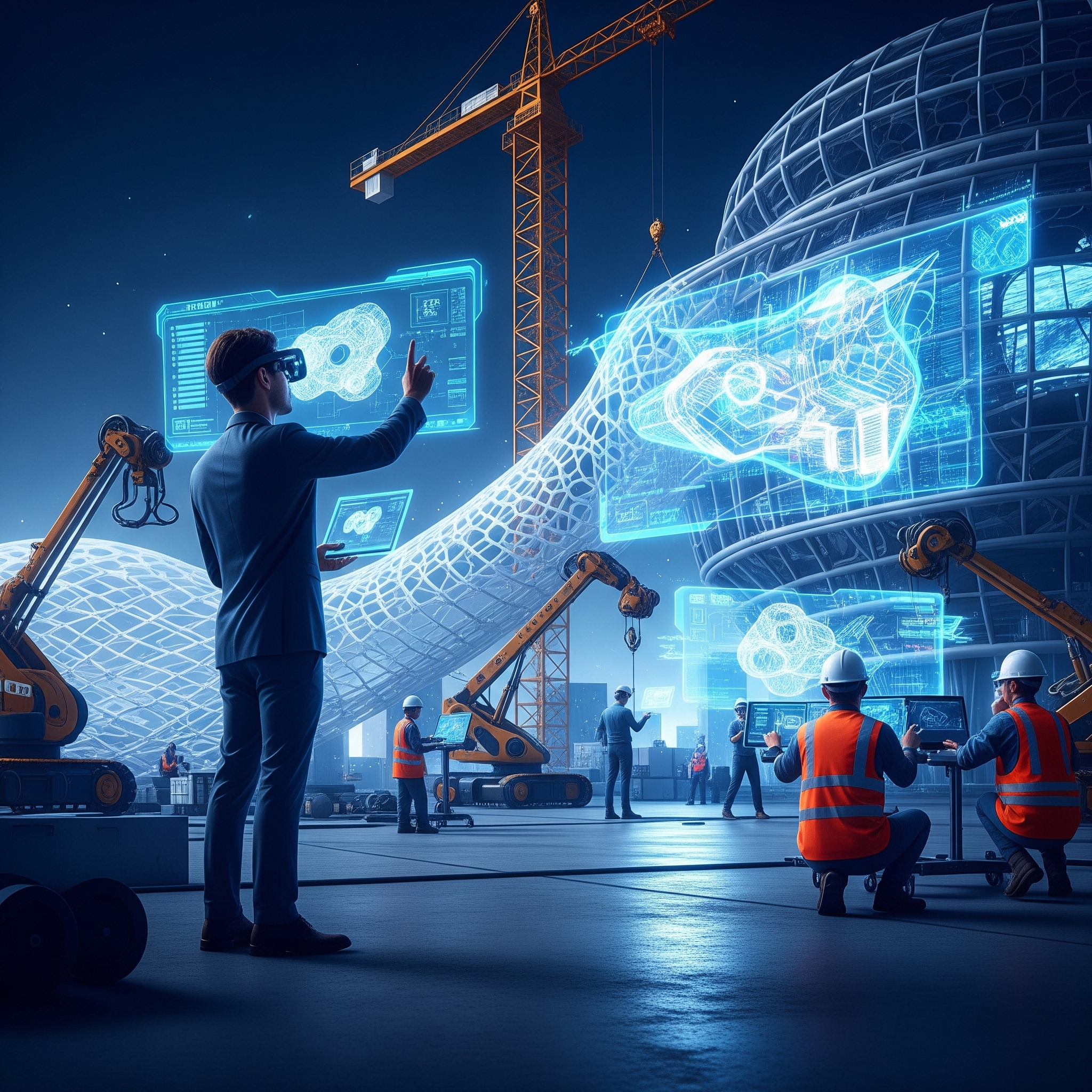
The architecture and construction industries stand on the brink of a monumental transformation. As spatial computing, AI, digital twins, and autonomous construction technologies converge, they are reshaping how we design, build, and experience the built environment. The traditional limitations of blueprints, static models, and manual construction processes are being replaced by real-time collaboration, immersive simulations, and AI-optimised workflows, ushering in a new era of precision, efficiency, and adaptability.
With AI-driven generative design, architects can explore thousands of optimised building configurations in seconds, ensuring that structures are functional, sustainable, and cost-effective before physical work begins. Immersive virtual environments allow clients, engineers, and city planners to walk through spaces before they are built, refining layouts, materials, and energy efficiencies with unprecedented accuracy. Meanwhile, construction sites are evolving into fully digitised, AI-assisted ecosystems, where robotics, augmented reality (AR), and predictive analytics reduce errors, improve safety, and streamline project timelines.
Beyond the immediate efficiencies, spatial computing is laying the foundation for a hyper-connected, intelligent built environment. Smart buildings will become self-optimising ecosystems, continuously adjusting energy consumption, maintenance schedules, and structural configurations based on real-time data. Future cities will no longer be static, they will be dynamic, AI-regulated entities that evolve based on population needs, environmental conditions, and urban planning innovations.
However, this revolution is not without its challenges. High initial investment costs, resistance to change, regulatory uncertainties, and cybersecurity risks must be addressed through strategic collaboration between architects, engineers, technology providers, and policymakers. Workforce upskilling is critical, a new generation of digitally fluent professionals must emerge, equipped to operate AI-enhanced design tools, immersive site management platforms, and predictive maintenance systems.
Looking even further ahead, the Hyper-Future of architecture and construction may lead us to a world where cities are designed in virtual space, assembled autonomously, and dynamically adapt to human needs. The boundaries between physical and digital construction will dissolve, allowing for fully reconfigurable infrastructure, self-healing materials, and AI-regulated urban environments.
The firms that embrace spatial computing today will lead the industry tomorrow. Those who hesitate to innovate risk being left behind in a world where efficiency, sustainability, and intelligence define the next generation of architecture and construction.
The future is not just about building better, it’s about reimagining what’s possible. Now is the time to embrace spatial computing and lay the foundations for a world where design, construction, and technology exist in perfect harmony.
The question is no longer if spatial computing will reshape architecture and construction, it’s how quickly we can embrace the change.
Are we ready to build the future?
Transforming the built environment: Architecture and Construction
Merging physical and digital worlds: Blending Reality
Redefining patient care and diagnostics: Spatial and Healthcare