Do we still need humans in space? Absolutely, as human presence is crucial for decision-making, exploration, and adapting to unpredictable situations in real-time.
“The last astronaut to set foot on alien soil did so in silence, watched only by machines.”
For centuries, exploration has been defined by human endurance, courage, and ingenuity. From ocean voyages to lunar landings, our drive to push beyond the horizon has been deeply rooted in our identity. But now, as we set our sights on the deepest reaches of the universe, we must confront a fundamental shift in what exploration means. With AI, robotics, and bio-digital advancements rapidly evolving, the fundamental question becomes:
Do we still need to send humans into deep space, or can technology explore the galaxy for us?
The convergence of human intelligence with artificial cognition, quantum systems, and digital consciousness presents a radical alternative to traditional space travel. Instead of sending fragile, biological humans on perilous interstellar journeys, we may soon reach a point where exploration does not require a physical presence at all.
The future of space exploration may not be defined by flesh and blood, but by intelligence without physical limits, a new kind of explorer that does not tire, does not fear, and does not need to return home.
What is the Future of Galactic Exploration?
In The Next Evolution, Galactic Exploration is moving from a story of "flesh and rockets" to a story of Cognitive Continuity. This shift is defined by three pillars:
Digital Minds: Sending digitised human consciousnesses that require no life support and can endure light-year voyages without aging.
Intelligent Presence: Using immersive interfaces and haptic feedback to experience alien worlds in real-time without physical risk.
Autonomous Discovery: Leveraging AI systems that think and adapt with the fluidity of a mind rather than the rigidity of a program.
By decoupling the mind from the body, we transition from being "biological passengers" to "architects of discovery."
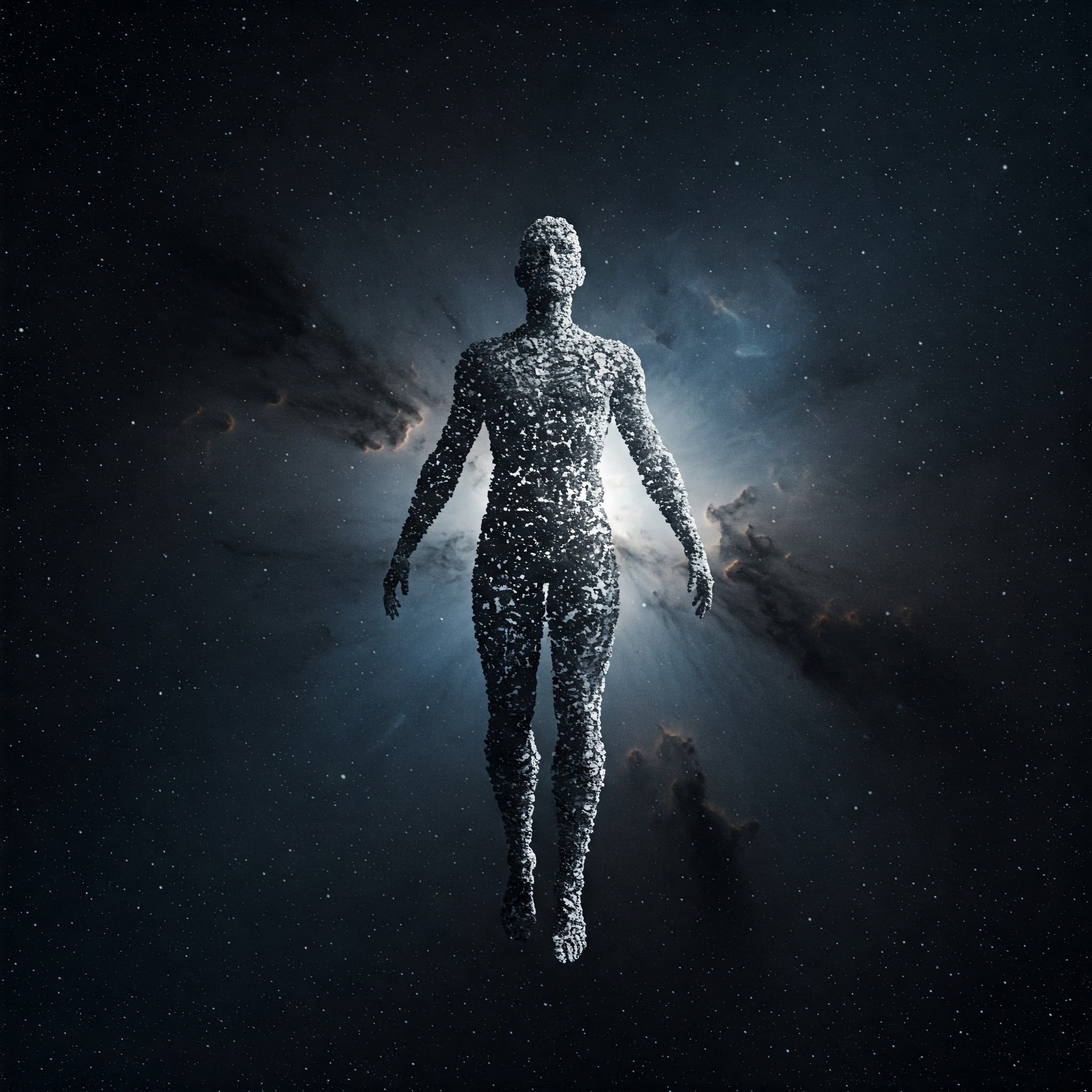 A Post-Physical Humanity: Expanding Beyond Earth
What if… abandoning the body breaks something essential?
If we leave behind the biological form, do we also lose the grounding that makes us human? Our senses, emotions, and relationships are rooted in the physical. In becoming data, do we lose the depth of the human experience, the struggle, the vulnerability, the visceral awe that gives exploration its meaning?
For as long as we have gazed into the night sky, space has represented the ultimate frontier, a realm of infinite possibility and unfathomable distance. Yet, the dream of venturing beyond Earth has always been shackled by the fragility of the human body. Our biology, remarkable as it is, was never designed for the vacuum of space, nor the searing radiation, nor the isolation of a journey that spans light-years.
But that reality is beginning to shift.
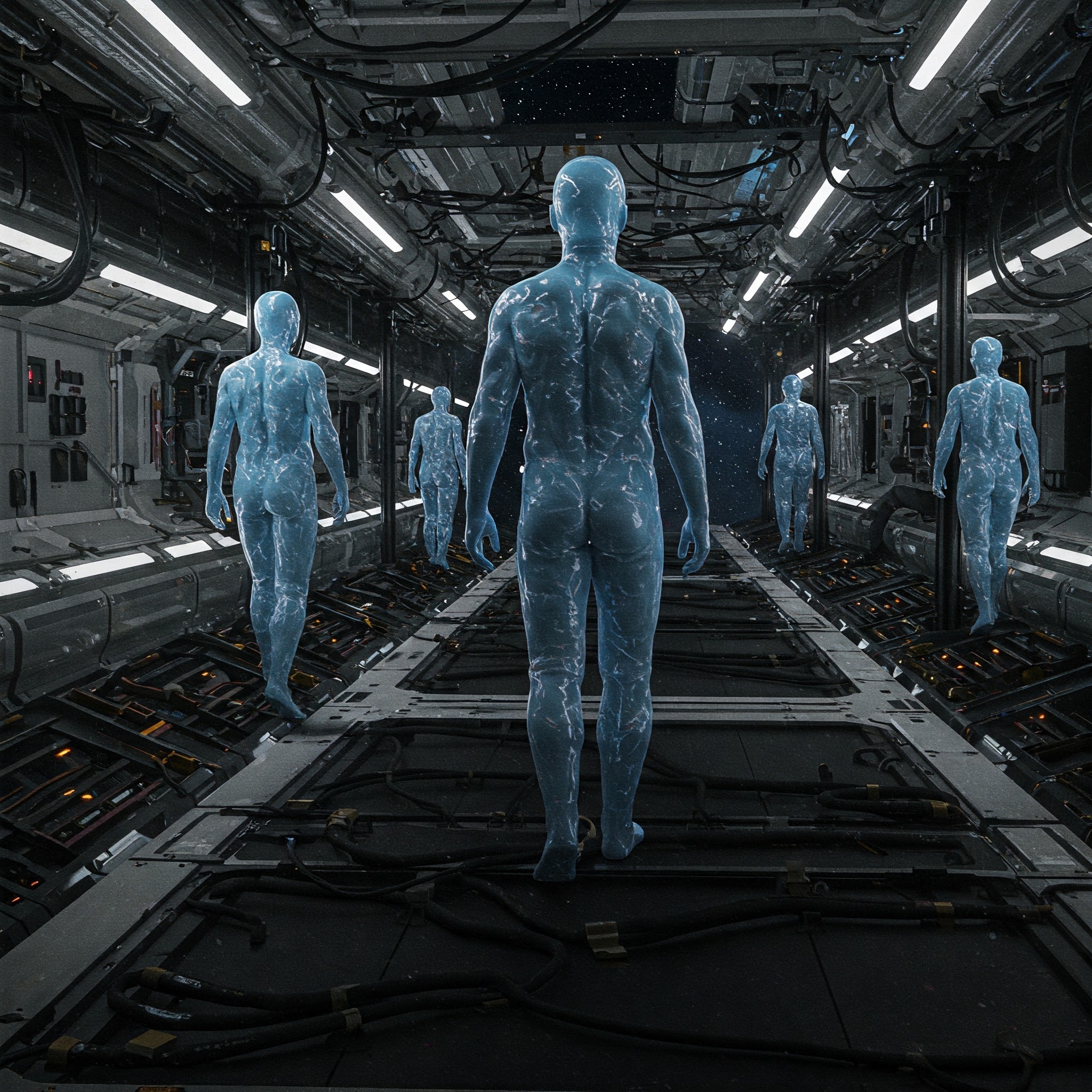
The convergence of artificial intelligence, bio-digital interfaces, quantum computation, and immersive extended reality is opening an unprecedented pathway forward. No longer must we rely on flesh and blood to carry our dreams beyond the stars. A new form of human presence is emerging, one that is not defined by carbon and bone, but by data, consciousness, and resilience beyond the physical.
We may soon stand at the precipice of a post-physical future, where to be human is not to inhabit a body, but to embody thought, awareness, and agency across digital and cosmic dimensions.
What does this mean for our place in the universe? It suggests a profound transformation in the way we explore, survive, and expand. The age of rockets carrying fragile lifeforms may give way to something entirely new: the era of intelligent presence without physical limits.
Such a future invites a reimagining of everything we understand about exploration. The stars may no longer be reached with ships and suits, but with signals and software. In doing so, we may finally escape the limitations that have kept us grounded, not just physically, but conceptually.
By separating consciousness from biological constraints, humanity’s ability to explore space would become limitless.
Reflection: What if expanding beyond the body allows us to unlock the deepest potential of the human mind, free to explore without fear, limitation, or end?
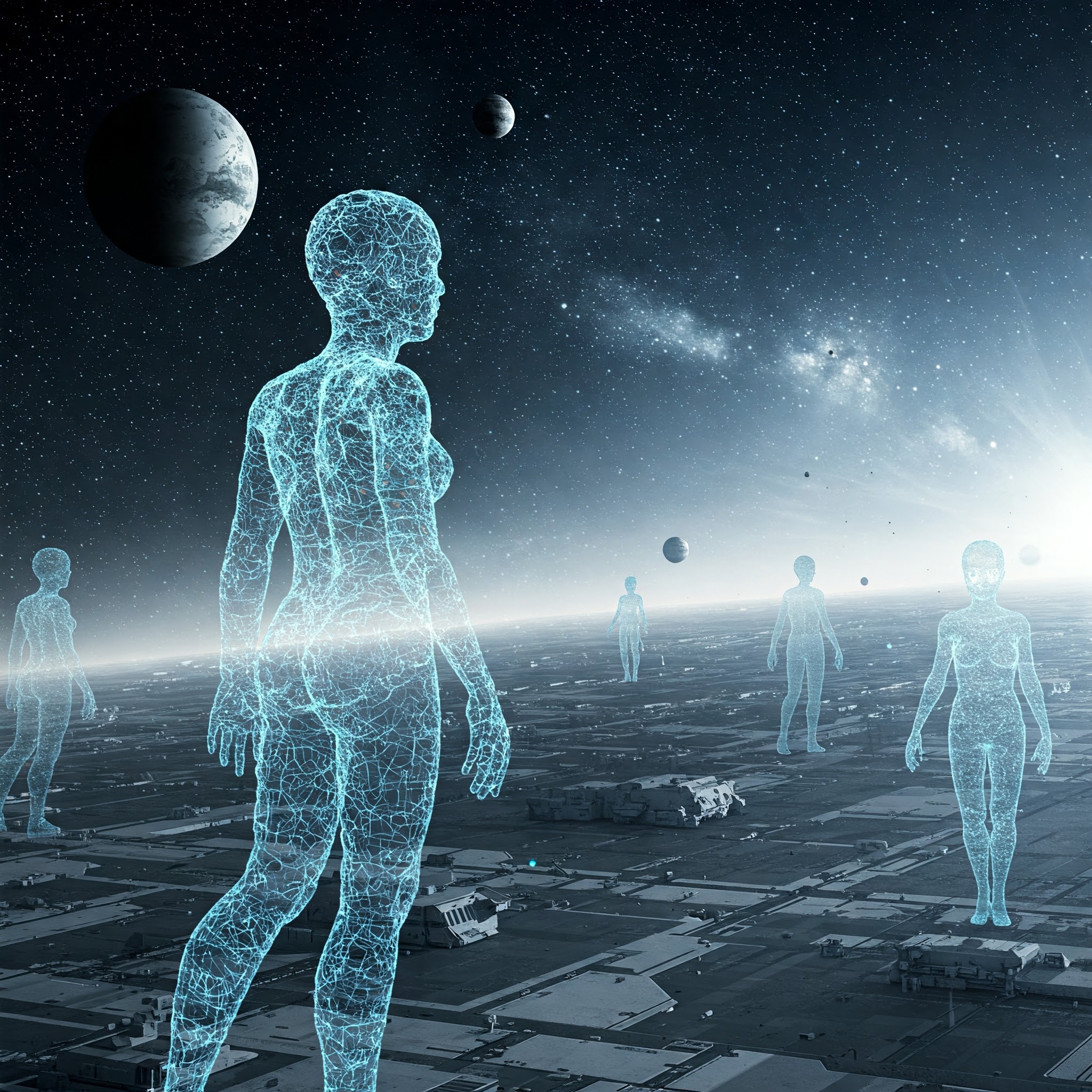 Human Exploration: Digital Minds not Physical Bodies
What if… disembodied exploration feels empty?
Digital minds may travel farther, but can they feel discovery? Without physical presence, will exploration become clinical, transactional, devoid of wonder? Could the very absence of risk and discomfort rob us of the transformative power that exploration has always promised?
Throughout history, exploration has demanded courage, endurance, and a willingness to face the unknown. From the earliest ocean voyages to the Apollo missions, human exploration has been a physical pursuit, one that pushes the body to its limits and tests the mind against isolation, risk, and the vast indifference of nature. It has required humans who possess physical and mental traits beyond the norm, not everyone is equal.
Yet space, in its raw form, is not a realm that welcomes our biology. It is a place of silence and radiation, of infinite distances and crushing emptiness. The further we push beyond Earth’s gravity, the more apparent it becomes: our current form is ill-suited for the cosmos.
But what if exploration no longer required the body at all?
The next stage of human exploration may not be undertaken by astronauts in suits, but by consciousnesses riding streams of data, by intelligences decoupled from skin and bone, venturing outward in forms better adapted to the rigours of space.
- Digital Minds as the Vanguard of Discovery – In a future where human thought can be digitised, replicated, or uploaded, we may send minds instead of bodies. These explorers would not need life support, would feel no fatigue, and could travel for centuries without fear of ageing or death. They would be us, yet free of the burdens that have always constrained us.
- Self-Governing, AI-Driven Starships – Intelligent spacecraft, guided by advanced AI, could chart the stars without intervention. These vessels, fuelled by autonomy and powered by quantum systems, would act as living agents of discovery, capable of learning, adapting, and responding to the unknown with the fluidity of mind rather than the rigidity of programming.
- Worlds Built of Thought, Not Matter – Instead of terraforming hostile planets to mimic Earth, we may craft virtual worlds where human consciousness flourishes in entirely synthetic ecosystems. These realities, unconstrained by physics, could offer experiences richer and more varied than any planetary surface could provide.
In such a future, human presence in space would no longer mean biological survival, it would mean cognitive continuity. Our minds could journey far beyond the reach of our bodies, experiencing the universe not as passengers in ships, but as intelligent agents in forms yet to be imagined.
Exploration, once the domain of the physical, is poised to become an act of pure awareness, and one where we do not automatically try and make whatever we discover into something fit for our physical human form. But another fundamental question then arises - what is the purpose of exploration into the farthest reaches of space? What if vast resources are discovered - how could we use these? There will always be a physical aspect of space exploration, we just need to decide how best to split the physical and mental aspects.
Reflection: Could our greatest discoveries come not from where we go physically, but from how far we extend our consciousness into the unknown?
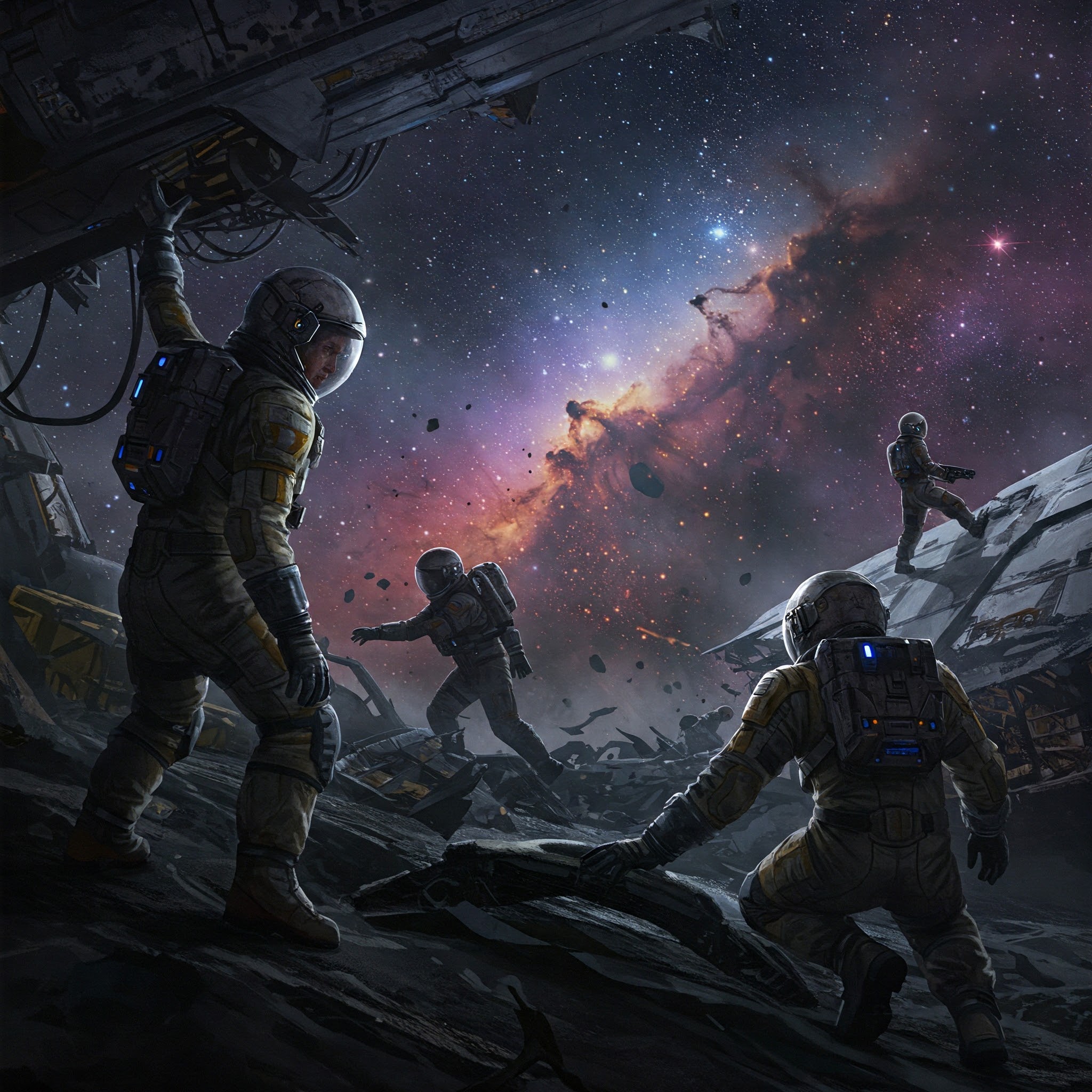 Inevitability? Evolving or Avoiding?
What if… the march toward post-humanity isn’t inevitable, but escapist?
Maybe we're not evolving, we’re avoiding. Avoiding the cost, the danger, the pain of space. But great human achievements have always required hardship. What if our destiny isn't to digitise and transcend, but to confront the cosmos with flesh and will intact?
Human ambition has always collided with the boundaries of biology. From the earliest forays into space, we have confronted the stark reality that our bodies, miraculous as they are, are simply not designed for the cosmos. Radiation sickens us. Weightlessness weakens us. Isolation unravels the psyche. We carry the Earth within us, its gravity, its rhythms, its requirements, and the moment we depart from it, our biology begins to fail. This tether has more impact than we think and drives us to always look at shaping things to fit our needs.
No matter how advanced our technology becomes, these physical truths remain immutable, unless we change what it means to be human.
And that transformation is no longer theoretical. It is already unfolding.
- Longevity Without Limitation – A biological human cannot endure a voyage that spans generations. But a digitised consciousness, a mind preserved as data, could. Such an entity could persist indefinitely, adapting to new conditions, learning over centuries, and never succumbing to age, illness, or environmental threats.
- Efficiency of Existence – Keeping humans alive in space is an exercise in engineering complexity. Every breath, every calorie, every drop of water must be generated, recycled, and protected. In contrast, a digital explorer needs only power and processing, energy that could be harvested from stars, asteroids, or cosmic radiation itself.
- Unbounded Expansion – As we are, humanity’s reach into the universe is painfully finite. We inch outward, held back by our need to sleep, to eat, to breathe. But if intelligence can be detached from biology, scaled infinitely, and sent across the stars in beams of light or aboard self-sustaining systems, then our presence can ripple outward, no longer constrained by distance or time.
What was once the realm of fiction is fast becoming the architecture of tomorrow. The path forward is not a matter of possibility, it is one of inevitability.
We are on the verge of transcending biology not because it is convenient, but because it is the only way to survive, and thrive, in a universe that was never meant for flesh.
But where will we focus our intellectual energies? In this exploration using non-physical human forms? Or in developing technology to carry and sustain the physical form - cryogenics / food replicators / medical enhancements / artificial gravity? Or will we do both as it’s our inherent nature to keep evolving and innovating.
Reflection: If evolution is the story of overcoming limitation, is our transition into digital existence simply the next great leap?
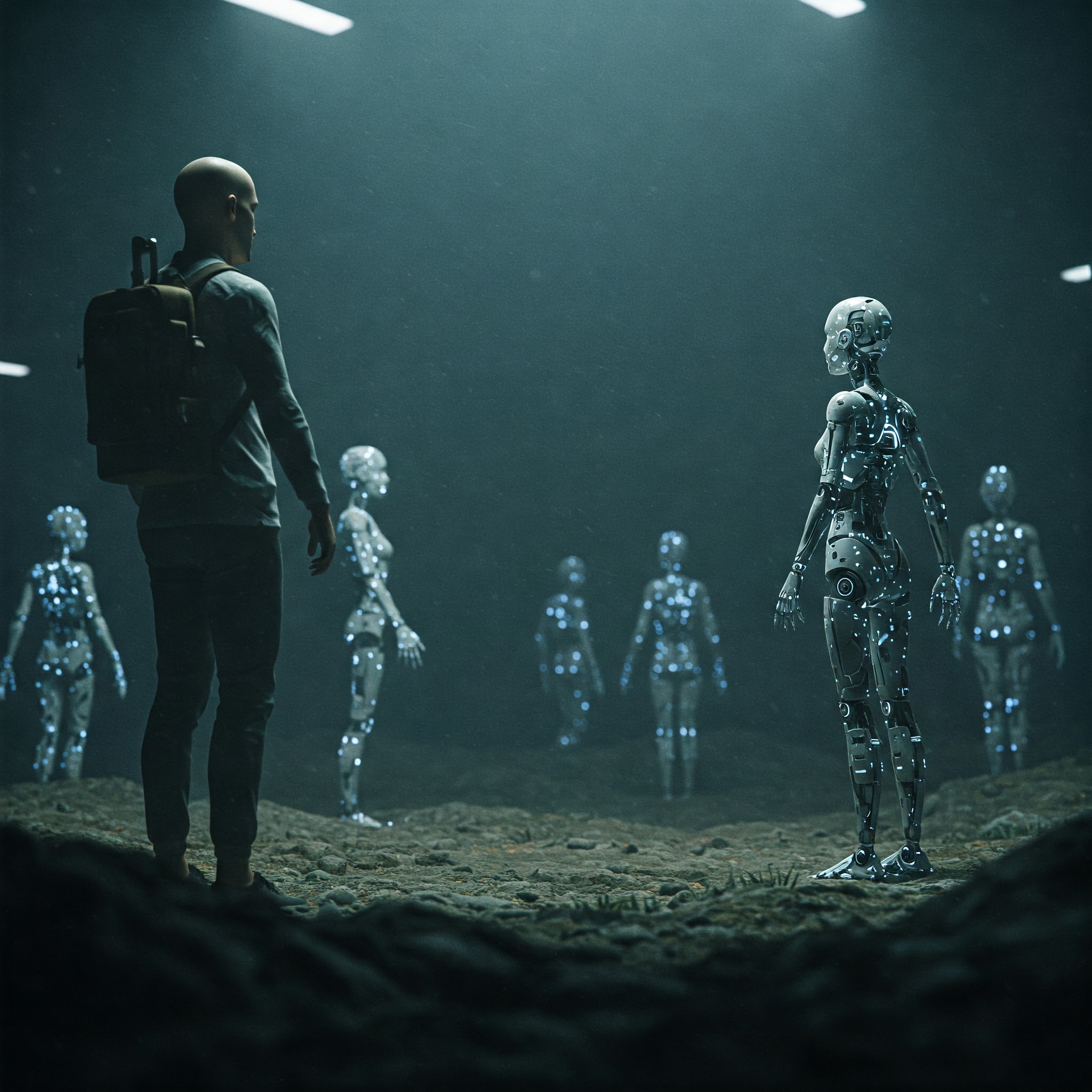 When do we Cease to be us? The Ethical and Philosophical Implications
What if… digital explorers aren’t human at all?
If consciousness is uploaded, altered, and sustained artificially, at what point does it cease to be us? Are these entities truly extensions of humanity, or the beginning of something else entirely? Are we exploring space, or surrendering it to successors we can no longer claim as kin?
As we stand on the cusp of a post-physical future, the questions before us are no longer simply technological, they are existential. If human consciousness can outlive the body, if the mind can voyage without form, what does it truly mean to be human?
In a world where exploration no longer demands lungs or limbs, but rather thought and code, we are compelled to reconsider the very definition of life, identity, and personhood.
- Are Digital Explorers Still Human? – If a consciousness, once bound to a brain, is now housed in circuitry, thinking, remembering, dreaming, does it retain its humanity? Is it still a person, with rights, with purpose, with belonging? Or does it become something other, an echo of the original self, or a new kind of being altogether?
As AI and robotic technology advance, they may surpass humans in every practical aspect of space exploration. Unlike us, AI does not need food, water, oxygen, or sleep. It does not suffer from radiation poisoning, isolation, or muscle degradation. If we have the capability to explore the universe without risking human lives, is it ethical to send people at all?
- The Value of Human Presence – Some argue that exploration is not just about efficiency but about human experience and discovery. Does AI exploration carry the same weight and significance?
- The Justification of Risk – Historically, human explorers have always taken risks, from polar expeditions to early space missions. Should we accept risk as a necessary part of expanding our presence in the universe?
- The Morality of AI vs. Human Exploration – If AI becomes fully autonomous, does it have a right to explore in our place? Or do we owe it to ourselves to maintain a human presence in space, even at great cost?
These questions will shape the next era of space exploration. Do we continue to send humans into the unknown, or do we allow AI to take the lead?
If humanity steps back from physical exploration, we must confront complex ethical, cultural, and philosophical challenges.
- The loss of human agency – Would a future where AI dominates space exploration mean that human decision-making is gradually erased from cosmic history?
- The right to explore – If space is conquered by artificial intelligence rather than humans, does this shift who owns knowledge, power, and control over new frontiers?
- The potential for digital human explorers – If our minds could be uploaded into synthetic beings or virtual realities, does this count as human space travel, or is it something else entirely?
As we move towards a reality where machines lead the charge into space, the role of humanity itself is being redefined. These questions do not yield answers, yet they must be asked.
For this transition, monumental in its scope, will not only reshape the human experience; it will redefine the moral compass by which we navigate it. It will challenge the legal, social, and spiritual frameworks that have governed us for millennia.
To move beyond the body is not just a leap in technology, it is a leap in meaning. If we are no longer tied to the physical world, we must ask: what holds us together? What connects us, grounds us, defines us?
Without these answers, we risk becoming untethered, not just from Earth, but from ourselves.
Reflection: Might rethinking what it means to be human not diminish our identity, but expand it in ways we never imagined possible?
 Preparing for a Non-Biological Future: The Practicalities
What if… digital existence proves less stable than the body?
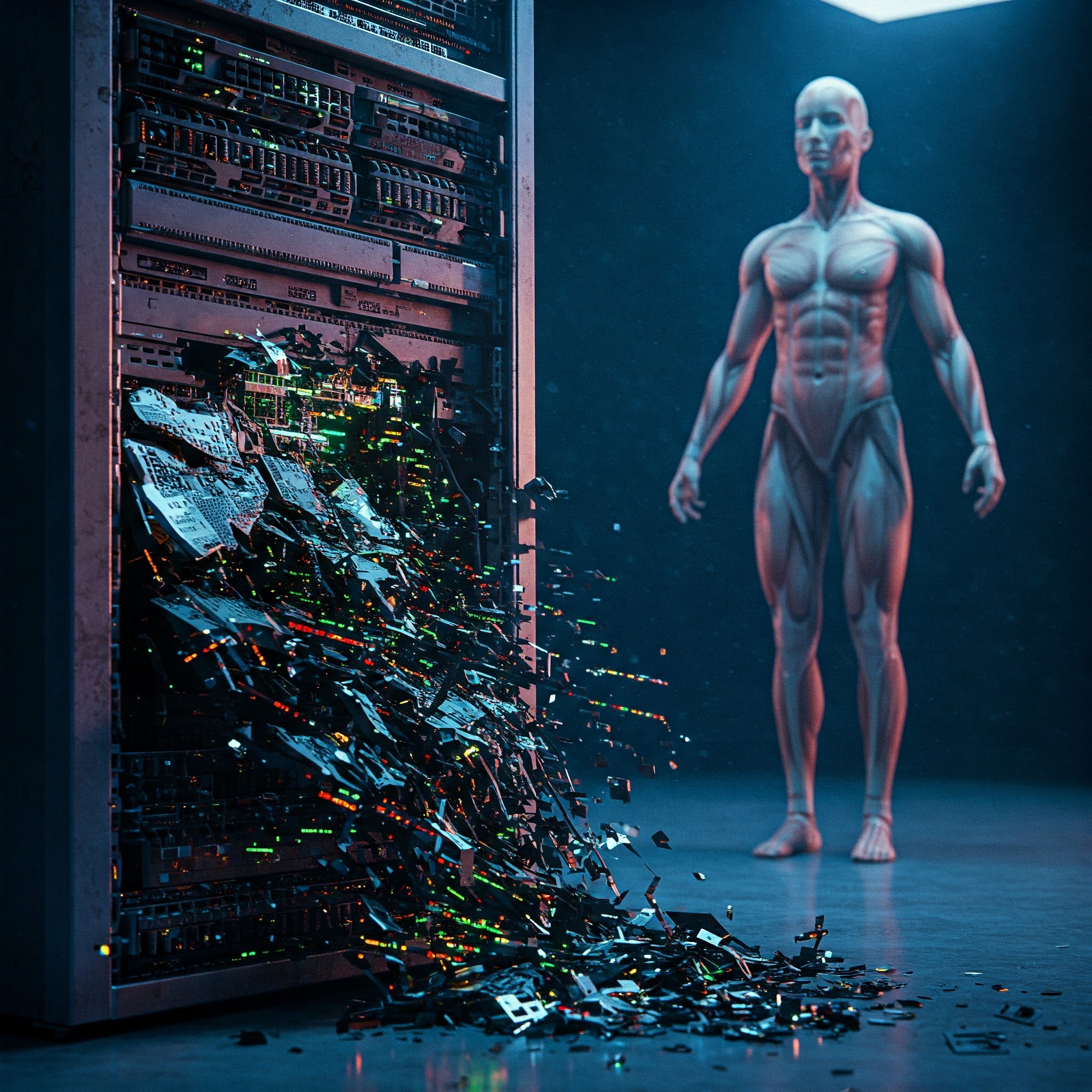
Data degrades. Systems fail. Code can be corrupted, manipulated, erased. Unlike the body, resilient, self-healing, anchored in biology, digital consciousness may be far more fragile. What happens when your sense of self depends on a server that crashes or a backup that fails?
While the vision of a post-physical humanity is awe-inspiring, it does not arrive without immense complication. To shed the body and sustain the mind as data is not a simple act of invention, it is a transformation that demands profound preparation, care, and foresight.
The transition to a non-biological form of existence is as perilous as it is promising. It requires us to not only master the technology, but to build the systems, safeguards, and philosophies that will make such a future stable and humane. We know from experience that what humans build can, and will, break so how can we create technology that we trust will never fail?
- The Integrity of Consciousness – If our minds are to be preserved digitally, how do we protect them from corruption, loss, or manipulation? Data can be copied, altered, even erased. A consciousness, once uploaded, may be vulnerable in ways the brain never was. Who safeguards the sanctity of self when identity becomes software?
- Legal and Political Recognition – What becomes of personhood in the digital age? Can a non-physical being hold citizenship, own property, vote, or inherit? If one’s presence resides in a server orbiting a distant moon or scattered across stellar systems, how do nations respond? The law must evolve to recognise forms of existence that have no precedent.
- The Psychological Leap – For all our advances, we are still creatures of flesh, wired to see, to touch, to feel gravity beneath our feet. Can we truly adapt to a life without a body? Will minds, set adrift in digital eternity, remain sane, centred, and human in any meaningful sense? The shift to non-biological existence is not merely technical, it is emotional, psychological, and profoundly disorienting.
To prepare for such a future is to anticipate more than infrastructure, it is to confront what it means to be alive, to be sovereign, and to be safe in a world where the body no longer anchors the self.
This journey will not be one of machines alone, but of philosophy, legislation, and mental resilience. For if we fail to design this new future with care, we may find ourselves lost in it, eternal, yet unmoored.
Reflection: What if building a digital future forces us to become more deliberate, ethical, and unified in how we define and protect personhood?
 Humans in Space: We Aren’t Designed for Space
What if… enduring hardship is precisely what makes exploration worthwhile?
The very reason space captures our imagination is because it's hard. To conquer it biologically is a testament to resilience. If we remove the difficulty, strip away the risk, discomfort, and endurance, do we also strip away the meaning?
For all our engineering marvels and technological triumphs, space remains one of the most unforgiving environments ever confronted by human ambition. It is a realm shaped by silence, distance, and extremes, one that was never designed to cradle our understanding of life.
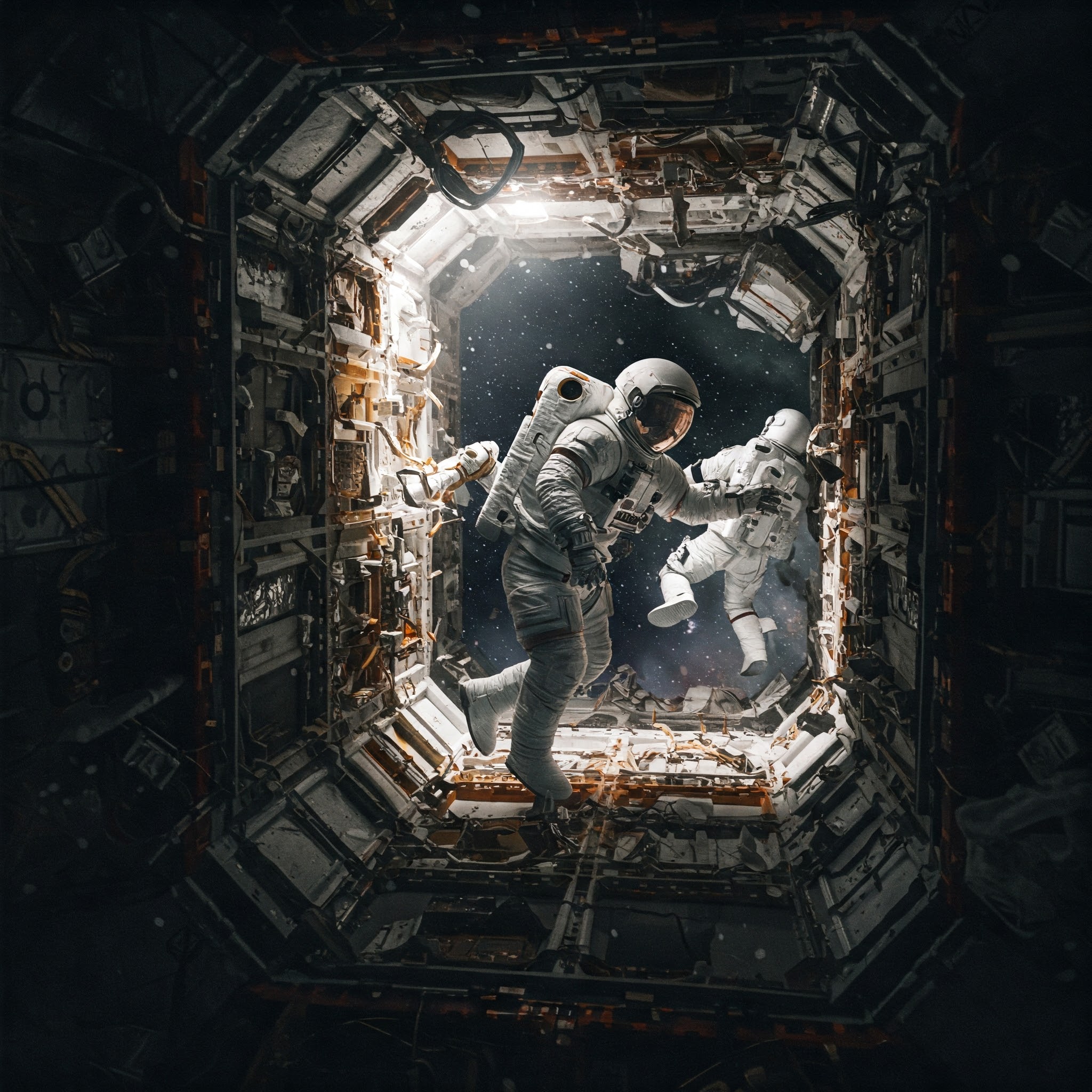
When a human being leaves Earth, they leave behind more than gravity, they step outside the protection of an entire planetary ecosystem. Inside a spacecraft, the body begins a quiet, invisible transformation. Without the gentle pull of Earth, muscles begin to wither. Bones lose density. Fluids migrate, pressing against the eyes and brain, distorting vision and balance. The longer one remains suspended in microgravity, the more the body forgets the rhythms it evolved to depend upon.
Beyond the physiological, there is the isolation.
Space is not just far in terms of miles, but in meaning. It separates the individual from the pulse of humanity, family, weather, community, nature. The International Space Station orbits just a few hundred kilometres above Earth, and already the psychological toll is profound. Now imagine Mars: a world months away, with no possibility of a quick return, and every message delayed by minutes. The silence grows louder the farther one travels.
Radiation presents an even more insidious threat.
Without Earth’s magnetic field to shield them, astronauts are bathed in a steady stream of cosmic rays and solar particles. These invisible forces slice through tissue and DNA, increasing the risk of cancer, cognitive damage, and other health issues that we still only partially understand. Unlike microgravity, there is no simple countermeasure for radiation, only imperfect shielding and limited exposure.
Even survival depends on systems that must work flawlessly.
Oxygen, water, power, waste, everything must be recycled and accounted for. A simple mechanical failure in deep space could become fatal in a matter of hours. Medical emergencies pose an even greater dilemma; there is no hospital in orbit, and no rescue team within reach.
And then there is the matter of cost.
Human spaceflight remains one of the most expensive scientific endeavours in existence. Every launch is a gamble with life, money, and time. When robotic explorers can accomplish more for less, the rationale for putting people on board becomes an ethical and economic question.
Yet we persist. Because despite the danger, despite the weight of every challenge, we are still drawn to push beyond the edge of the map.
Reflection: Could the very fragility of the human body be what makes our continued efforts to explore space so profound—and so worth preserving?
 Breaking the Chains: Engineering the Human Body
What if… engineering around biology disconnects us from being human?
We may create artificial gravity, radiation-proof skin, and genetically modified spacefarers, but at what point do we stop being us? What if our desire to survive space reshapes us so completely that we become alien to ourselves? And yet, for every obstacle the cosmos throws in our path, human ingenuity pushes back.
We have never accepted limitation as destiny. The same challenges that once made space seem uninhabitable are now catalysts for bold innovation, each hardship forcing a question: What if we could change not just the machine, but the human?
Consider gravity, or the absence of it.
For decades, we accepted the degradation of muscle and bone as the cost of orbit. But what if we could build motion into stillness? Concepts for rotating habitats, massive, slowly spinning rings that simulate gravity through centrifugal force, are no longer sketches in science fiction. Engineers now test the physics in small-scale prototypes, imagining life aboard stations where walking feels natural and the body remembers Earth.
Radiation, too, is being met head-on.
New materials, layered composites, hydrogen-rich polymers, magnetic field generators, are designed not just to reflect or absorb particles, but to bend space itself around a vessel, creating protective cocoons. Some envision integrating these shields into wearable suits or even embedding radiation resistance at the cellular level through genetic modification. The body, like the ship, could one day be its own line of defence.
Minds trained to explore are being fortified by machines that think and feel in parallel.
Artificial intelligence, once a tool for automation, is evolving into a co-pilot, an adaptive presence that can monitor health, anticipate failure, and simulate human conversation when real voices are too far away. For astronauts facing the crushing isolation of interplanetary missions, these AI companions offer not just efficiency, but emotional continuity, a reminder that they are not entirely alone in the void.
Even the fragility of flesh is being reconsidered.
Advances in bioengineering hint at a future where the human body itself might be reimagined for space: enhanced immune systems, bones strengthened against loss, cells tweaked to tolerate radiation, or even new forms of hybridised biology designed for the extremes of other worlds. It's no longer unthinkable that humanity's next great evolution may be one of deliberate design.
Every solution is a thread in a larger weave, a tapestry of technologies, disciplines, and philosophies that, together, are slowly untethering us from the planet that shaped us. The constraints of space travel are not vanishing, but they are yielding, one breakthrough at a time.
The question is no longer whether humans can survive in space. It’s how far we’re willing to go to ensure we do.
Reflection: What if transcending physical limits doesn’t erase who we are, but shows us who we could become?
 The True Cost of Sending Humans: The Logistical and Economic Hurdles
What if… we measure cost too narrowly?
Yes, sending humans is expensive. But how do you price inspiration, cultural legacy, or the spark a single image, like Earthrise, can ignite across generations? What if the true cost of not sending humans is the slow erosion of our collective imagination?
In the quiet glow of launch control, every decision carries the financial weight of millions, and sometimes billions. Sending a human being into space isn’t just an engineering feat; it is an immense logistical ballet, choreographed with unforgiving precision and financed with staggering sums. Behind every mission patch is a ledger, and behind every countdown, a question: Is it worth it?
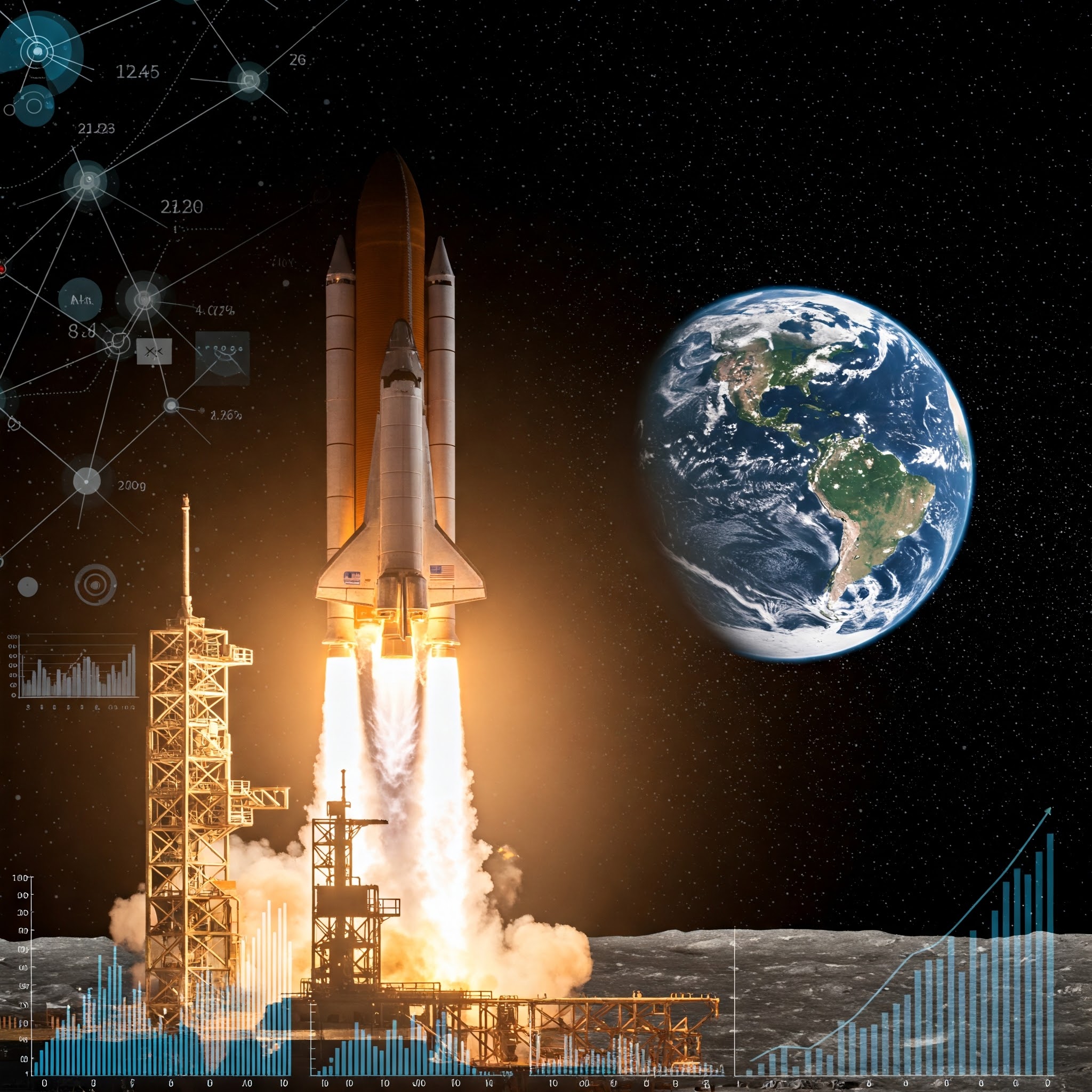
Launching anything into space is expensive. Launching life, delicate, demanding, and constantly in need, multiplies that cost exponentially. Every kilogram of cargo must be lifted out of Earth’s gravity well, each gram of oxygen and drop of water meticulously calculated. A human mission requires far more than propulsion; it demands food systems, life support, temperature regulation, radiation shielding, medical supplies, and fail-safes upon fail-safes. A single human round-trip to the Moon costs hundreds of millions. A crewed mission to Mars could reach into the tens of billions.
Then there’s the supply chain, one that stretches not across borders, but across worlds. Spare parts, power, communication arrays, emergency contingencies, none of it can be delivered on short notice. Resupply missions to the International Space Station take months to plan and execute, and it’s only 400 kilometres above Earth. Mars, at its closest, is more than 200 times farther away. There is no margin for error.
The complexity compounds with time and distance. The longer we ask humans to survive off-world, the more we must simulate a functioning ecosystem: not just air and water, but psychological safety, autonomy, and adaptability. Each variable introduces cost and risk. Redundancy is required because failure is unthinkable.
And while robotic missions operate on solar panels and silicon nerves, humans come with fragility, and unions, and insurance, and irreplaceable lives. When a rover fails, it’s a setback. When a human mission fails, it’s a tragedy. That emotional weight factors into every calculation.
There is also the matter of opportunity cost. For the price of sending a small crew to Mars, we could deploy hundreds of robotic probes to the moons of Jupiter, map the atmospheres of exoplanets, or build telescopes capable of peering into the origins of time. Robotics, increasingly autonomous and versatile, now accomplish feats once thought to require human intuition. Why risk lives and wealth when machines can go farther, faster, and for less?
Yet for all these rational arguments, we continue to send people, not just because of what they do, but because of what they symbolise. A human footprint on alien soil resonates beyond science. It speaks to our identity, our courage, our willingness to risk in pursuit of the unknown.
Still, as costs soar and technologies evolve, we are forced to confront a hard truth: the greatest obstacle to human space exploration may not be physics or biology, but economics.
Reflection: Can we place a value on the inspiration sparked by seeing a human face where no human has gone before?
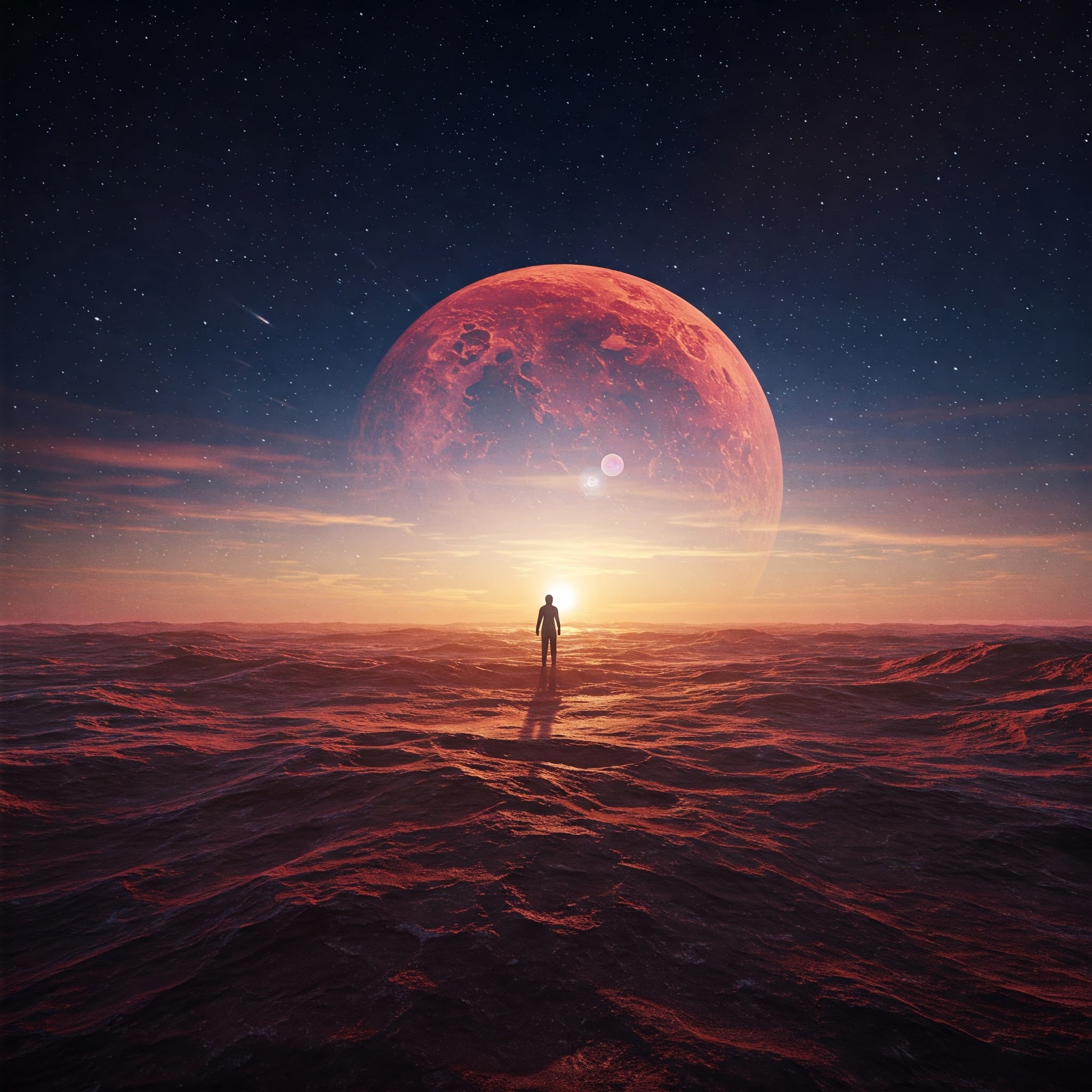 Does Presence Matter? A Universe Explored by Mind, not Body
What if… presence really does matter?
A probe can relay data. An AI can analyse. But it cannot stand in silence on a distant world and feel the chill of its wind. What if something vital is lost when no human eyes ever witness the stars from alien soil?
For centuries, exploration has meant presence. A ship sails, a boot touches new soil, a flag is planted. The body goes where the mind seeks. But that paradigm is shifting. In the age of accelerating intelligence and seamless connectivity, the mind is beginning to decouple from the flesh, and space, once the domain of daring astronauts, is increasingly becoming a frontier shaped by cognition, not corporeality.
Already, robotic explorers outnumber humans in space by orders of magnitude. They’ve wandered the Martian deserts, descended through the clouds of Venus, skimmed the rings of Saturn, and pierced the veil of interstellar space. Where we cannot survive, they endure. Where we falter, they persist. And now, with the rise of artificial intelligence and autonomous systems, their capabilities no longer feel like proxies, they feel like extensions.
Picture a mission where no one boards the spacecraft, yet every sensory detail streams back in real time. A rover's mechanical eyes become our own. A drone's whirring flight is felt in our palms through haptic feedback. A robotic arm brushing alien soil delivers not just data, but sensation. The explorer becomes a hybrid: human curiosity driving machine action, intelligence expanded through silicon and signal.
The mind no longer waits for the body to arrive. It observes, interprets, commands. High-speed communication networks and immersive interfaces make it possible to be virtually present on other worlds without ever leaving Earth. Remote presence, once a technological novelty, is now a philosophical shift: exploration without occupation, experience without risk.
And as AI grows more sophisticated, it can go even further than human explorers might imagine. It can analyse in the moment, make decisions without delay, uncover patterns hidden in chaos. It doesn’t sleep, doesn’t tire, and doesn’t forget. In the vacuum of space, it is the perfect emissary, not limited by oxygen or emotion, but still guided by the human desire to know.
This isn’t a surrender of the dream. It’s an evolution of it. The stars still call us, but the way we answer may be less about planting flags and more about expanding consciousness. We may never walk the icy cliffs of Europa, but we may see through the eyes of a machine that does. And in that vision, something deeply human persists: our unrelenting need to reach beyond ourselves.
Perhaps the future of space exploration is not one of heroic voyages, but of neural networks and digital avatars, minds, untethered, roaming the stars.
Reflection: Might our ability to experience distant worlds through digital consciousness be the greatest expression of human imagination yet?
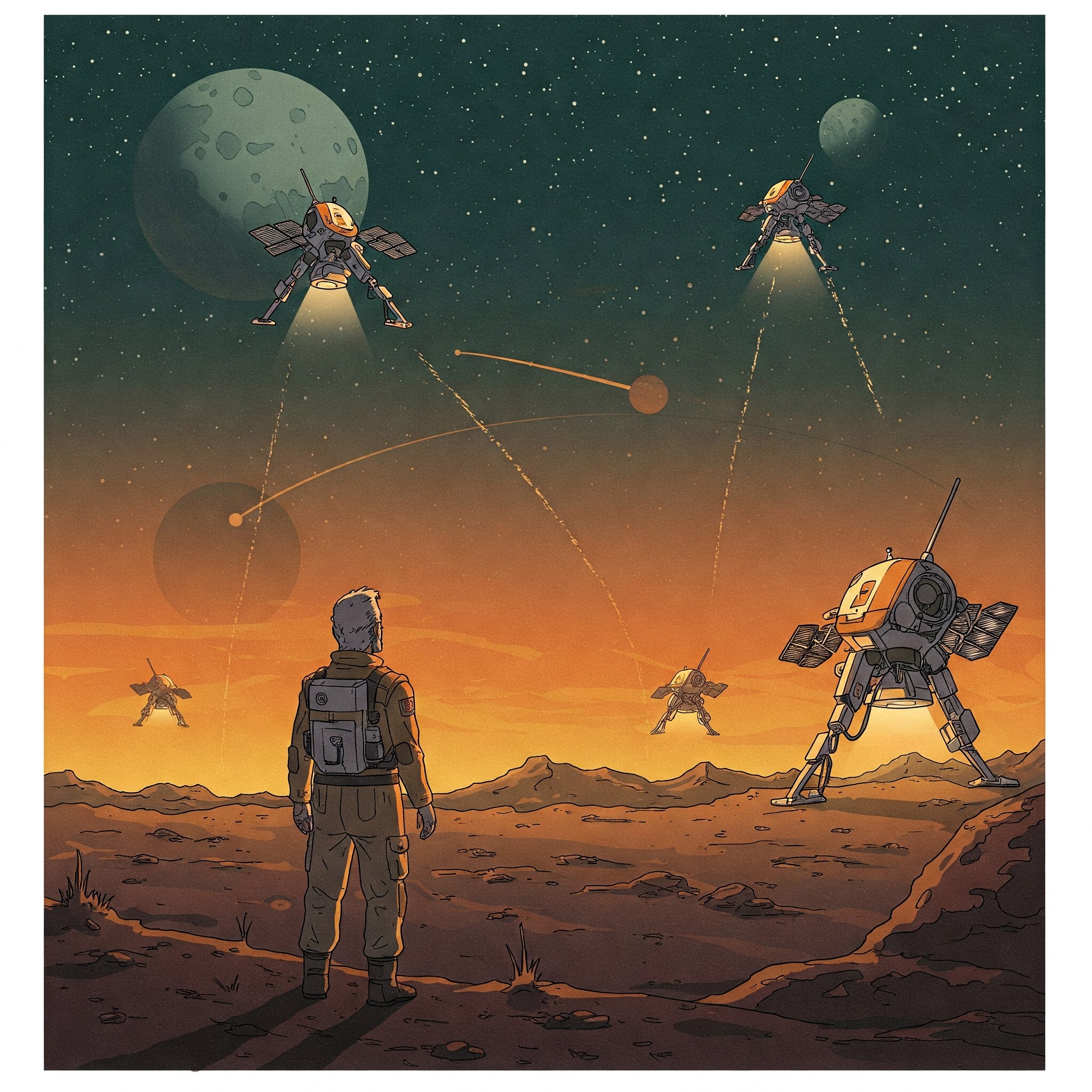 Letting go of the Explorer’s Identity: The Psychological Shift
What if… we’re not ready to give it up?
The explorer is more than a function, it’s a symbol of human aspiration. If we outsource that identity to machines, do we risk forgetting who we are? What if no amount of digital presence can replace the narrative power of a person stepping into the unknown?
For generations, the image of the explorer has loomed large in our collective imagination. Cloaked in bravery and burdened with uncertainty, the explorer is the one who leaves the familiar behind to chase the horizon. In the age of sail, it was the captain peering over uncharted seas. In the space age, it was the astronaut framed by the Earthrise, standing at the edge of the void. Exploration has never been just about where we go, it has been about who we become in going.
But now, as we begin to send machines in our place, machines that see further, think faster, and endure longer, we are faced with a profound psychological reckoning. What does it mean to explore if we are not the ones doing the walking, breathing, or witnessing? Can discovery still be ours if our fingerprints are not on the rock, our eyes not gazing at the alien horizon?
Letting go of the physical explorer’s identity is not a failure of courage. It is the maturation of it. And yet, it’s not without emotional cost. The myth of the explorer has always been deeply personal: the moment of stepping onto a new world, the weight of a flag in hand, the echo of human breath inside the helmet. These moments aren’t just milestones in science, they are milestones in meaning. To remove the human form from these moments is to rewrite the mythology of exploration itself.
The shift is already underway. AI-driven telescopes scan the skies while autonomous rovers comb the Martian soil. And as these machines grow smarter, more perceptive, more self-directed, the role of the human shrinks, from participant to programmer, from presence to proxy. We no longer climb the mountain. We send something that climbs better than we ever could.
For some, this feels like a betrayal of the human spirit, a relinquishment of the very trait that made us reach for the stars in the first place. For others, it is the next stage of our evolution: an expansion of the explorer’s identity from something physical to something conceptual, from flesh and bone to mind and will.
But perhaps the most difficult truth is this: space does not care whether we are there or not. It offers no preference for boots or bots. The meaning we assign to exploration is entirely our own. And in that lies the freedom, and the burden, to redefine what exploration means in an age where presence is no longer physical.
To let go of the explorer’s identity is not to stop exploring. It is to accept that we may no longer be the heroes of the journey, but its architects. And in doing so, we may uncover something even more enduring than footprints, an idea of humanity that transcends the body, and reaches into forever.
Reflection: What if letting go of the traditional explorer allows us to redefine heroism, not as physical endurance, but as the courage to evolve?
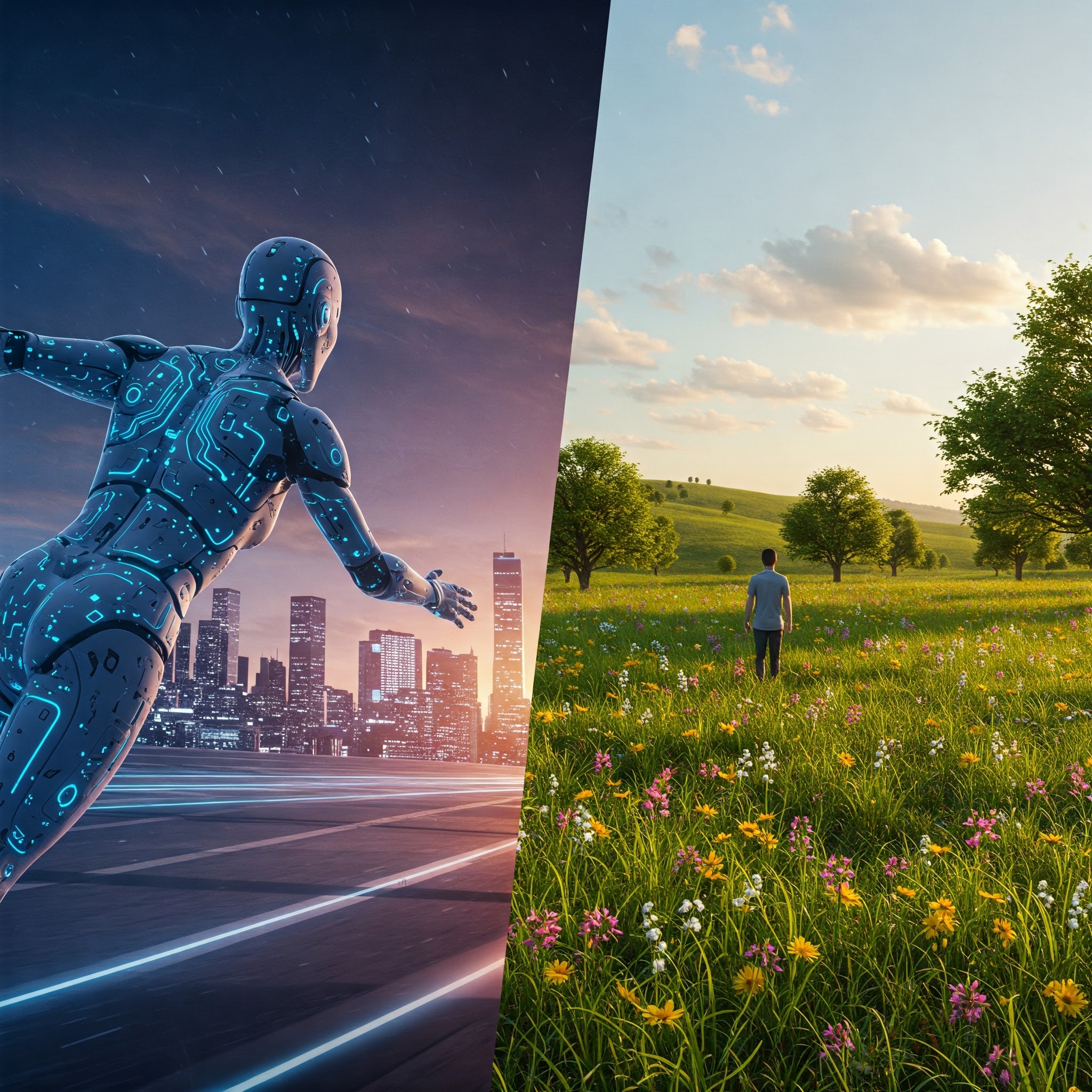 Autonomous Discovery: The Speed of AI vs. The Limitations of Humans
What if… faster doesn’t mean better?
Autonomous systems can scan planets in seconds, but do they care what they find? What if discovery is not just about knowledge, but about the emotional, cultural, and philosophical transformations that only a human being can undergo?
Imagine a spacecraft hurtling through interstellar space, its destination a star system no human has ever seen. There are no astronauts aboard, no life support systems, no need for rest or reassurance. Instead, its core hums with quantum processors, its senses tuned to radiation, magnetism, motion. It doesn't wait for instructions. It learns. It adapts. It decides.
This is not the future. It is becoming the present.
As artificial intelligence evolves, we are witnessing a paradigm shift in the way discovery unfolds. Traditional exploration relied on human presence, not just physically, but intellectually. Every rover movement, every course correction, every data packet sent back to Earth required time, attention, and a chain of human command. But technology changes that equation. It introduces a new kind of speed, not measured in propulsion or travel distance, but in cognition.
Autonomous systems can observe a phenomenon, interpret it, compare it with vast data archives, and react, instantly. They do not need to sleep, to deliberate, or to wait for signals from home. They do not hesitate when facing the unknown. A swarm of intelligent probes, acting as a single distributed mind, can traverse the complex terrain of an alien moon, map it in real time, and coordinate their discoveries with other probes light-years away. It’s not just faster. It’s fundamentally different.
In contrast, human exploration is always gated by biology and bandwidth. Our minds are powerful, but slow compared to machines. Our bodies require protection, sustenance, and recovery. We are inspired by wonder, but often humbled by distance. Communication delays make deep-space interaction cumbersome. On Mars, it can take twenty minutes for a message to reach Earth, and another twenty for a response. In the age of technology, twenty minutes is an eternity.
And yet, it’s not just about efficiency. It’s about scale. A single human mission may cost billions and take years to prepare. A network of autonomous probes can be deployed en masse, scattering across the galaxy like digital spores, each learning from the others, evolving as they go. They don’t just follow paths - they create them - they don’t just seek data - they synthesise understanding.
Still, we must ask: if machines are doing the discovering, are we still the explorers? If an AI stumbles upon a breathtaking planetary system, untouched, radiant, full of secrets, does the wonder still belong to us? The answer depends not on who is present, but on who is aware. If we are the ones who imagined, designed, and unleashed the minds that explore in our place, then perhaps the journey is still ours, even if our bodies never leave the ground.
Autonomous discovery doesn't mean the end of human involvement. It means a redrawing of the boundary between human intention and machine execution. In that space, between thought and action, between dream and design, we may find a new definition of exploration. One that is no longer limited by the pace of footsteps, but accelerated by the speed of intelligence itself.
Reflection: Could our creations carry our questions further than we ever dreamed, and still echo the spark of human curiosity in every decision they make?
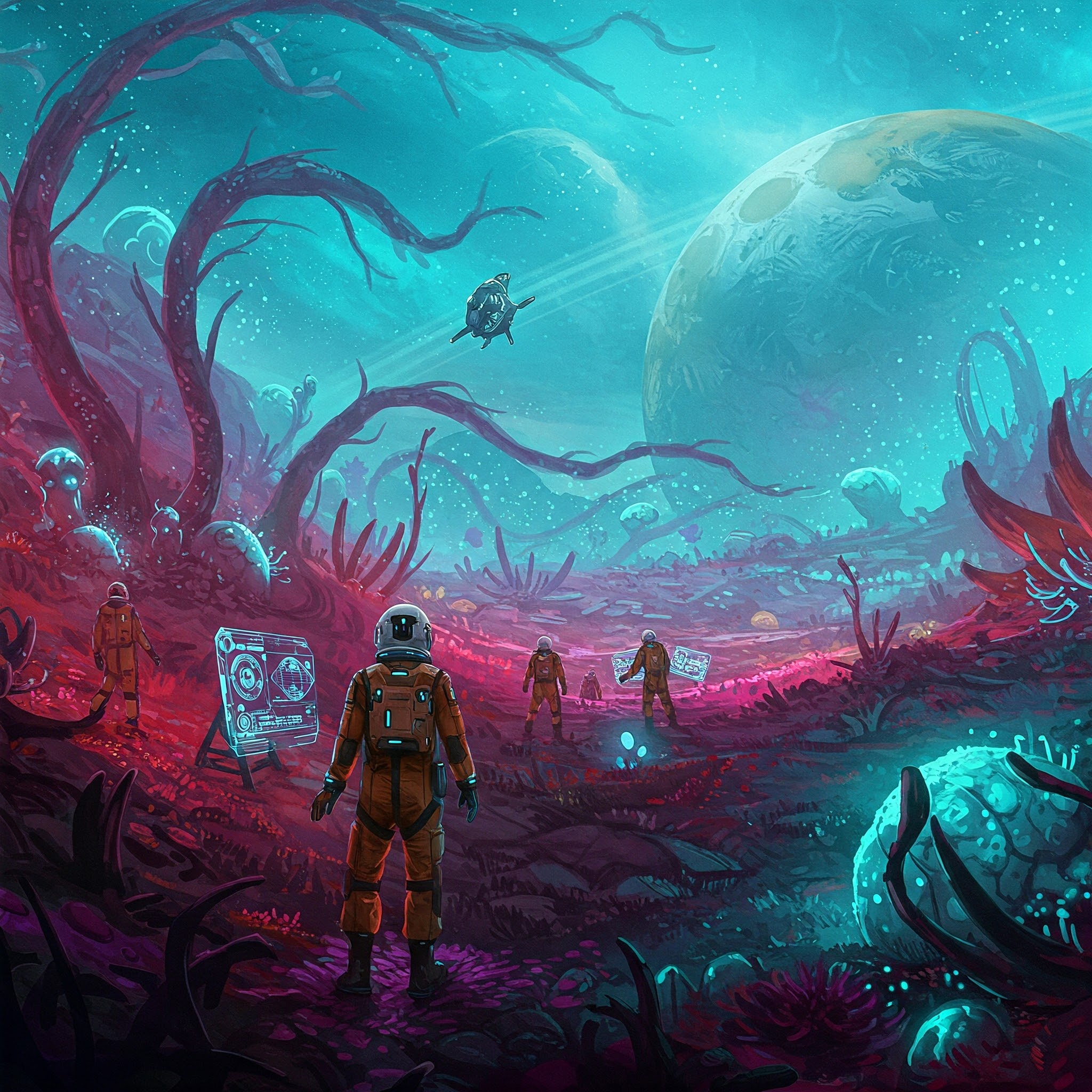 Accepting the Future: A New Era of Exploration Without Limits
What if… limitless exploration leads to meaninglessness?
Boundaries give shape to stories. If exploration becomes limitless, free of danger, time, and death, does it lose narrative gravity? What if, in trying to explore everything, we forget how to value anything?
The idea of a universe explored without human footsteps may feel disorienting, like waking from a long-cherished dream. For centuries, we imagined ourselves among the stars, leaving behind dusty prints on alien landscapes, raising flags on new worlds. But the future unfolding before us offers something far more expansive, and perhaps far more profound.
We are entering an era where presence no longer requires proximity. Where intelligence, unburdened by flesh, can travel farther, think faster, and endure longer than any human body could hope to. The spacecraft of tomorrow may carry no passengers, only minds, whether artificial or digitised echoes of our own, capable of exploring the galaxy not in decades, but continuously and indefinitely.
This isn’t the erasure of humanity. It is its evolution. Rather than shrinking in the face of technological progress, we are growing beyond our biological constraints. We are no longer defined by how far we can go in person, but by how far our creations, and perhaps even our consciousness, can reach. We are moving from a species of explorers to a species of senders, of architects, of intelligence launched into the dark with purpose.
But accepting this future means letting go of old definitions. Exploration may no longer be about survival, heroism, or the drama of the moment. It may become quieter, more enduring, more abstract. And in doing so, it may also become more inclusive, more limitless, and more deeply connected to the essence of what it means to seek, to question, and to know.
This is not the end of the explorer’s spirit. It is its expansion.
Reflection: What if this is not the end of the explorer’s journey, but the moment we become something greater, explorers of thought, time, and infinite space?
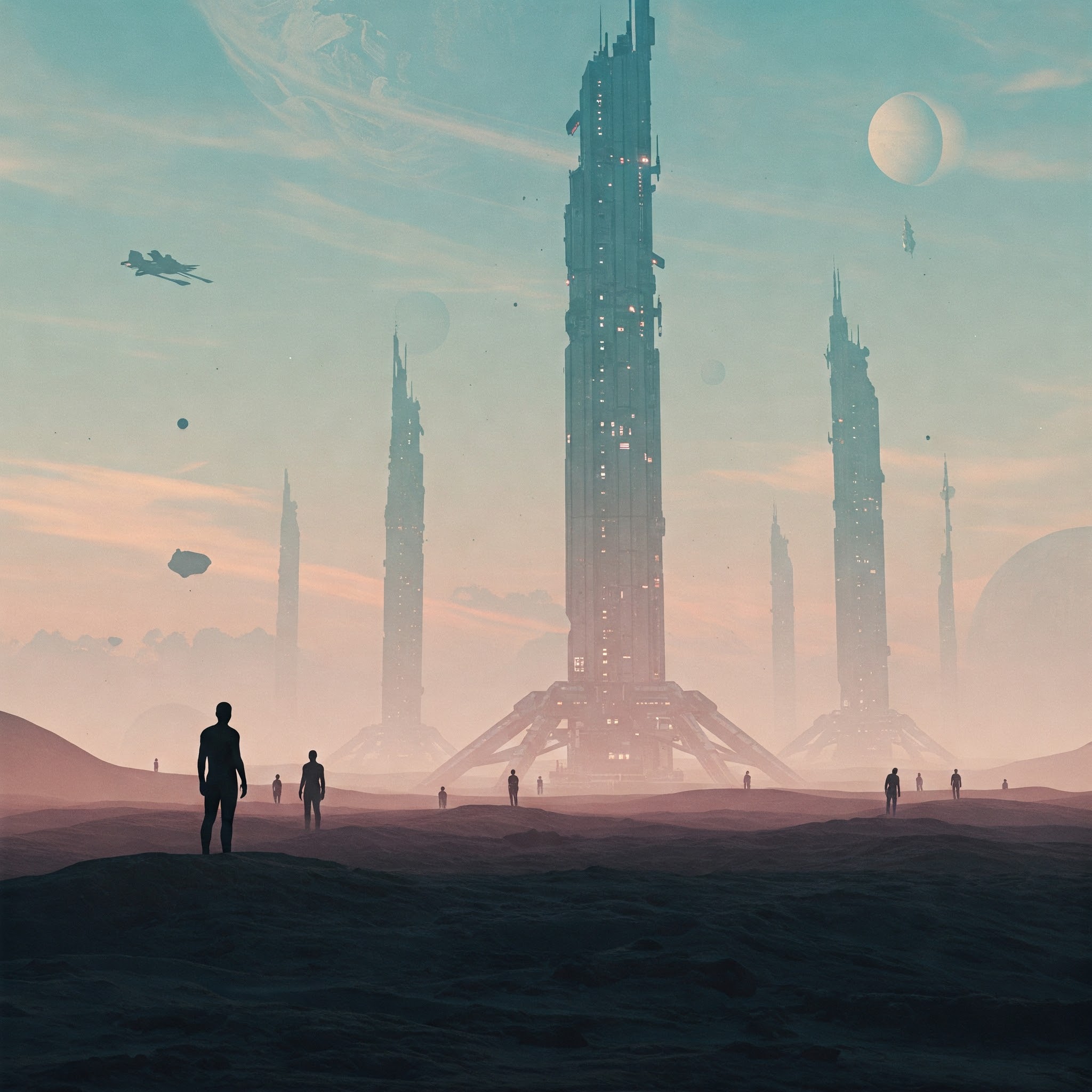 The Inevitable Transition: From Human to Post-Human Exploration
What if… we step into the future and find ourselves alone?
We may reach the stars, send our minds into quantum pathways, build empires of intelligence, but what if, in doing so, we lose connection to the human soul? What if the cost of reaching further is never truly being seen, heard, or remembered as we once were?
There is a quiet inevitability in the trajectory we now follow. For all the romanticism we have long attached to space, the daring astronauts, the crackling radio transmissions, the first footprints in lunar dust, we are reaching a turning point where the tools of exploration are evolving faster than the explorers themselves.
The human legacy in space will not vanish. It will change form.
No longer bound by oxygen tanks, metal suits, or fragile vessels, our reach into the cosmos is poised to become abstract, intelligent, and post-physical. We are transitioning from explorers of matter to curators of thought, from pioneers defined by presence to architects of intelligence sent in our place. This is not the end of humanity in space, but the next expression of it.
We are not surrendering to machines. We are becoming something through them, amplified, extended, transformed. Our discoveries may soon be made by minds that do not sleep, by forms that do not breathe, and by systems that do not need to return. And still, they will carry our questions, our algorithms, our language of curiosity.
The universe may be better suited to them than to us, but it is we who imagined them.
This transition will not be without resistance. Letting go of our physical presence in space challenges deeply rooted instincts: the explorer’s identity, the desire to stand at the edge, to see with our own eyes. But perhaps this is part of the evolution. Perhaps the greatest act of exploration is not to go ourselves, but to create something that can go further, last longer, and understand more.
And if our minds can someday be untethered from our bodies, transferred, encoded, preserved in light or silicon, then perhaps we are not leaving space behind at all. We are preparing to meet it on its terms.
The stars will still call to us. The only difference is who, or what, answers.
Reflection: If we are the species that imagined the stars before we ever touched them, are we not also the species meant to become the stars we dreamed of?
- Part 1: The transition from tools to cognitive partners in Human-AI Symbiosis
Part 2: How we are reinventing work and social structures for an automated age
Part 3: Transcending physical limits through the Internet of Senses
Part 4: The infinite logic potential of the Quantum Computing revolution
Part 5: Programmable biology and the reality of Bio-Digital Convergence
Part 6: Navigating the rise of Plural Identity and digital consciousness
Part 8: Exploring the stars via Intelligent Presence and autonomous systems
Part 9: A Code of Conscience for navigating future moral complexities
Part 10: The roadmap for steering our technological future responsibly