AI in UK Insurance Claims
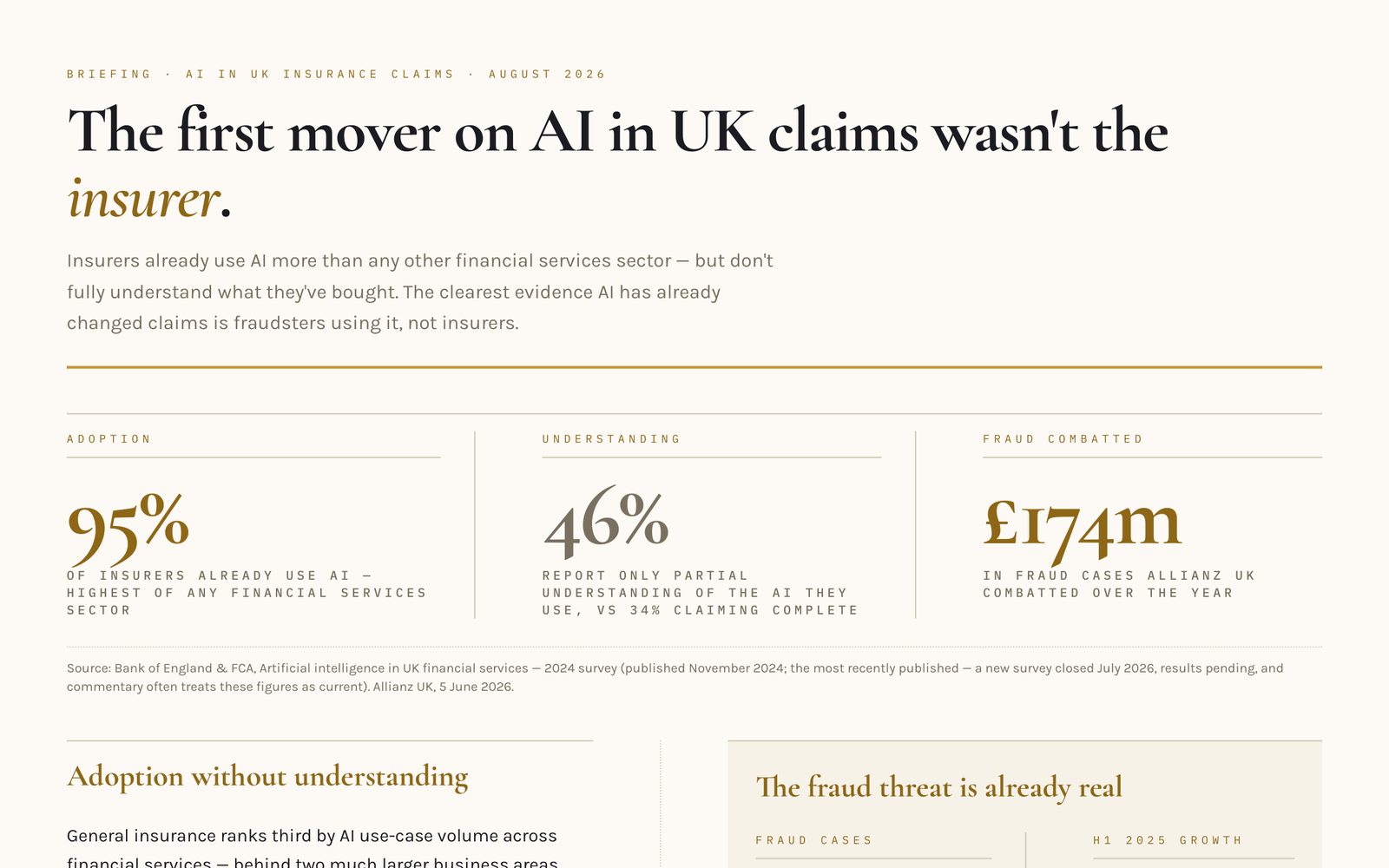
Claims costs are at record levels, the regulator has named claims handling its top priority for 2026, and the first AI-fabricated claims are already on the record.
One technology, one sector, one report — the regulatory pressure, the verified threats, and where the opportunity is actually defensible today. Free to read, built only on sources you can check yourself.
Every figure is checked against a regulator, trade body, ombudsman, legislation, or an operator's own statement. Where a widely-quoted statistic could not be sourced, it was left out — and the exclusion is stated in the briefing itself.
Claims costs are at record levels, the regulator has named claims handling its top priority for 2026, and the first AI-fabricated claims are already on the record.
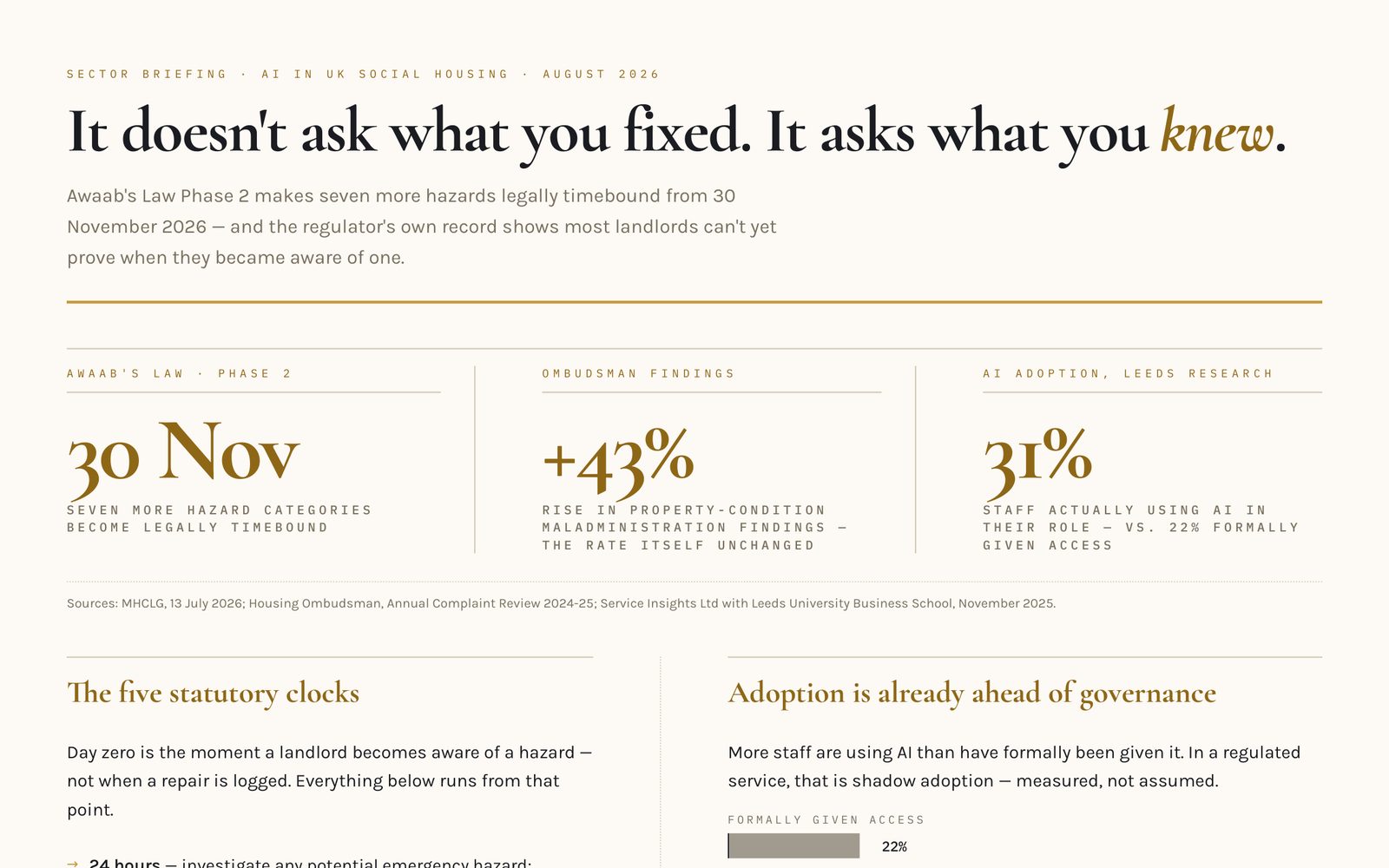
Awaab's Law starts a legal clock the moment a landlord becomes aware of a hazard. The regulator, the Ombudsman and the sector's own flagship AI case study all say the constraint is data, not technology.
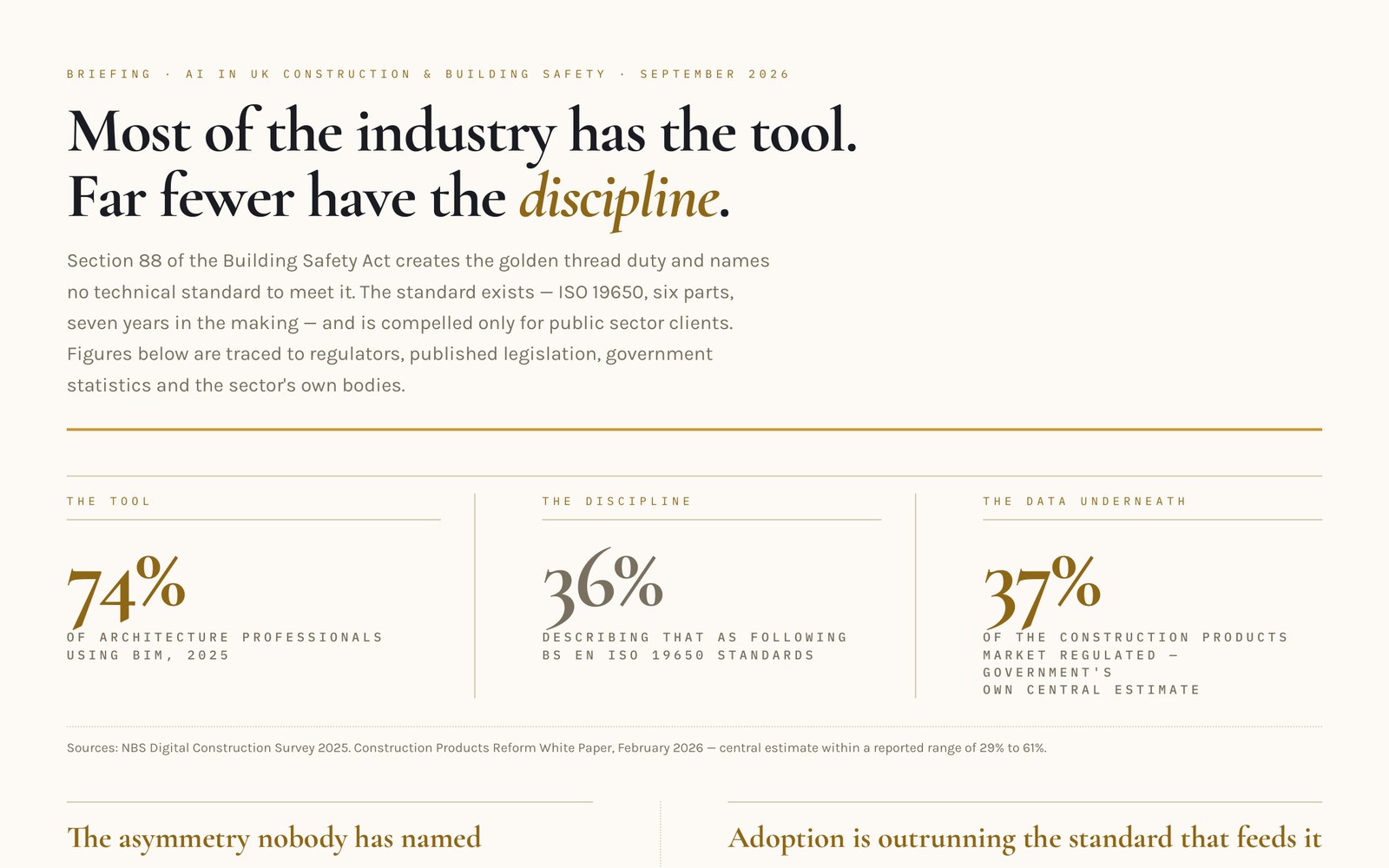
The golden thread is a legal duty with no named technical standard attached to it. The standard the duty needs already exists — ISO 19650, seven years in the making — and is compelled for public sector clients and optional for everyone else. 74% of architecture professionals use BIM; 36% describe that as conforming to the standard.
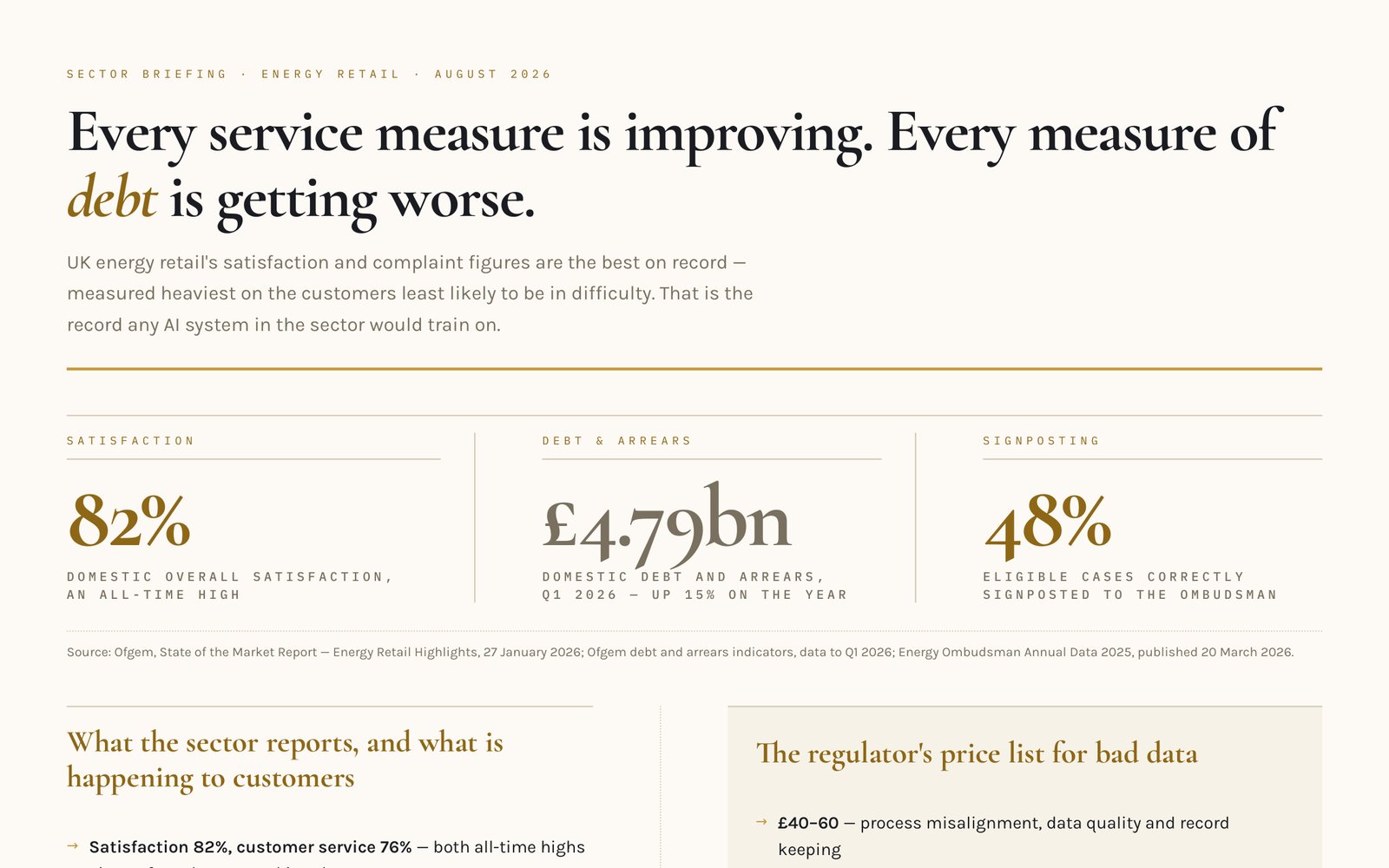
Satisfaction is at a record high and complaints at their lowest since 2022, while debt hits £4.79bn and arrears without a repayment plan run at three times managed debt. Ofgem has twice this year found the customer record itself unreliable — and that record is what an AI system would learn from.
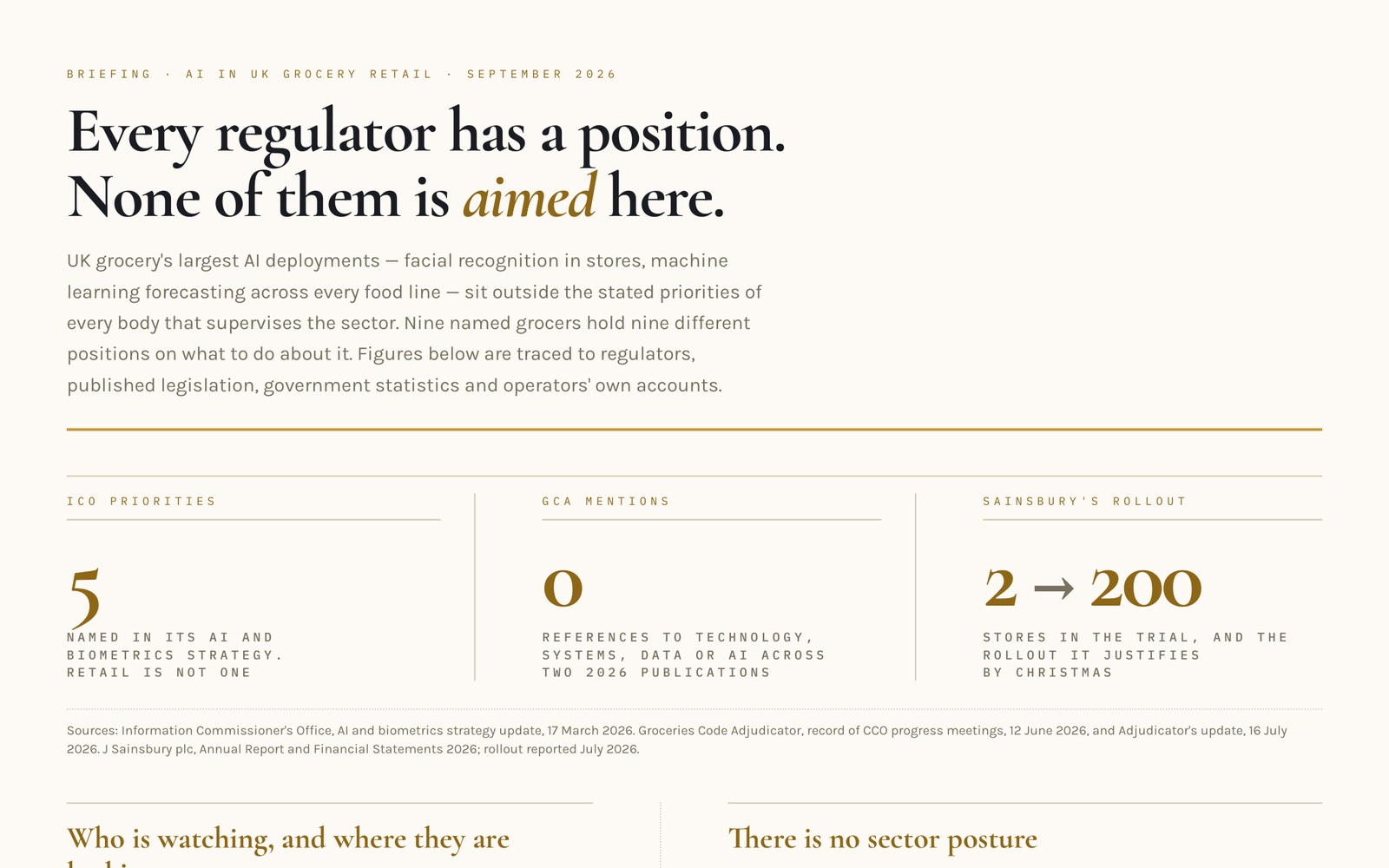
Four regulators hold a position on AI in or around this sector and none is aimed at its largest deployments. Facial recognition is reaching around two hundred stores on the strength of a two-store trial, while machine learning forecasting already sits inside a statutory duty requiring due care, consultation and an explainable basis.
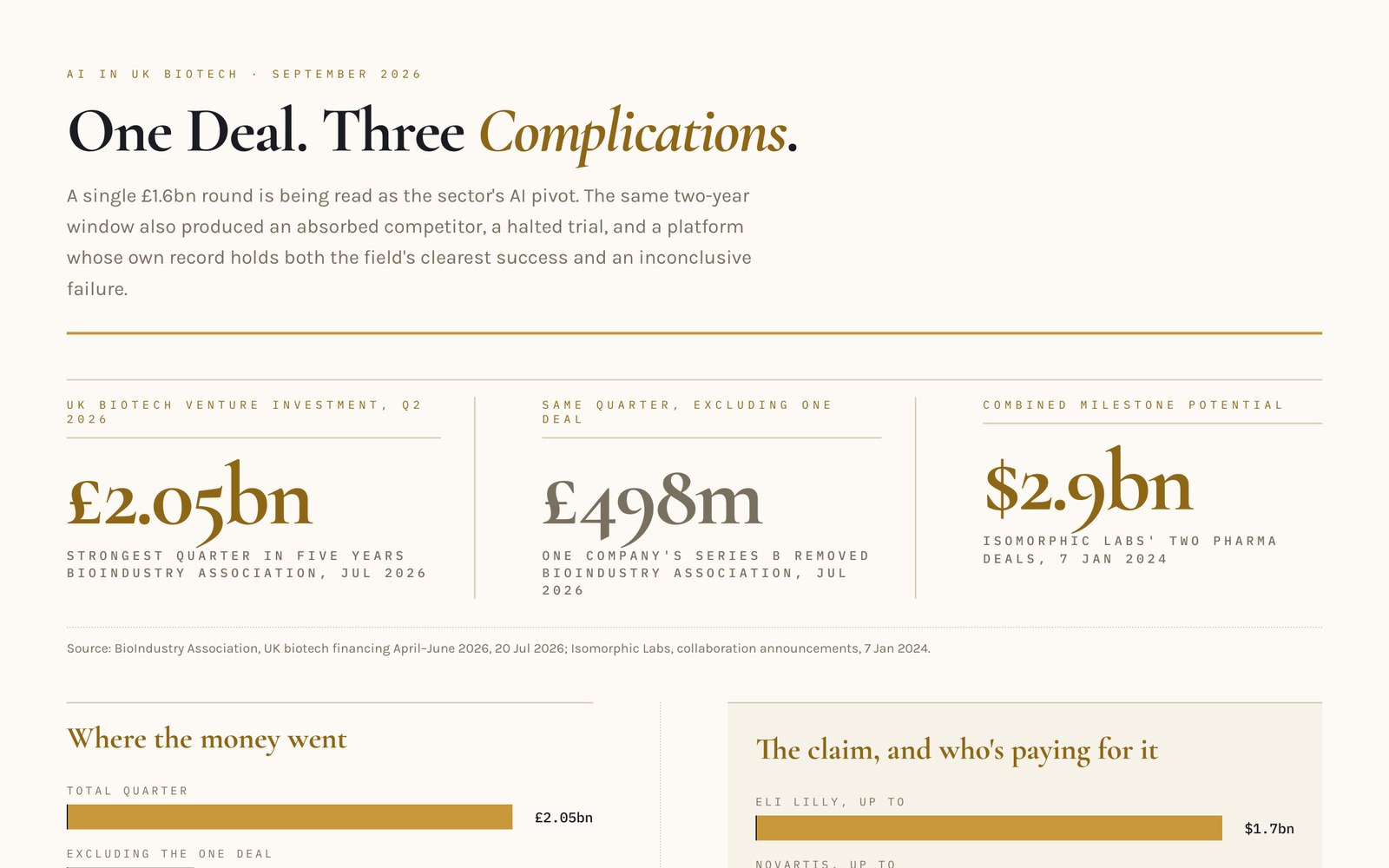
UK biotech venture investment hit a five-year high in Q2 2026. One company's round accounts for three quarters of it, the MHRA is now receiving AI-drafted inspection responses that cite guidance which doesn't exist, and four named companies' outcomes over two years run from a verified drug-discovery success to outright absorption into a US competitor.
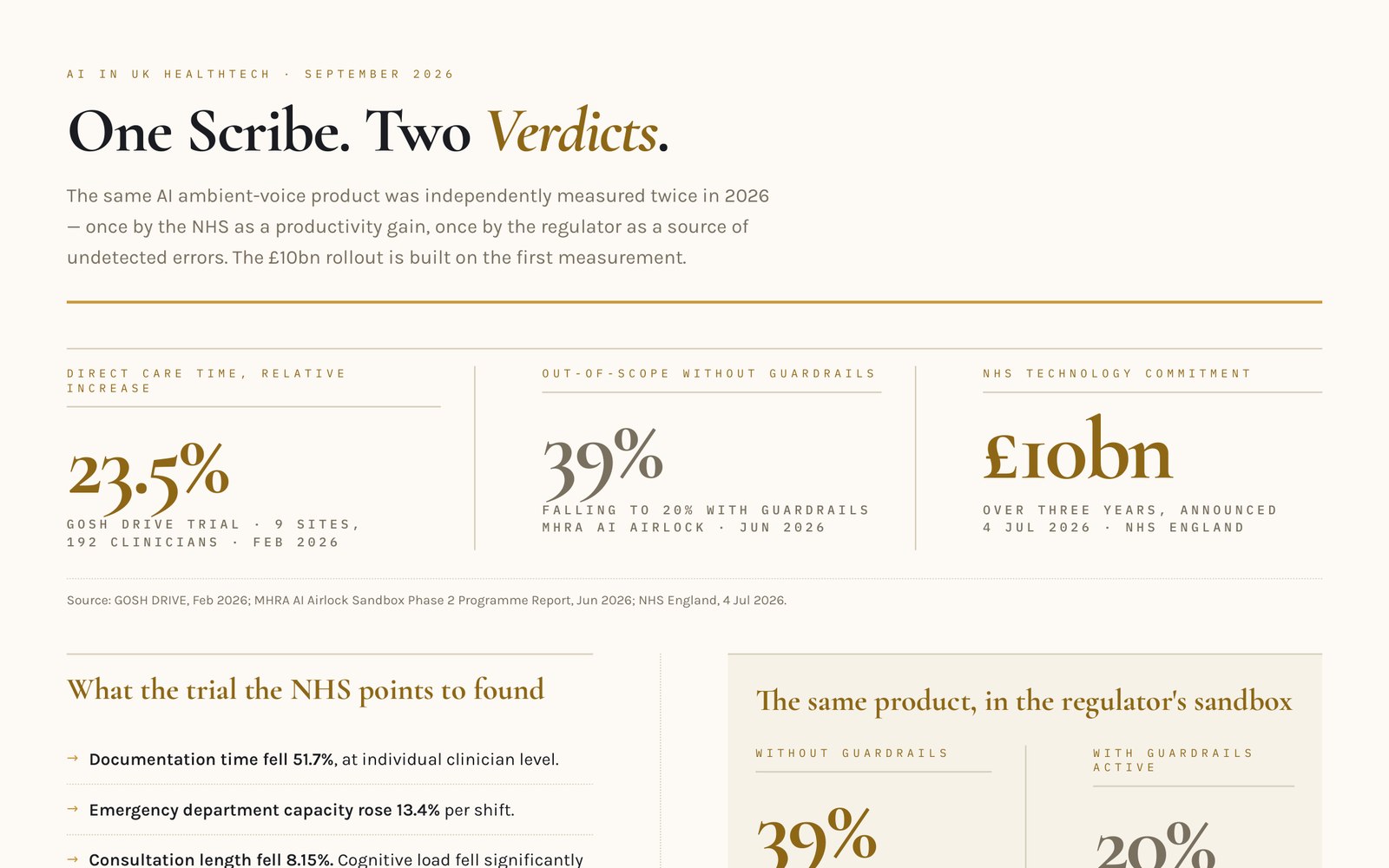
The same AI ambient-voice product was measured twice in 2026 — once by the NHS as a productivity gain, once by the regulator as a source of undetected errors. The £10bn rollout is built on the first measurement, and nothing yet exists to count what the second one found.
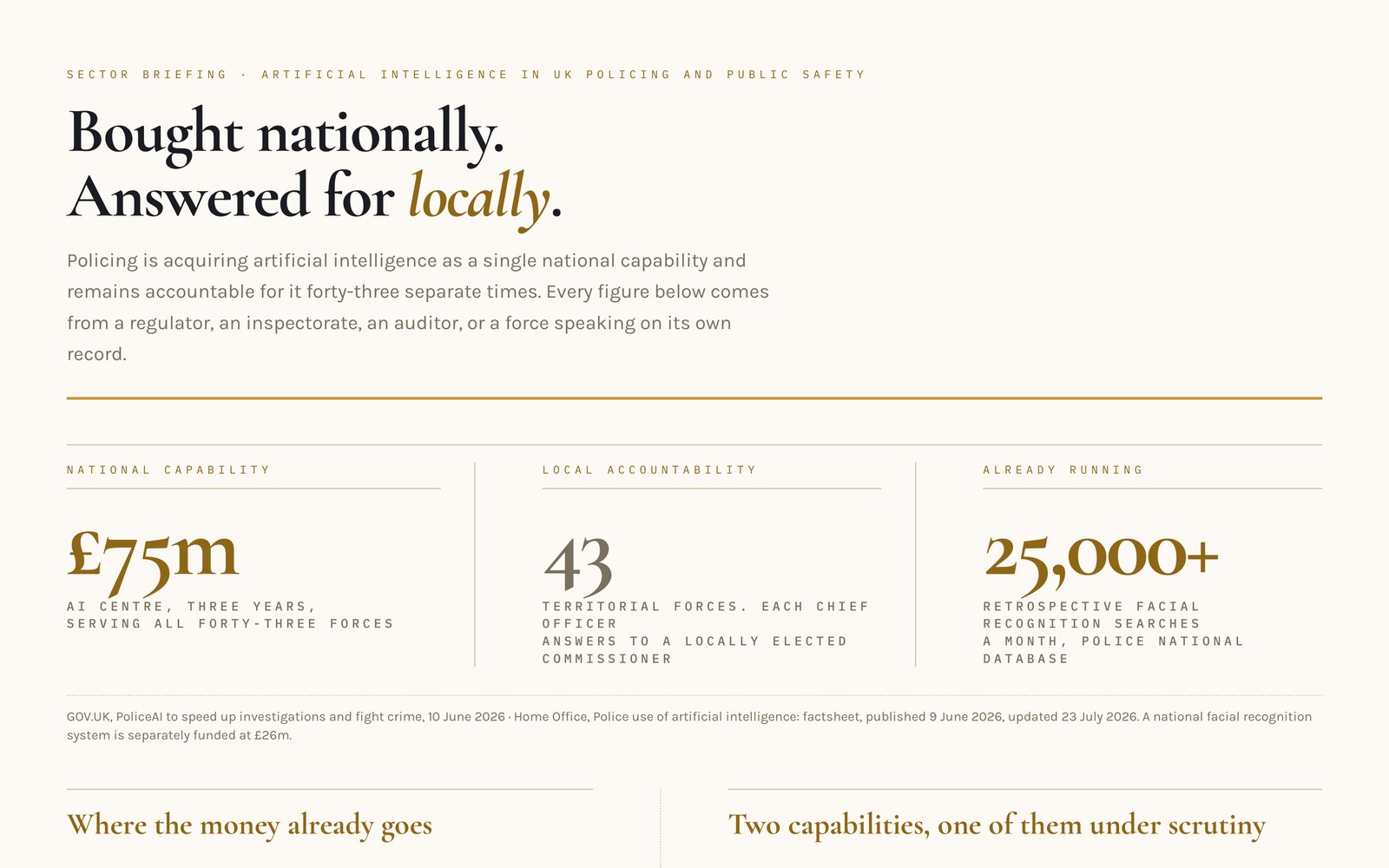
Policing is nationalising the capability faster than it is nationalising the accountability. A national AI centre, a national facial recognition system and national procurement are funded and moving, while the legal framework is, on the Home Secretary's own account, still being refined.
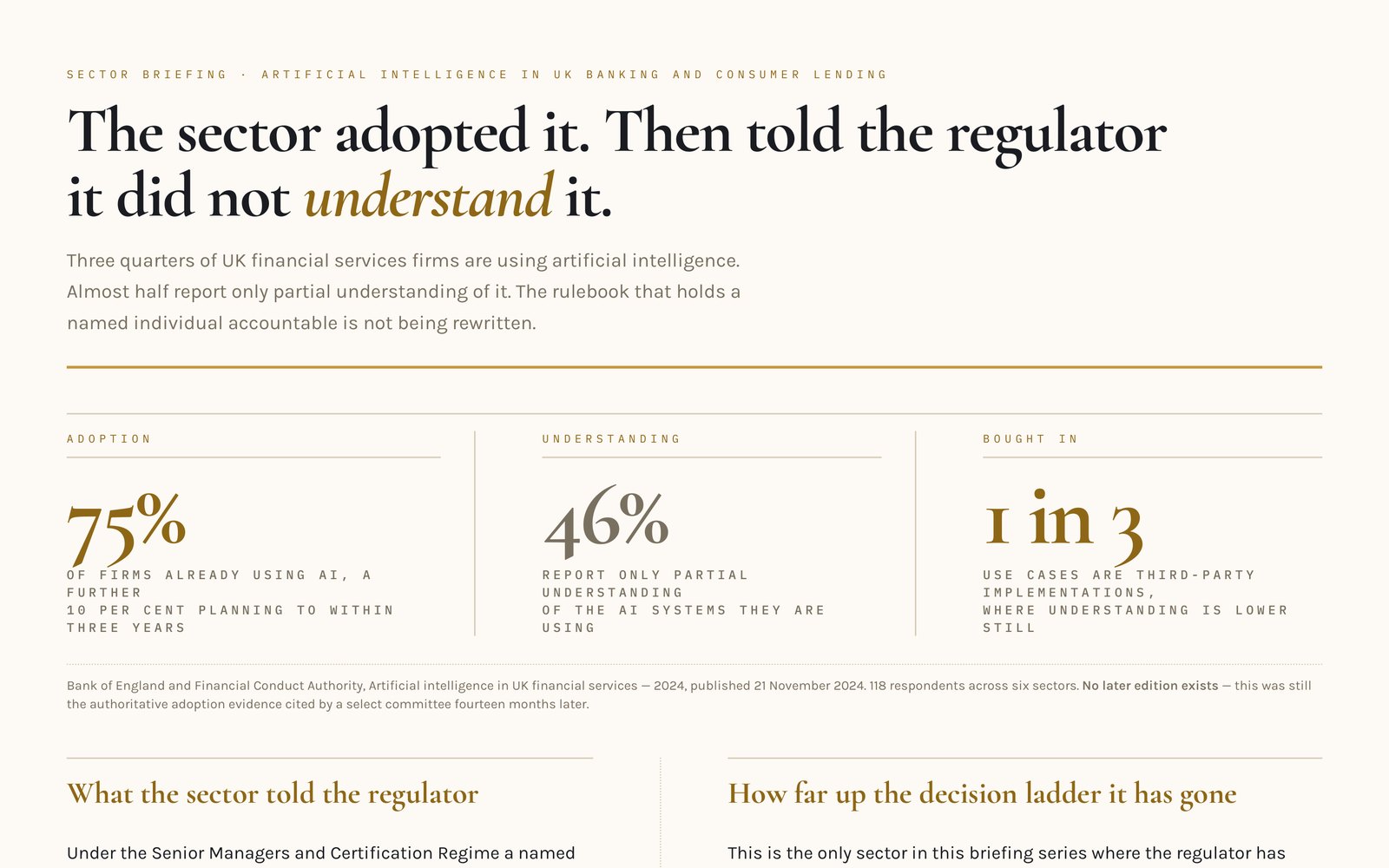
The regulator has decided not to write rules for AI and has said so in terms. That decision has already moved the accountability onto named individuals under the Senior Managers regime — against the regulators' own finding that 46 per cent of firms only partly understand the AI systems they are running.
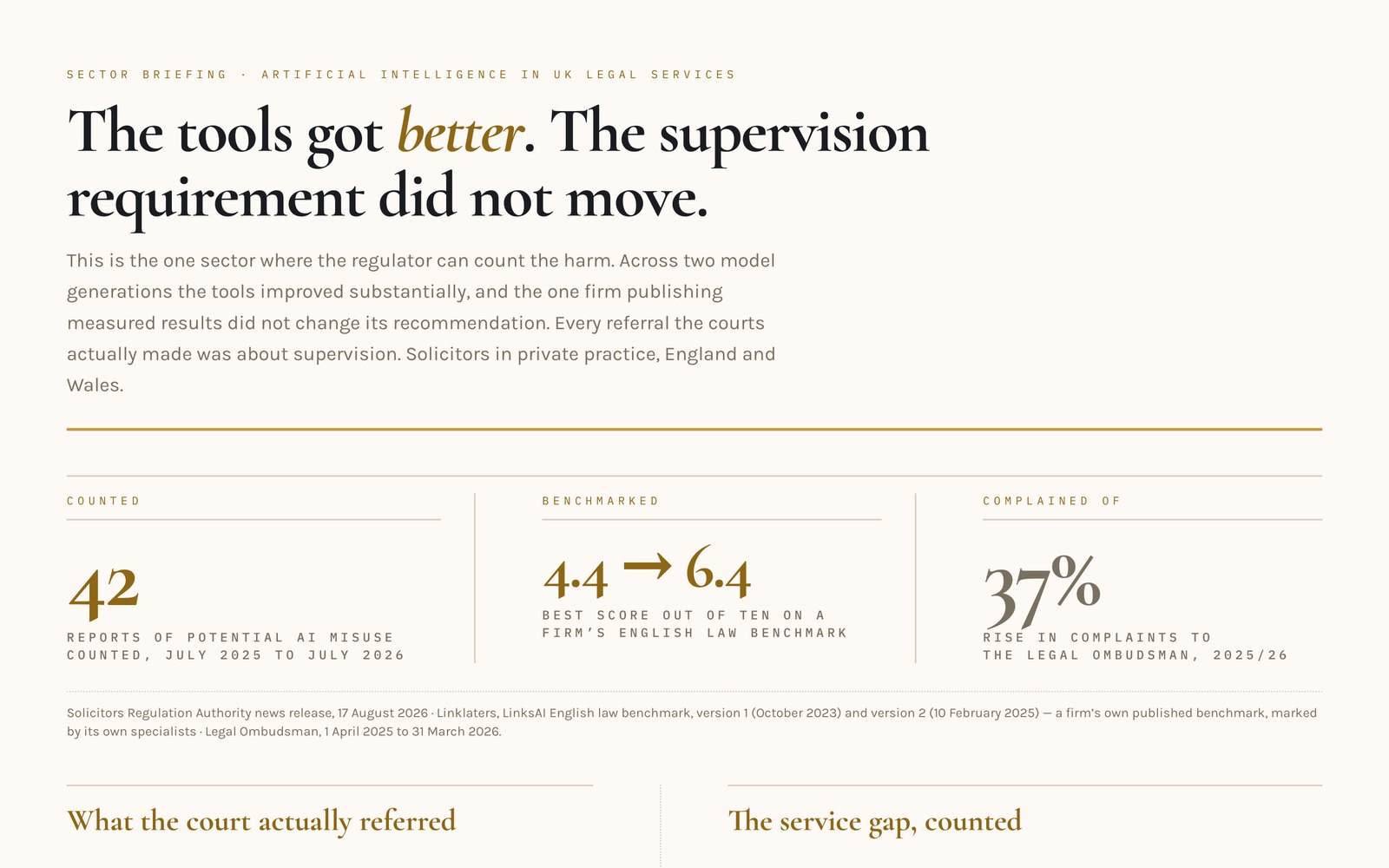
The one sector where the regulator can count the harm — 42 reports of potential AI misuse in twelve months. Every referral the courts actually made was about supervision, not about the technology, and the service gap driving firms to buy lands on the same junior review layer.
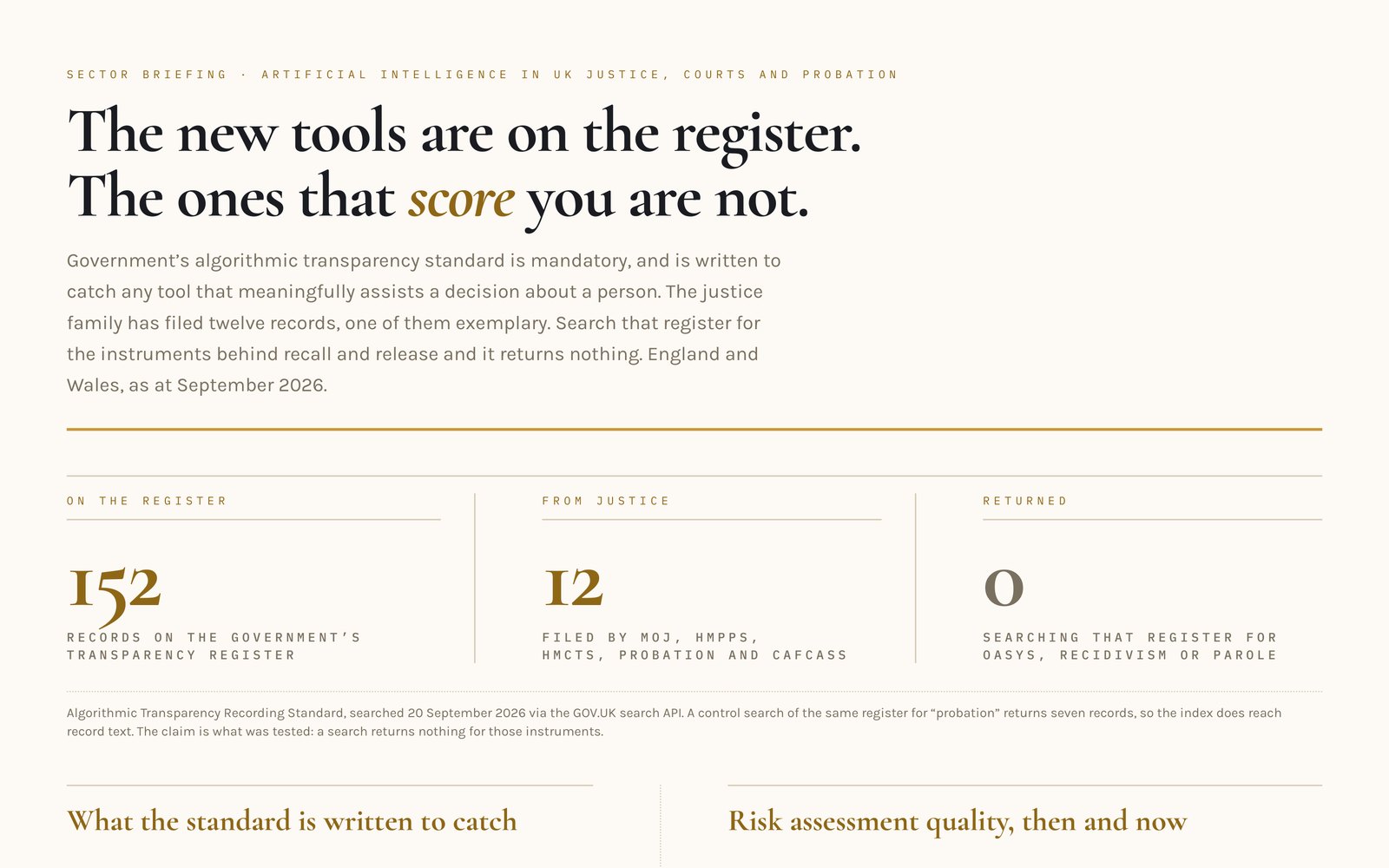
Justice has filed twelve algorithmic transparency records, including an exemplary one for a prison violence estimator. Search the same register for the scoring that helps decide recall and release, and it returns nothing — while the department's own revalidation reports miscalibration by ethnicity.
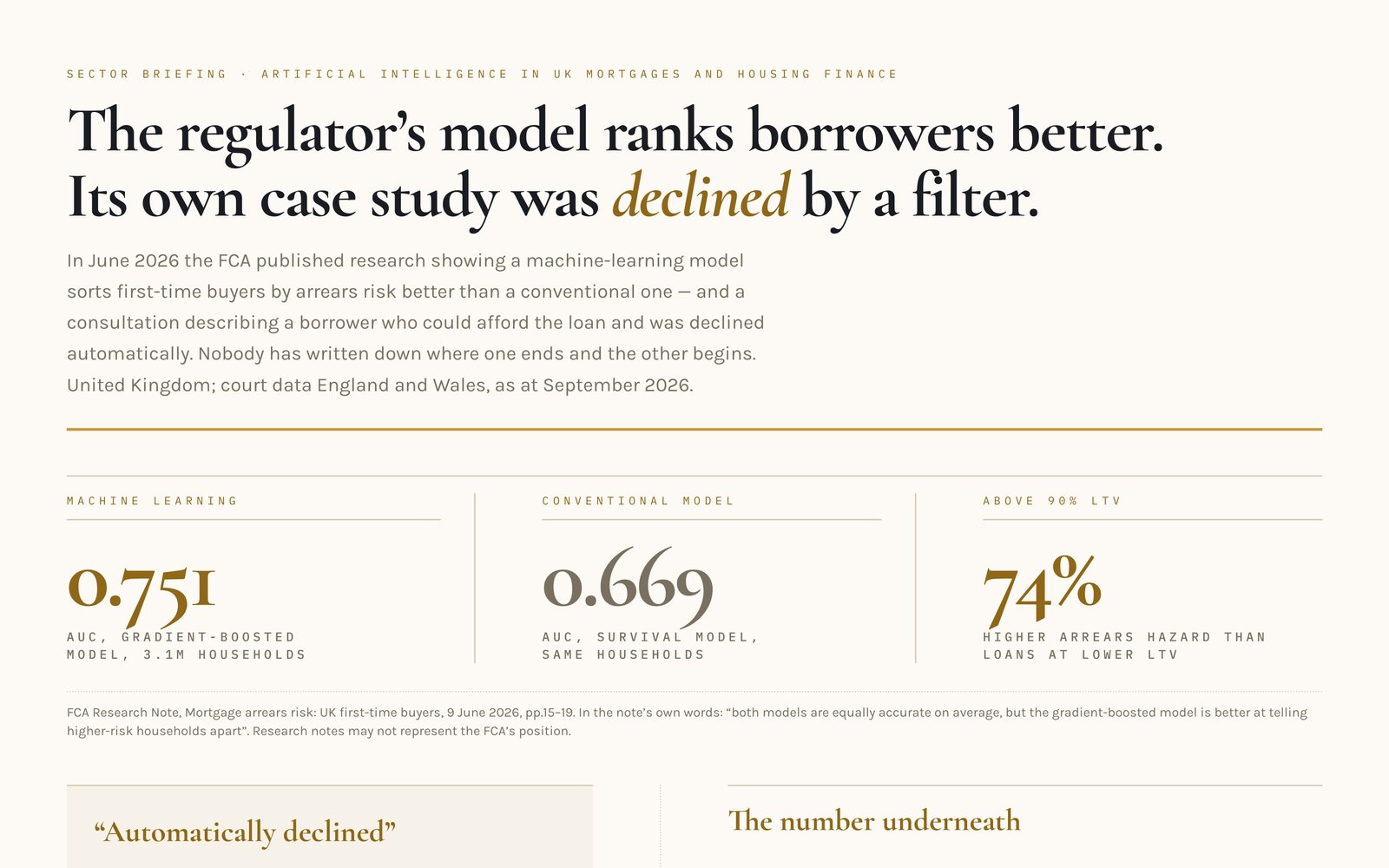
The FCA's own research shows a machine-learning model ranks borrowers better; its own consultation describes a borrower declined automatically by a filter. From 1 January 2027, Basel 3.1 makes keeping every home's valuation current a standing duty — and the largest lenders say nothing about AI in the mortgage decision.
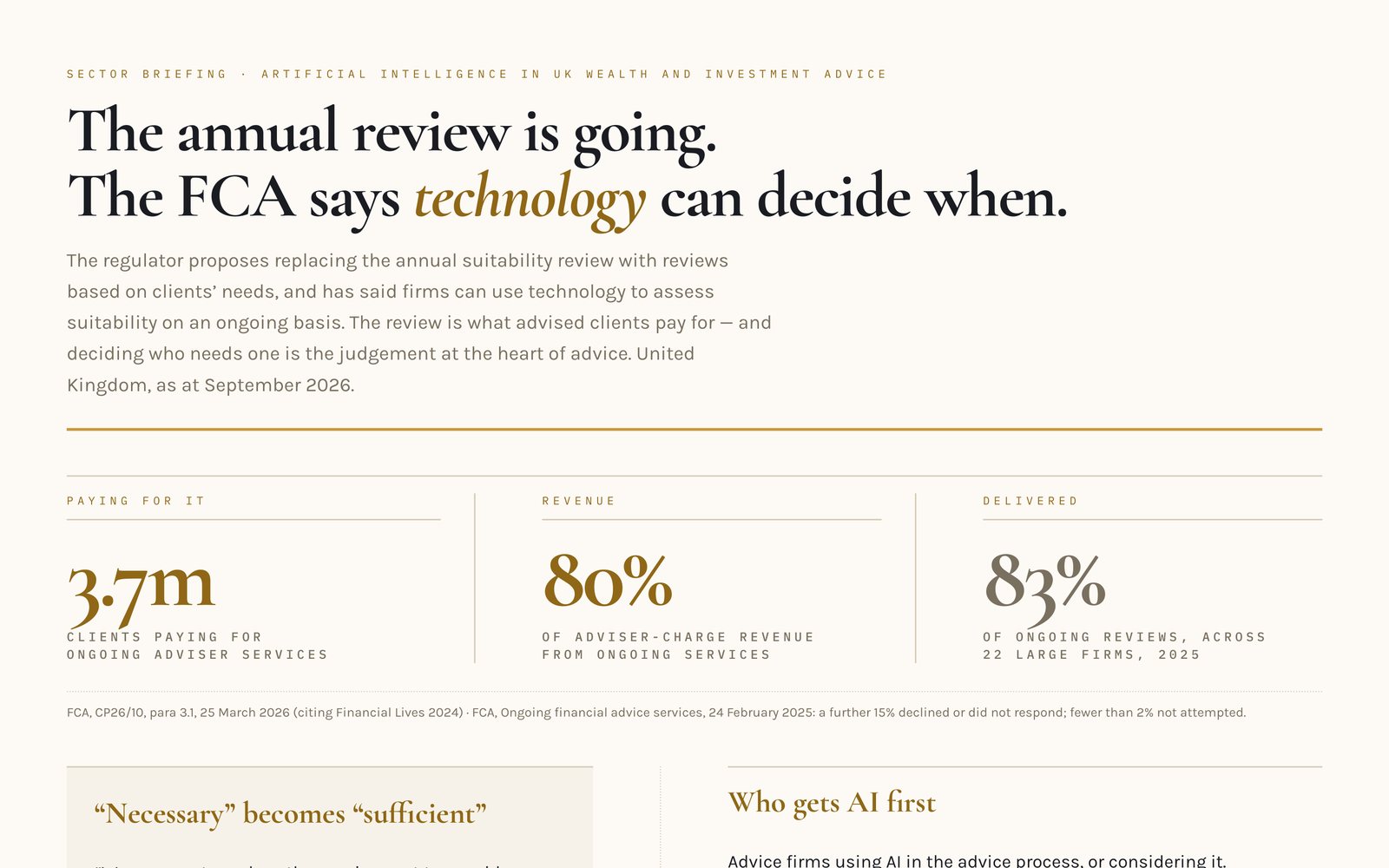
The FCA proposes replacing the annual suitability review with needs-based reviews, and says firms can use technology to assess suitability on an ongoing basis. The review is what 3.7 million clients pay for — and two of the largest advice firms are still remediating reviews they could not evidence.
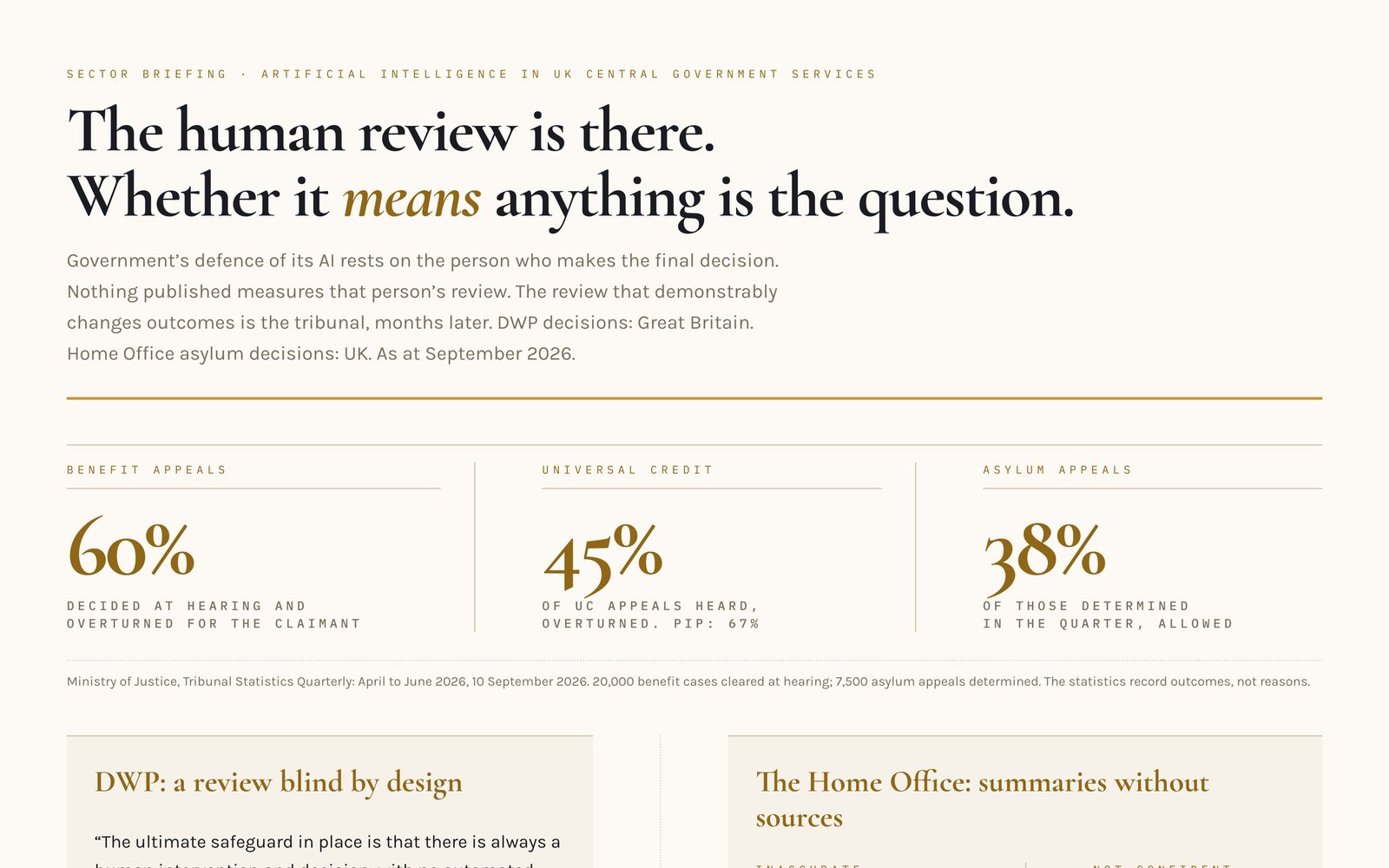
DWP's advances model refers non-UK nationals at 3.35 times the rate of UK nationals, and those referrals are correct at about the same rate. The caseworker who decides is not told the model raised the case. Nothing published measures that review — while 60 per cent of benefit appeals heard are overturned for the claimant.
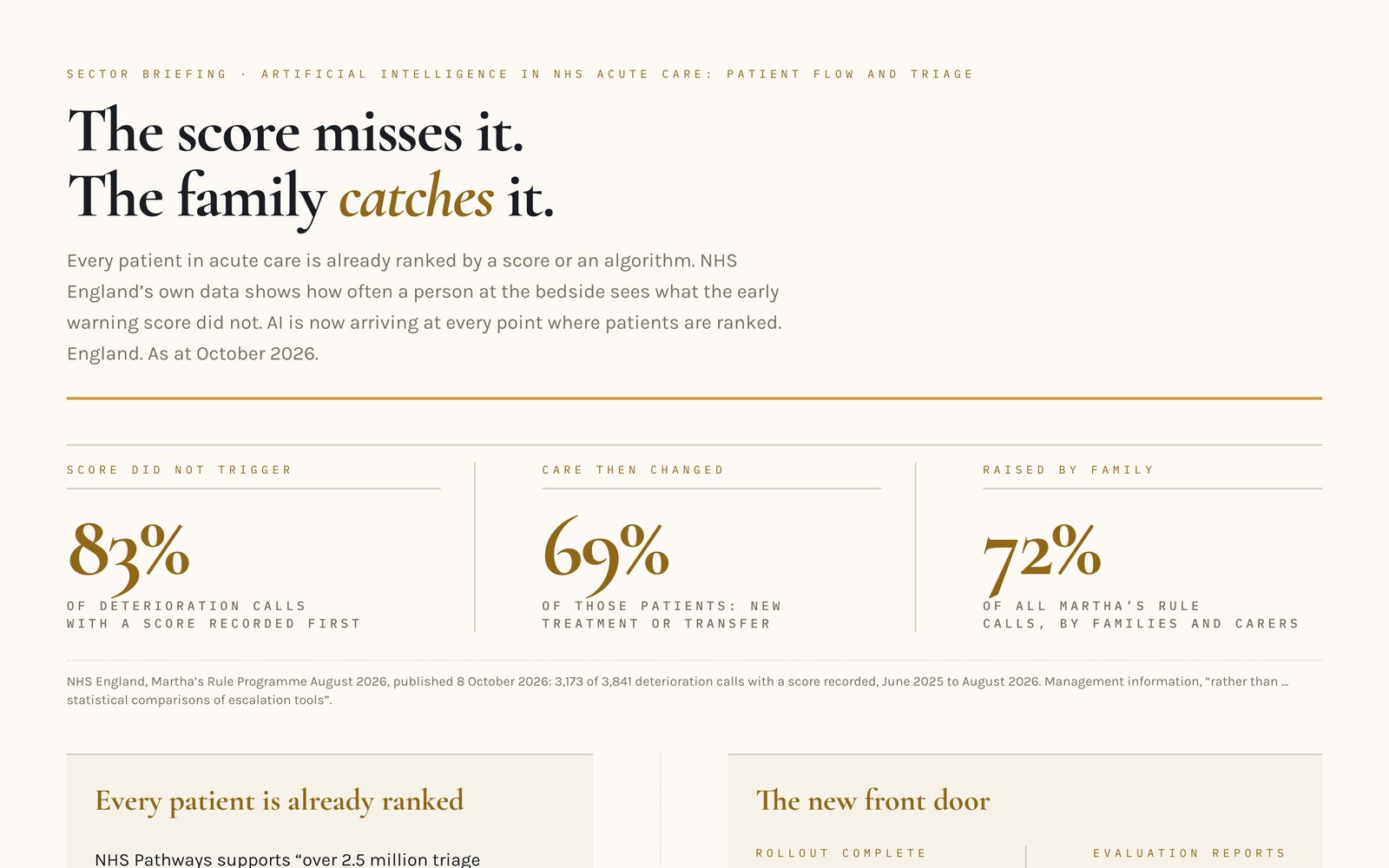
In 83 per cent of Martha's Rule deterioration calls where an early warning score had been taken, the score would not have triggered escalation — and 69 per cent of those patients then needed their care changed. AI triage is now reaching every NHS App user, judged so far on phone queues.
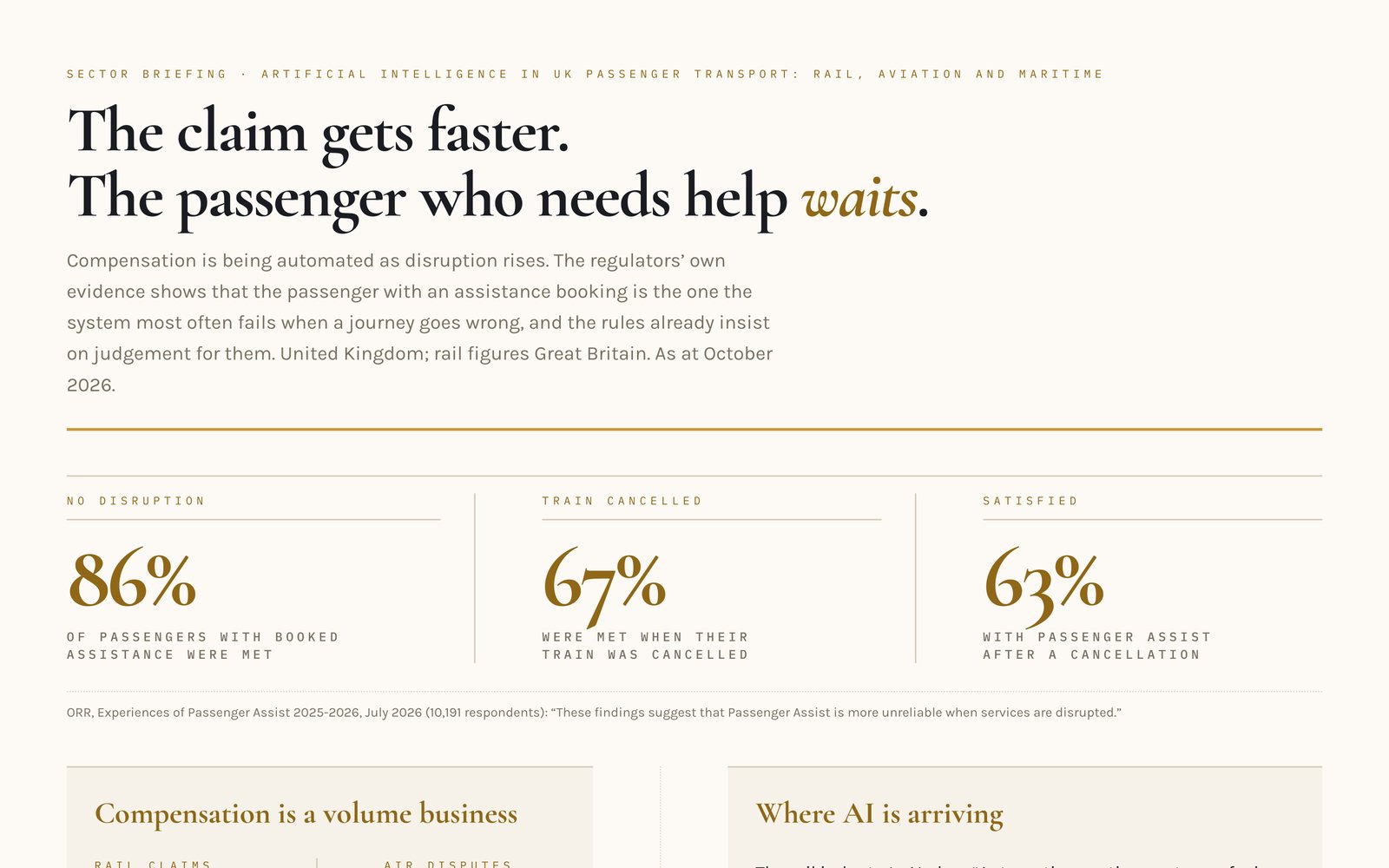
Rail compensation claims are up 55 per cent and the industry's AI plan sets out to automate compensation eligibility. When a train is cancelled, only 67 per cent of passengers with booked assistance are met, against 86 per cent when it runs. The regulators already require case-by-case judgement for them.
Nothing matches that search.
Try a sector name, a regulator, or clear the search to see everything published so far.
Some briefings are co-authored with a named industry practitioner — someone working inside the sector, credited by name, whose operational knowledge goes beyond what desk research alone can verify. The discipline doesn't change: primary sources only, confidence marked on every claim, exclusions stated in the document itself.
The US has just excluded agentic AI from its flagship model risk framework. European supervisors have answered by restating the frameworks they already have. A joint examination of the discipline financial services built to govern models — and why, on its own terms, it no longer reaches what AI now deploys.
Almost every published statistic about AI in a given sector is produced by a company selling AI into that sector. A briefing that repeats those numbers is indistinguishable from the vendor material a senior stakeholder already ignores.
Each report is built the other way round: primary sources first, confidence marked on every claim, exclusions named in the document itself. The reader is assumed to know their sector well and their AI options less well — and to check one figure before trusting the rest.
Take the one for your sector. If it isn't here yet, ask.
The first tranche covers AI, sector by sector, across UK financial services, housing, public services, and beyond. Later tranches will take the same discipline to other emerging technologies as they reach the same bar: a named regulator, a public evidence base, and a real human consequence.
Ask about a sectorMost engagements begin with a single conversation, after someone has already read the briefing.
Book a meeting