Book I · The Next Evolution · How To · No. 11
Design for Digital Well-being and Mental Health
For when the phone in your pocket has more say over your mood than you do.
Reducing cognitive load, restoring attention, and building a healthier relationship with the technology that shapes us.
Casey checked the phone at the dinner table without deciding to. Nobody had messaged. The hand just went there, the way it does forty or fifty times a day, pulled by a notification that may or may not have arrived. By the time Casey looked up, the conversation had moved on without them.
That reflex isn't a personal failing. It's the product working as designed. The interfaces, the notifications and the metrics an app chases are built to hold attention, and holding attention has real costs — disrupted rhythms, eroded focus, a sense of self quietly reshaped by whatever keeps someone scrolling. None of that is inevitable. It's the result of design choices, made deliberately or left unexamined.
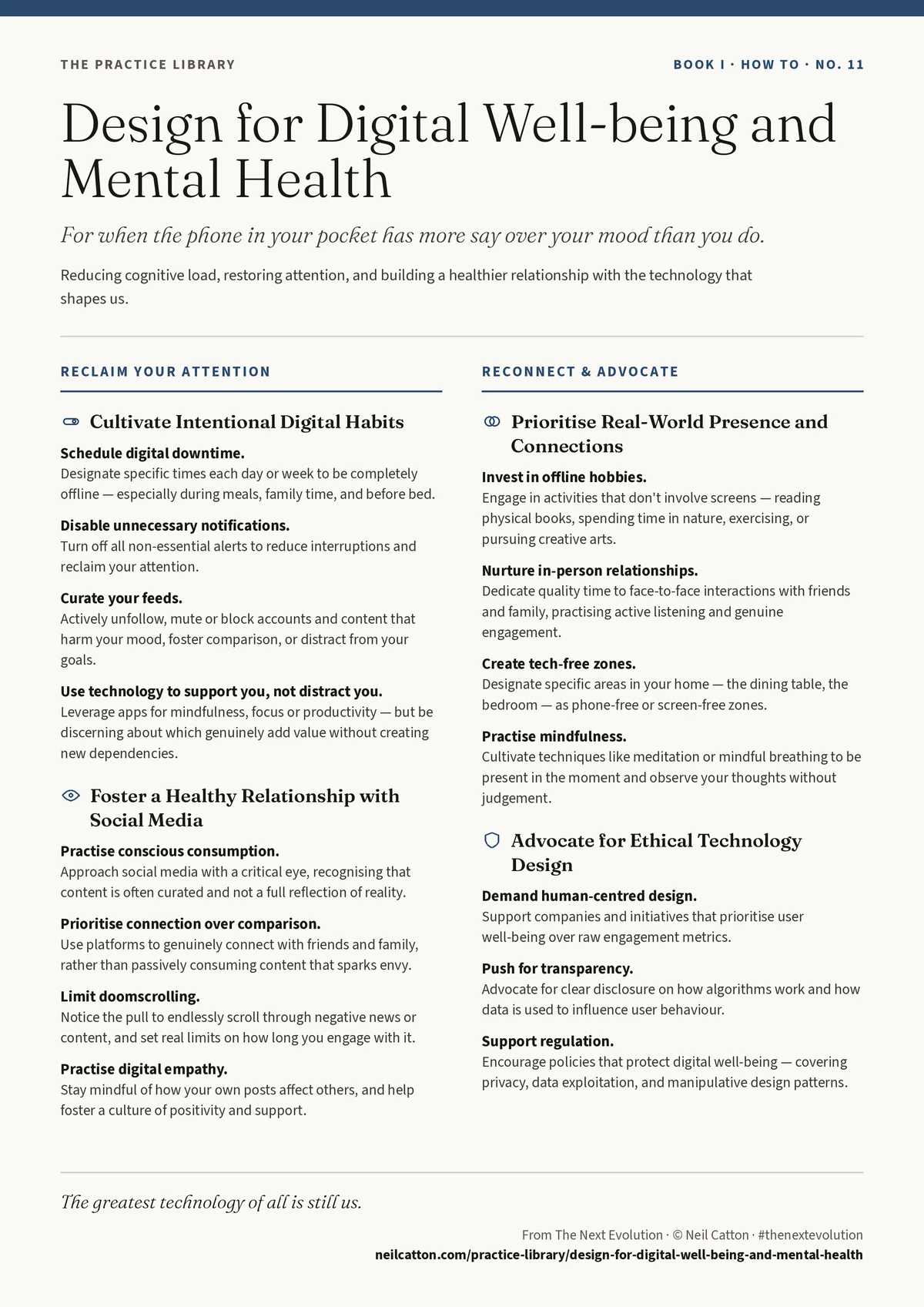
The card holds four practice areas across two columns: reclaiming attention through intentional habits and a healthier relationship with social media, then reconnecting through real-world presence and by pushing for design that answers to the people using it, not just the engagement metrics it's measured against. Written for anyone whose phone currently has more influence over their day than they'd like — which is most people.
It comes from The Next Evolution, where the fuller argument for shifting from engagement to restoration lives. The card stands alone — you don't need the book to use it.
Print it, or pin it somewhere you'll actually see it — the kitchen, the desk, wherever the phone usually wins.
So here's the honest question: the next time your hand reaches for the phone without you deciding to, whose interest is it actually serving?
Design for Digital Well-being and Mental Health
Reclaim Your Attention
Cultivate Intentional Digital Habits
- Schedule digital downtime. Designate specific times each day or week to be completely offline — especially during meals, family time, and before bed.
- Disable unnecessary notifications. Turn off all non-essential alerts to reduce interruptions and reclaim your attention.
- Curate your feeds. Actively unfollow, mute or block accounts and content that harm your mood, foster comparison, or distract from your goals.
- Use technology to support you, not distract you. Leverage apps for mindfulness, focus or productivity — but be discerning about which genuinely add value without creating new dependencies.
Foster a Healthy Relationship with Social Media
- Practise conscious consumption. Approach social media with a critical eye, recognising that content is often curated and not a full reflection of reality.
- Prioritise connection over comparison. Use platforms to genuinely connect with friends and family, rather than passively consuming content that sparks envy.
- Limit doomscrolling. Notice the pull to endlessly scroll through negative news or content, and set real limits on how long you engage with it.
- Practise digital empathy. Stay mindful of how your own posts affect others, and help foster a culture of positivity and support.
Reconnect & Advocate
Prioritise Real-World Presence and Connections
- Invest in offline hobbies. Engage in activities that don't involve screens — reading physical books, spending time in nature, exercising, or pursuing creative arts.
- Nurture in-person relationships. Dedicate quality time to face-to-face interactions with friends and family, practising active listening and genuine engagement.
- Create tech-free zones. Designate specific areas in your home — the dining table, the bedroom — as phone-free or screen-free zones.
- Practise mindfulness. Cultivate techniques like meditation or mindful breathing to be present in the moment and observe your thoughts without judgement.
Advocate for Ethical Technology Design
- Demand human-centred design. Support companies and initiatives that prioritise user well-being over raw engagement metrics.
- Push for transparency. Advocate for clear disclosure on how algorithms work and how data is used to influence user behaviour.
- Support regulation. Encourage policies that protect digital well-being — covering privacy, data exploitation, and manipulative design patterns.
The greatest technology of all is still us.
From The Next Evolution · © Neil Catton · Filed under wellbeing and mental load, attention and focus
Read it alongside
 Also from The Next Evolution · No. 9Navigate the Future of Work and Economic SystemsFor when the terms of work are changing faster than anyone agreed to change them.
 Also from The Next Evolution · No. 13Navigate the Ethics of Algorithmic IntelligenceFor when a judgement call that used to be yours quietly became the system’s.
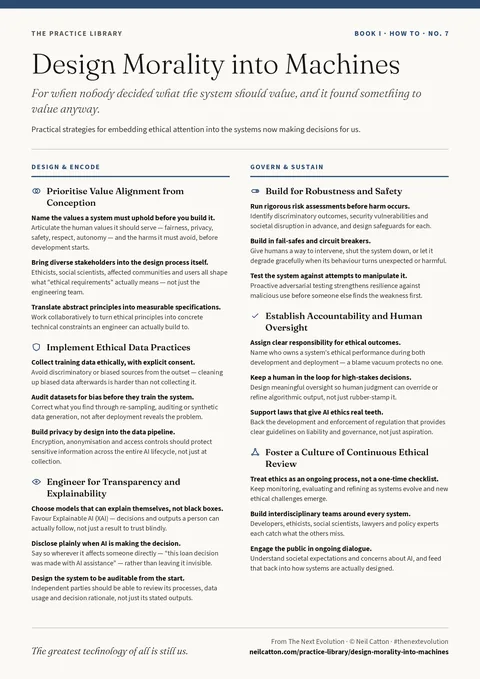 Also from The Next Evolution · No. 7Design Morality into MachinesFor when nobody decided what the system should value, and it found something to value anyway.