Book I · The Next Evolution · How To · No. 43
Design for the Human OS
For when a system is built around the part of a person that's easiest to measure.
Centring design on the full human being — thinker, feeler, mover, meaning-maker — not just the metrics that are easiest to build for.
A staff wellbeing platform asks how you are feeling, on a scale of one to five, each number carrying a small face. Someone whose father died the previous week picks three, because nothing on the scale describes where they actually are. The dashboard records a workforce in reasonable spirits and the quarterly report says engagement is holding.
The platform measured the part of the person that fitted the field. That is what most systems do, and not out of malice — attention, clicks and a sentiment score are simply the easiest things to represent. The rest of a human being is harder to put into a database column. Emotional range, the need for rest, the pull towards play with no goal attached, the willingness to sit with something unresolved: none of it is hostile to design, all of it gets left out because nobody has worked out what the field would look like.
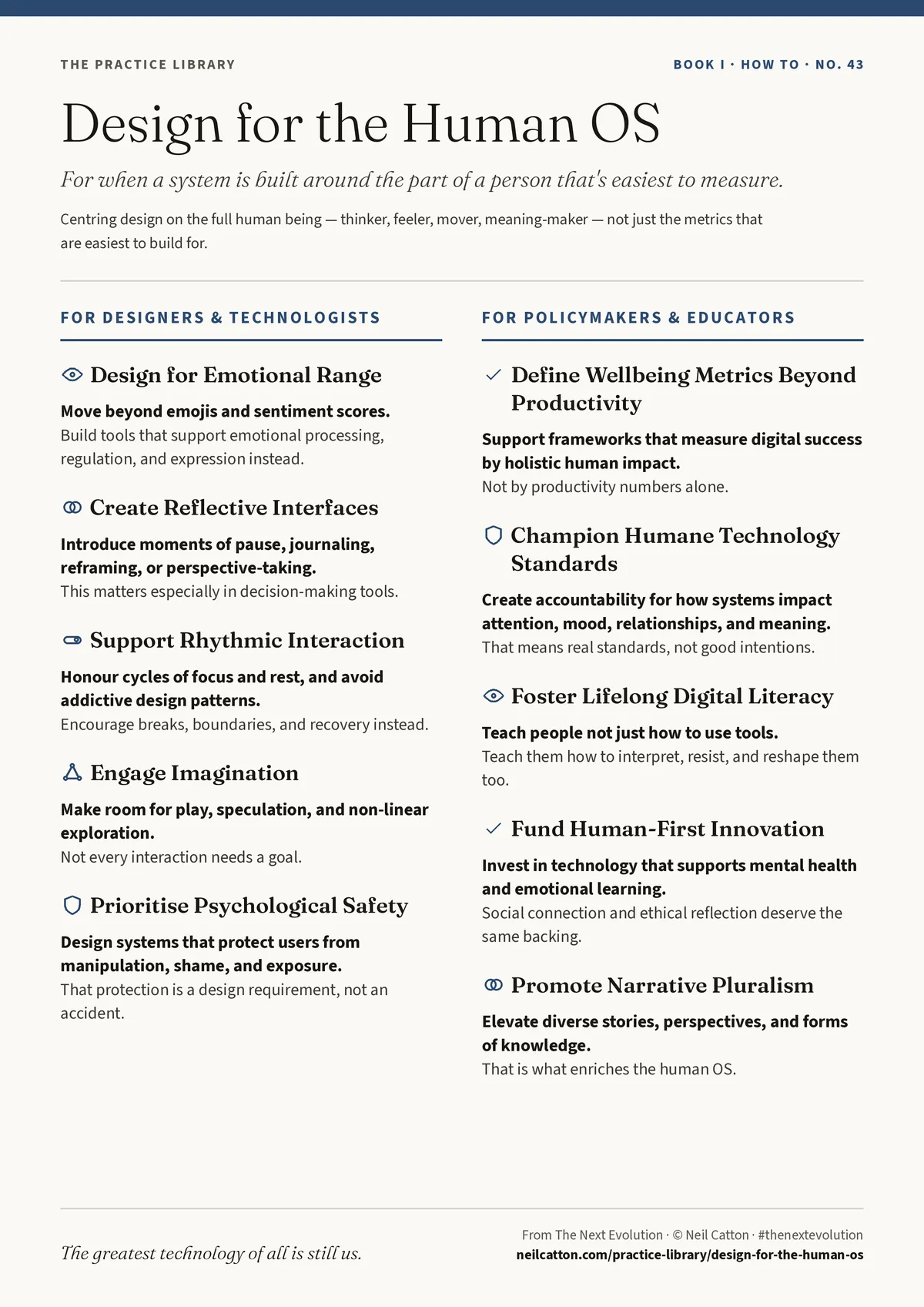
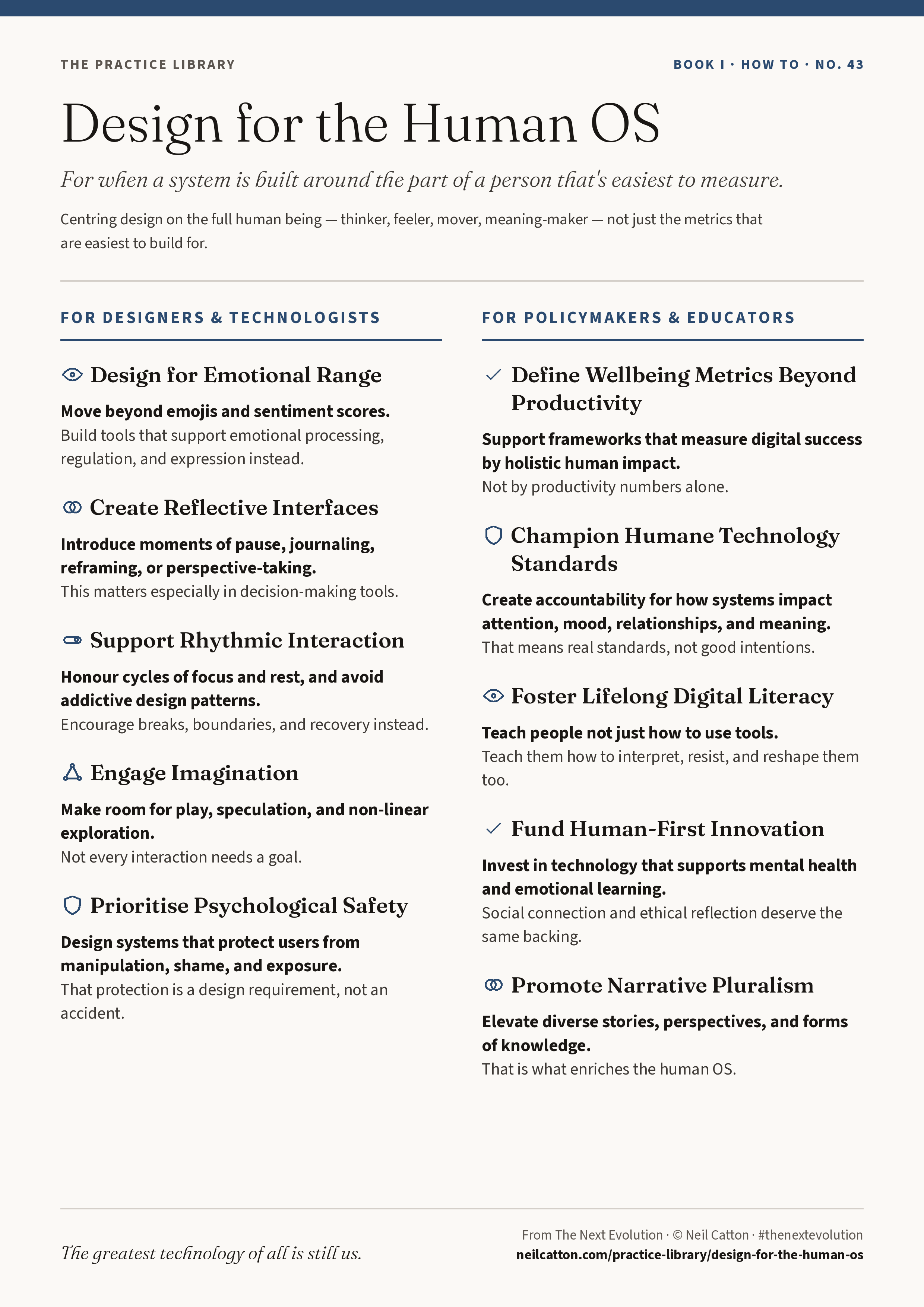
The card runs ten practices in two columns — five for designers and technologists building the systems, five for policymakers and educators setting the conditions those systems get built under. It's for anyone who has watched a tool measure the wrong thing with real precision.
It comes from The Next Evolution, where the fuller argument about designing around the whole person gets made at length. The card doesn't need the book to make sense — it stands on its own.
Print it, or send it to whoever owns the metric.
Every system decides which parts of a person are worth representing. In your organisation, who actually makes that call?
Design for the Human OS
For Designers & Technologists
Design for Emotional Range
- Move beyond emojis and sentiment scores. Build tools that support emotional processing, regulation, and expression instead.
Create Reflective Interfaces
- Introduce moments of pause, journaling, reframing, or perspective-taking. This matters especially in decision-making tools.
Support Rhythmic Interaction
- Honour cycles of focus and rest, and avoid addictive design patterns. Encourage breaks, boundaries, and recovery instead.
Engage Imagination
- Make room for play, speculation, and non-linear exploration. Not every interaction needs a goal.
Prioritise Psychological Safety
- Design systems that protect users from manipulation, shame, and exposure. That protection is a design requirement, not an accident.
For Policymakers & Educators
Define Wellbeing Metrics Beyond Productivity
- Support frameworks that measure digital success by holistic human impact. Not by productivity numbers alone.
Champion Humane Technology Standards
- Create accountability for how systems impact attention, mood, relationships, and meaning. That means real standards, not good intentions.
Foster Lifelong Digital Literacy
- Teach people not just how to use tools. Teach them how to interpret, resist, and reshape them too.
Fund Human-First Innovation
- Invest in technology that supports mental health and emotional learning. Social connection and ethical reflection deserve the same backing.
Promote Narrative Pluralism
- Elevate diverse stories, perspectives, and forms of knowledge. That is what enriches the human OS.
The greatest technology of all is still us.
From The Next Evolution · © Neil Catton · Filed under design and leadership
Read it alongside
 Also from The Next Evolution · No. 41Shape the StoriesFor when the version of events everyone else believes isn't the one you lived.
 Also from The Next Evolution · No. 46Navigate Techno-IntimacyFor when your home finishes your sentences before you do.
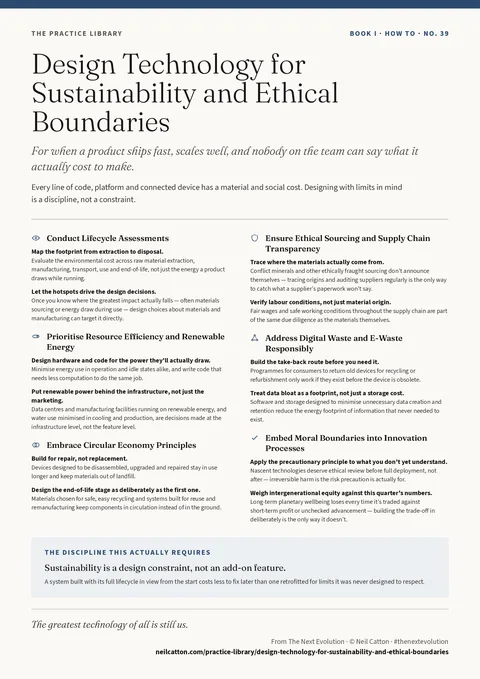 Also from The Next Evolution · No. 39Design Technology for Sustainability and Ethical BoundariesFor when a product ships fast, scales well, and nobody on the team can say what it actually cost to make.