Book I · The Next Evolution · How To · No. 39
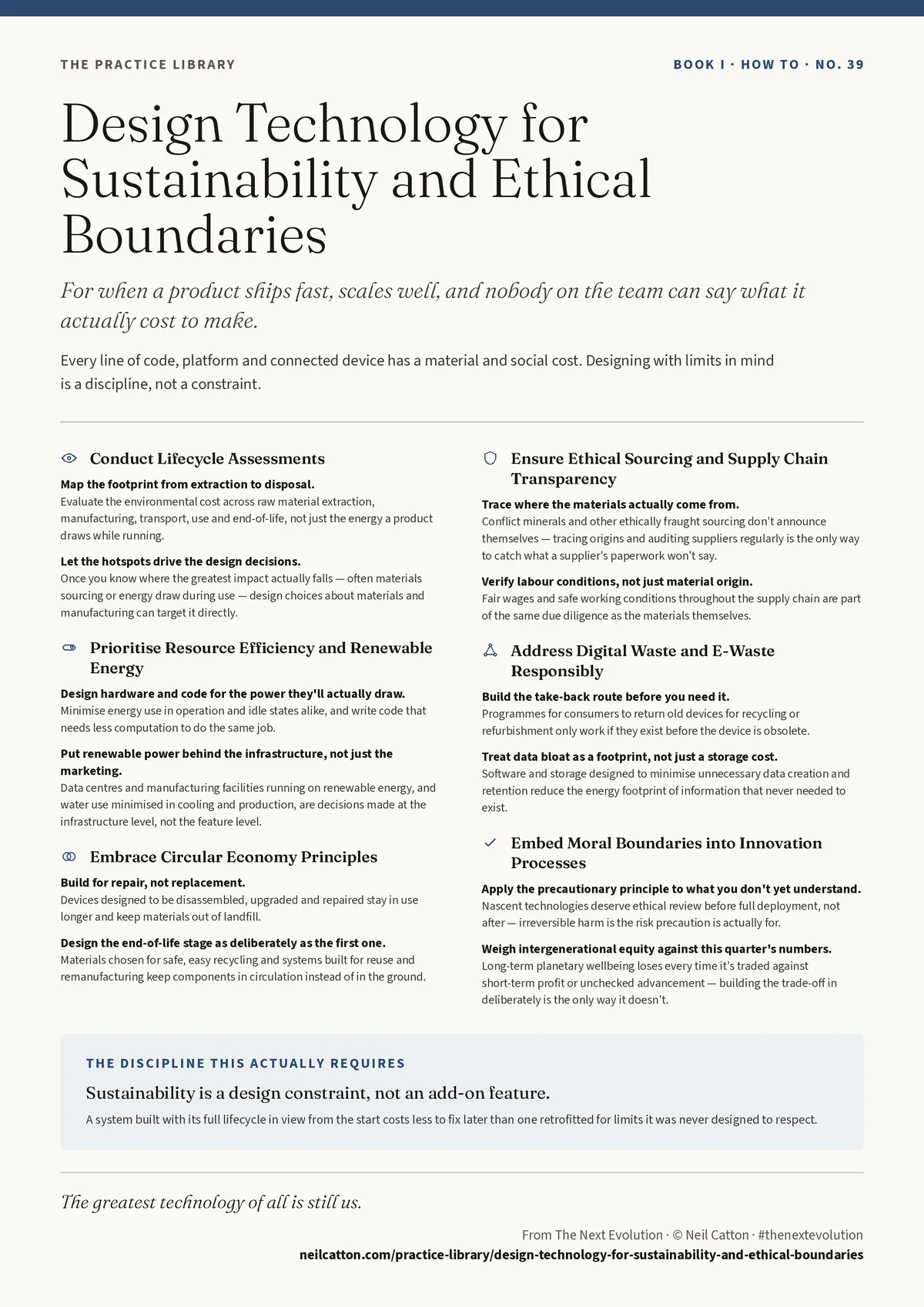
Design Technology for Sustainability and Ethical Boundaries
For when a product ships fast, scales well, and nobody on the team can say what it actually cost to make.
Every line of code, platform and connected device has a material and social cost. Designing with limits in mind is a discipline, not a constraint.
A phone is designed, built, shipped and sold in under a year. The cobalt in its battery, the water used to cool the factory that made its chips, the device it replaced sitting in a drawer somewhere — none of that shows up on the price tag, and none of it was really designed either. It's simply what happens when speed, scale and profit are the only things being measured.
Every platform, device and line of code carries a material and social cost across its full life, from extraction to disposal. Designing for sustainability means treating that whole lifecycle as part of the brief, not an externality somebody else absorbs later — and treating ethical limits as a design constraint from the start, not a review that happens after the fact.
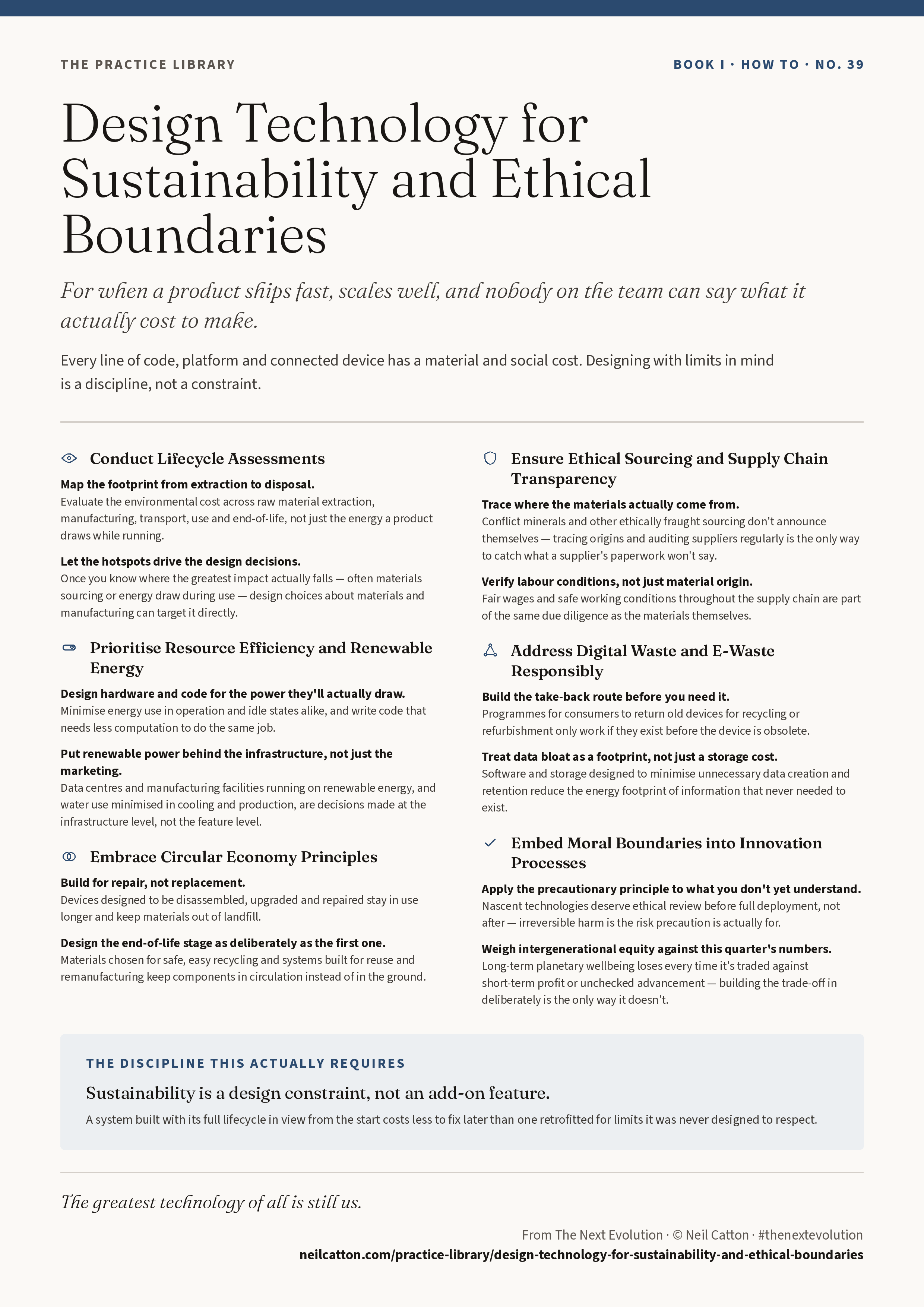
The card holds six practice areas in one column: running real lifecycle assessments, prioritising resource efficiency and renewable energy, building for a circular economy, ensuring ethical sourcing and supply chain transparency, addressing digital and e-waste responsibly, and embedding moral boundaries into the innovation process itself. Written for anyone building technology who wants the full cost on the table before the product ships, not after.
It comes from The Next Evolution, where the fuller argument lives. The card stands on its own — you don't need the book to use it.
Print it, or send it to whoever just greenlit a product without asking what happens to it in five years.
If nobody on the team can say what a product actually cost to make, was it ever really designed at all?
Design Technology for Sustainability and Ethical Boundaries
Conduct Lifecycle Assessments
- Map the footprint from extraction to disposal. Evaluate the environmental cost across raw material extraction, manufacturing, transport, use and end-of-life, not just the energy a product draws while running.
- Let the hotspots drive the design decisions. Once you know where the greatest impact actually falls — often materials sourcing or energy draw during use — design choices about materials and manufacturing can target it directly.
Prioritise Resource Efficiency and Renewable Energy
- Design hardware and code for the power they'll actually draw. Minimise energy use in operation and idle states alike, and write code that needs less computation to do the same job.
- Put renewable power behind the infrastructure, not just the marketing. Data centres and manufacturing facilities running on renewable energy, and water use minimised in cooling and production, are decisions made at the infrastructure level, not the feature level.
Embrace Circular Economy Principles
- Build for repair, not replacement. Devices designed to be disassembled, upgraded and repaired stay in use longer and keep materials out of landfill.
- Design the end-of-life stage as deliberately as the first one. Materials chosen for safe, easy recycling and systems built for reuse and remanufacturing keep components in circulation instead of in the ground.
Ensure Ethical Sourcing and Supply Chain Transparency
- Trace where the materials actually come from. Conflict minerals and other ethically fraught sourcing don't announce themselves — tracing origins and auditing suppliers regularly is the only way to catch what a supplier's paperwork won't say.
- Verify labour conditions, not just material origin. Fair wages and safe working conditions throughout the supply chain are part of the same due diligence as the materials themselves.
Address Digital Waste and E-Waste Responsibly
- Build the take-back route before you need it. Programmes for consumers to return old devices for recycling or refurbishment only work if they exist before the device is obsolete.
- Treat data bloat as a footprint, not just a storage cost. Software and storage designed to minimise unnecessary data creation and retention reduce the energy footprint of information that never needed to exist.
Embed Moral Boundaries into Innovation Processes
- Apply the precautionary principle to what you don't yet understand. Nascent technologies deserve ethical review before full deployment, not after — irreversible harm is the risk precaution is actually for.
- Weigh intergenerational equity against this quarter's numbers. Long-term planetary wellbeing loses every time it's traded against short-term profit or unchecked advancement — building the trade-off in deliberately is the only way it doesn't.
The greatest technology of all is still us.
From The Next Evolution · © Neil Catton · Filed under design and leadership
Read it alongside
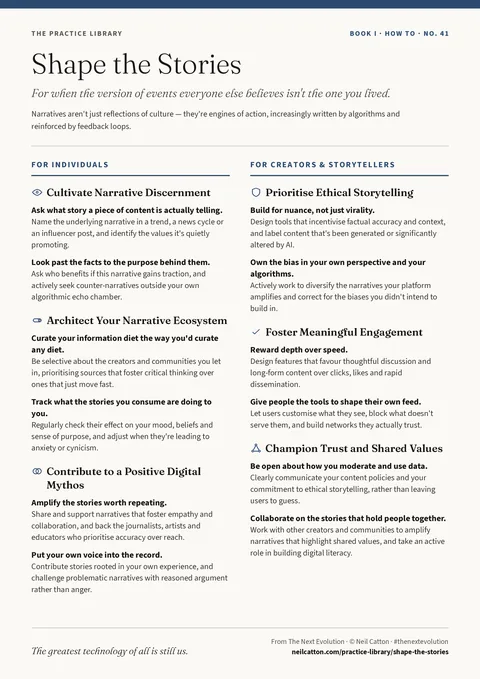 Also from The Next Evolution · No. 41Shape the StoriesFor when the version of events everyone else believes isn't the one you lived.
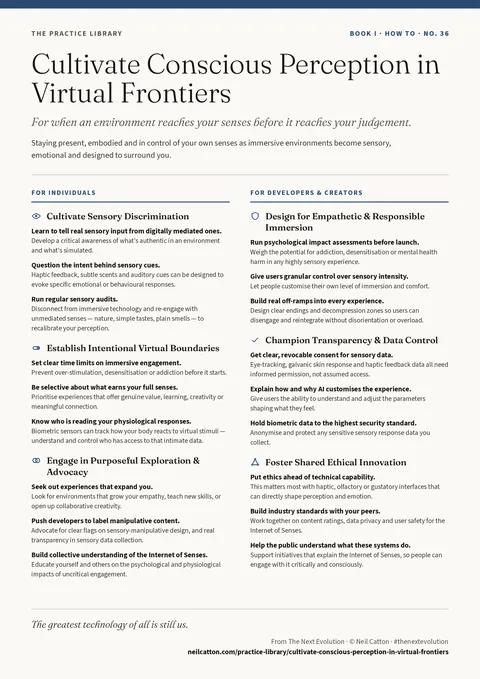 Also from The Next Evolution · No. 36Cultivate Conscious Perception in Virtual FrontiersFor when an environment reaches your senses before it reaches your judgement.
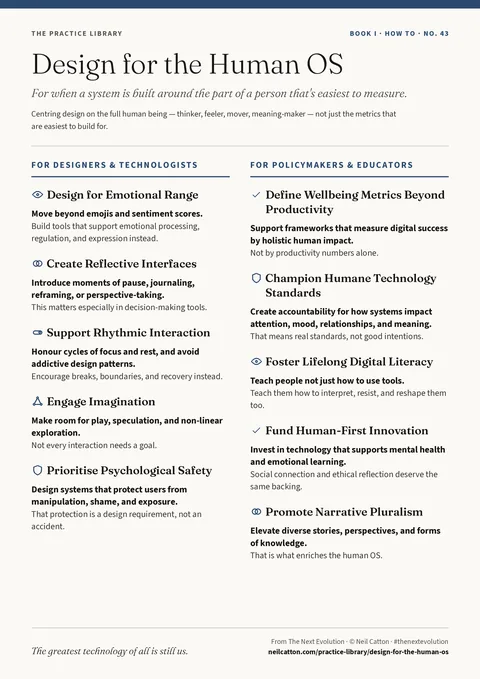 Also from The Next Evolution · No. 43Design for the Human OSFor when a system is built around the part of a person that's easiest to measure.