Book II · The Cognitive Crucible · Pause to Reflect · No. 14
Reclaiming Your Quiet Moments
For the pause you fill before you’ve noticed there’s a pause at all, and the thinking that comes back once you leave it alone.
Notifications and smart devices have turned focus into a low hum of urgency. This pause is about noticing it, and building space to think.
The kettle finishes boiling and your hand is already reaching for your phone before you've decided to. A notification badge, a podcast queued for a four-minute walk, the radio left on because the kitchen felt too quiet without it — none of it urgent, all of it there, filling a gap before you've noticed one exists.
That's ambient attention: the low hum of pings, badges and background noise that never quite lets a moment sit empty. The card's own framing names it plainly — this isn't a failure of discipline, it's an environment built so silence reads as something to fix rather than something to have.
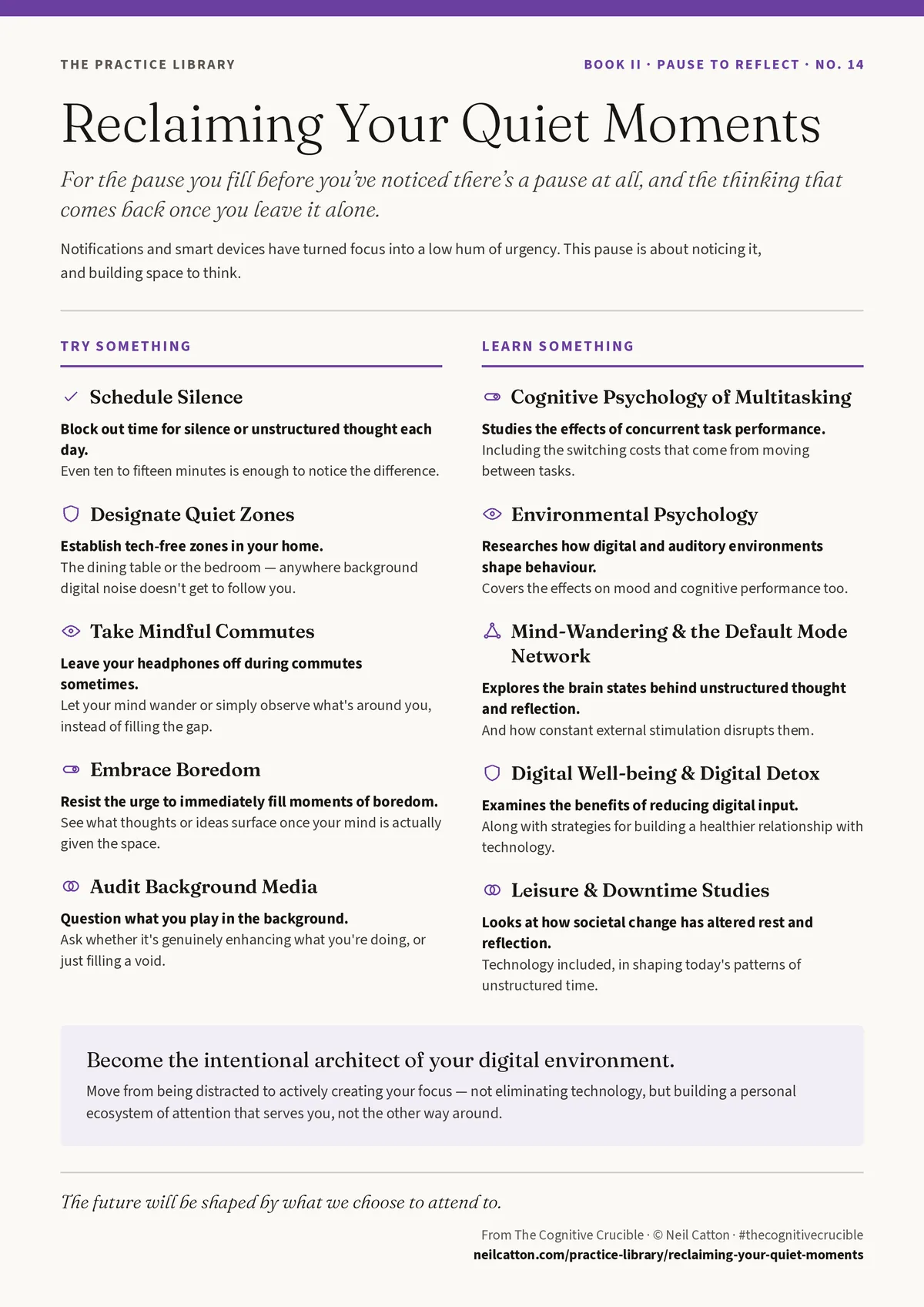
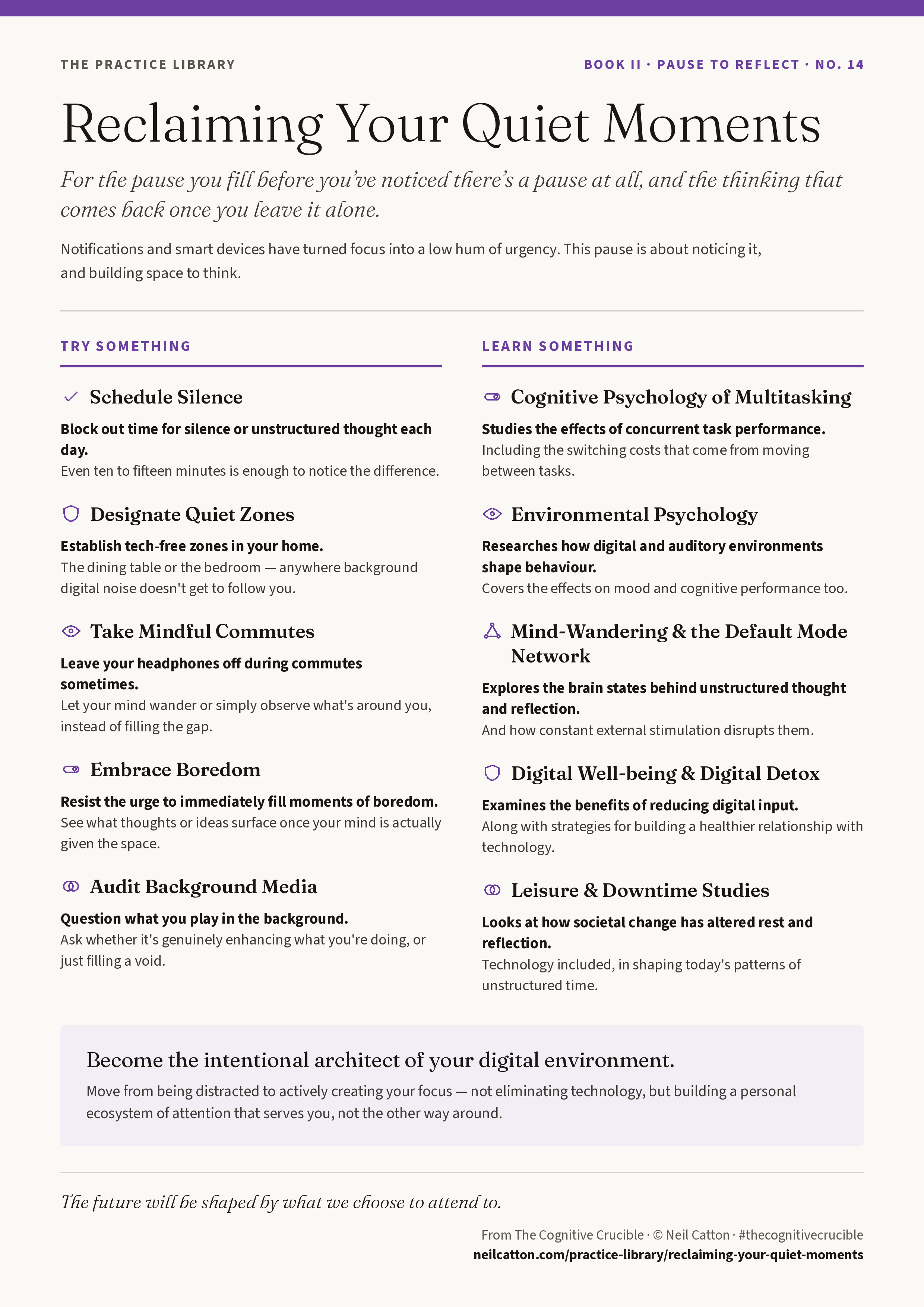
The card holds ten prompts across two columns. Five habits to try this week — blocking out real unstructured time, turning part of the house tech-free, leaving the headphones off on a short commute, letting boredom sit instead of reaching past it, questioning what's actually playing in the background and why. And five fields of research if you want to understand the pull behind it, from the cost of switching between tasks to what the brain does with genuine idle time.
It comes from The Cognitive Crucible, where the fuller argument about attention as contested ground plays out. The card stands on its own — you don't need the book to use it.
Print it, or keep it somewhere you'll see it before you next reach for something to fill a gap.
And here's the question I'd leave you with: the next time a moment goes quiet, is the silence actually empty — or is that just the first thing you've noticed in a while?
Reclaiming Your Quiet Moments
Try Something
Schedule Silence
- Block out time for silence or unstructured thought each day. Even ten to fifteen minutes is enough to notice the difference.
Designate Quiet Zones
- Establish tech-free zones in your home. The dining table or the bedroom — anywhere background digital noise doesn't get to follow you.
Take Mindful Commutes
- Leave your headphones off during commutes sometimes. Let your mind wander or simply observe what's around you, instead of filling the gap.
Embrace Boredom
- Resist the urge to immediately fill moments of boredom. See what thoughts or ideas surface once your mind is actually given the space.
Audit Background Media
- Question what you play in the background. Ask whether it's genuinely enhancing what you're doing, or just filling a void.
Learn Something
Cognitive Psychology of Multitasking
- Studies the effects of concurrent task performance. Including the switching costs that come from moving between tasks.
Environmental Psychology
- Researches how digital and auditory environments shape behaviour. Covers the effects on mood and cognitive performance too.
Mind-Wandering & the Default Mode Network
- Explores the brain states behind unstructured thought and reflection. And how constant external stimulation disrupts them.
Digital Well-being & Digital Detox
- Examines the benefits of reducing digital input. Along with strategies for building a healthier relationship with technology.
Leisure & Downtime Studies
- Looks at how societal change has altered rest and reflection. Technology included, in shaping today's patterns of unstructured time.
The future will be shaped by what we choose to attend to.
From The Cognitive Crucible · © Neil Catton · Filed under attention and focus, wellbeing and mental load
Read it alongside
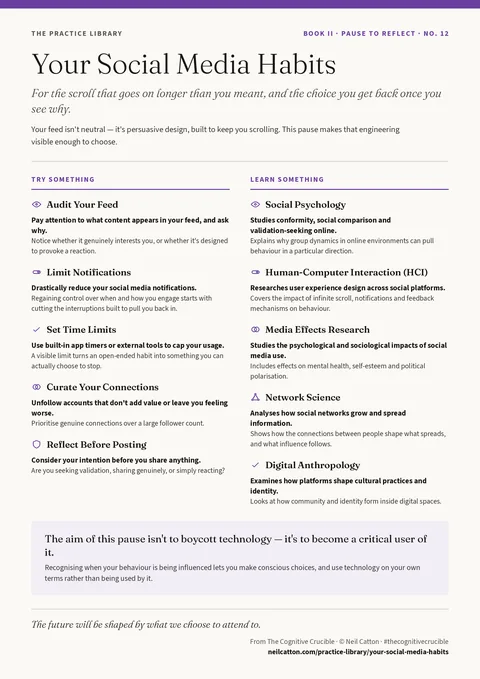 Also from The Cognitive Crucible · No. 12Your Social Media HabitsFor the scroll that goes on longer than you meant, and the choice you get back once you see why.
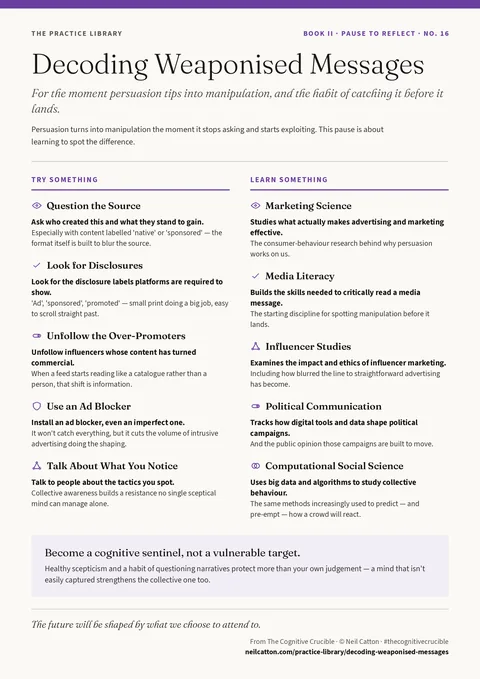 Also from The Cognitive Crucible · No. 16Decoding Weaponised MessagesFor the moment persuasion tips into manipulation, and the habit of catching it before it lands.
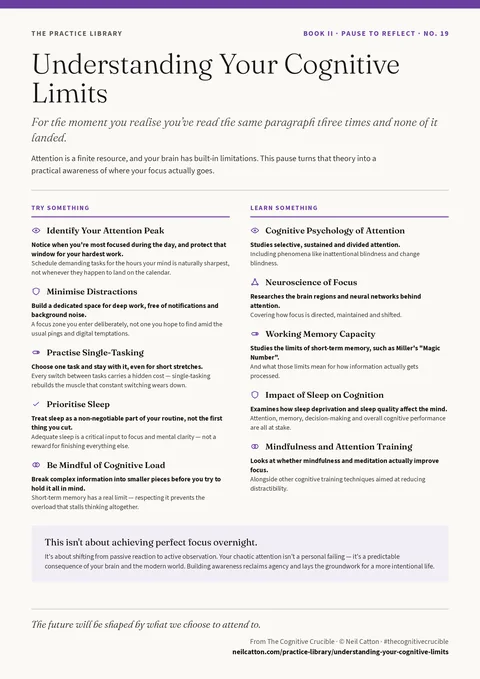 Also from The Cognitive Crucible · No. 19Understanding Your Cognitive LimitsFor the moment you realise you’ve read the same paragraph three times and none of it landed.