Book II · The Cognitive Crucible · Pause to Reflect · No. 44
Bridging Generational Focus
For when the family group chat and the family dinner table can't agree on what deserves attention.
Shared attention held families together long before a platform learned to engineer it. This pause is about telling the difference.
A grandparent explains what they remember about waiting for the evening news. A teenager explains what a group chat notification actually means. Neither is wrong, and neither has fully understood the other — the disagreement usually isn't about values, it's about which version of shared attention each generation grew up inside.
Shared focus is an old human trait, built for collaboration and survival long before any platform existed to profit from it. What's changed is the scale at which it can now be engineered — and that's where most generational friction over technology actually starts.
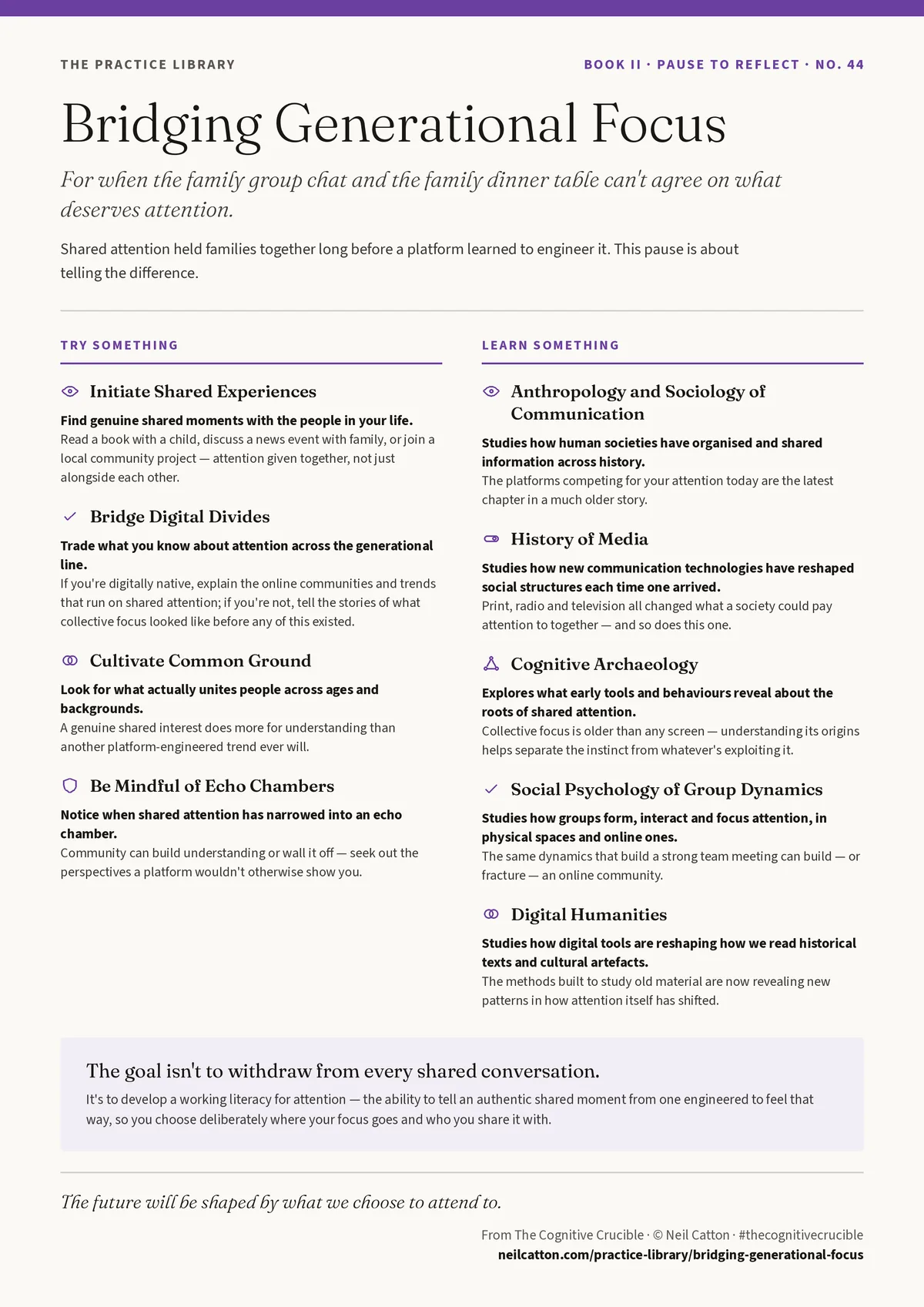
The card splits into two columns — four things to try, from trading stories about collective focus across the generational line to noticing when a shared interest has narrowed into an echo chamber, and five research threads for anyone curious where collective attention comes from, from cognitive archaeology to the history of media. It's for anyone mid-argument about screens with someone twenty years older or younger than them.
It comes from The Cognitive Crucible, where the fuller argument about attention and the systems built to capture it lives. The card stands on its own — you don't need the book to use it.
Print it, pin it somewhere the whole household will see it, or send it to whoever just had the same argument about phones at dinner, again.
What would your family actually choose to pay attention to together, if nothing was engineering the choice for you?
Bridging Generational Focus
Try Something
Initiate Shared Experiences
- Find genuine shared moments with the people in your life. Read a book with a child, discuss a news event with family, or join a local community project — attention given together, not just alongside each other.
Bridge Digital Divides
- Trade what you know about attention across the generational line. If you're digitally native, explain the online communities and trends that run on shared attention; if you're not, tell the stories of what collective focus looked like before any of this existed.
Cultivate Common Ground
- Look for what actually unites people across ages and backgrounds. A genuine shared interest does more for understanding than another platform-engineered trend ever will.
Be Mindful of Echo Chambers
- Notice when shared attention has narrowed into an echo chamber. Community can build understanding or wall it off — seek out the perspectives a platform wouldn't otherwise show you.
Learn Something
Anthropology and Sociology of Communication
- Studies how human societies have organised and shared information across history. The platforms competing for your attention today are the latest chapter in a much older story.
History of Media
- Studies how new communication technologies have reshaped social structures each time one arrived. Print, radio and television all changed what a society could pay attention to together — and so does this one.
Cognitive Archaeology
- Explores what early tools and behaviours reveal about the roots of shared attention. Collective focus is older than any screen — understanding its origins helps separate the instinct from whatever's exploiting it.
Social Psychology of Group Dynamics
- Studies how groups form, interact and focus attention, in physical spaces and online ones. The same dynamics that build a strong team meeting can build — or fracture — an online community.
Digital Humanities
- Studies how digital tools are reshaping how we read historical texts and cultural artefacts. The methods built to study old material are now revealing new patterns in how attention itself has shifted.
The future will be shaped by what we choose to attend to.
From The Cognitive Crucible · © Neil Catton · Filed under attention and focus, civic and collective
Read it alongside
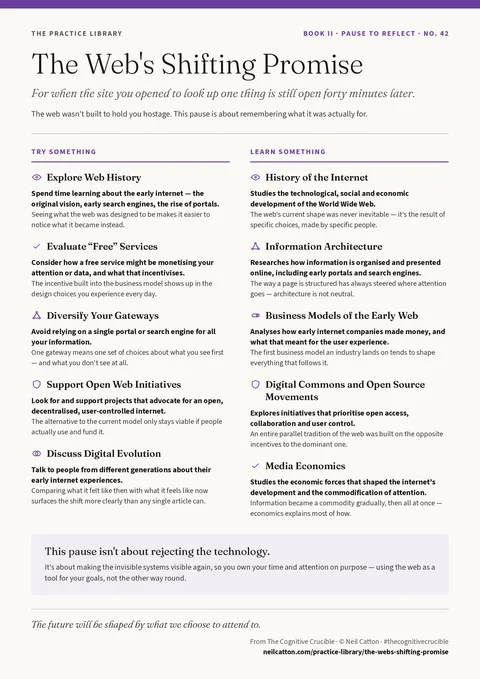 Also from The Cognitive Crucible · No. 42The Web's Shifting PromiseFor when the site you opened to look up one thing is still open forty minutes later.
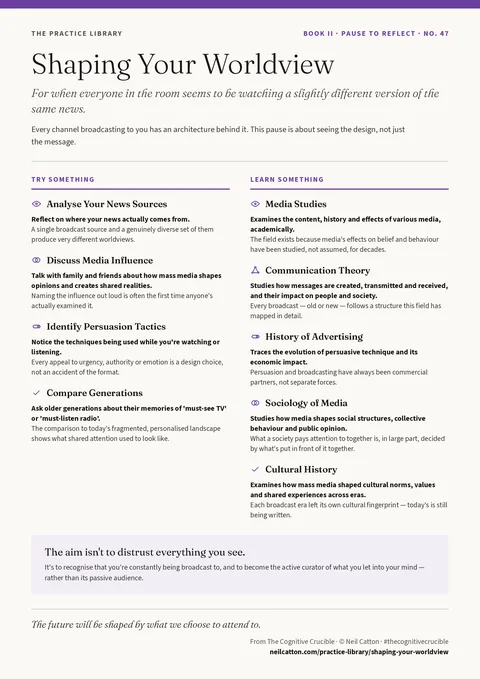 Also from The Cognitive Crucible · No. 47Shaping Your WorldviewFor when everyone in the room seems to be watching a slightly different version of the same news.
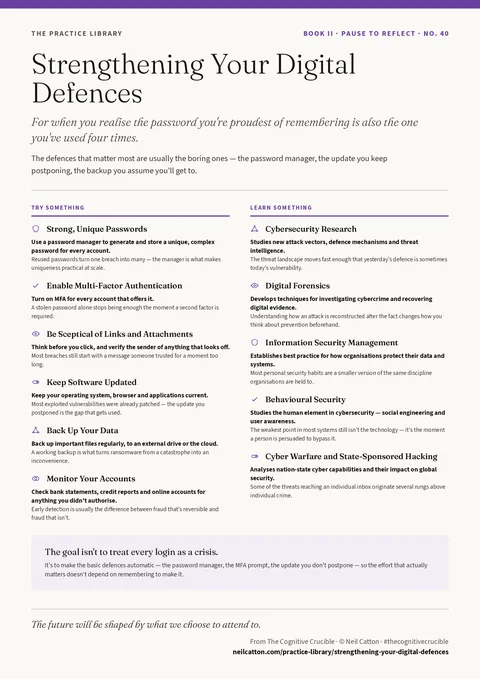 Also from The Cognitive Crucible · No. 40Strengthening Your Digital DefencesFor when you realise the password you're proudest of remembering is also the one you've used four times.