Book I · The Next Evolution · How To · No. 41
Shape the Stories
For when the version of events everyone else believes isn't the one you lived.
Narratives aren't just reflections of culture — they're engines of action, increasingly written by algorithms and reinforced by feedback loops.
Two people watch the same event unfold and walk away with two different accounts of what it meant. Neither is lying. Each one was fed a slightly different set of stories in the weeks before, by different feeds, different creators, different algorithms quietly deciding which version deserved the traffic.
The stories that get amplified aren't automatically the ones that are true. They're the ones that were built, by design or by accident, to travel — and travel has its own logic, closer to what spreads than to what's accurate. Nobody sets out to believe the version built to move fastest. It just arrives first, and arriving first counts for more than it should.
The card splits into two columns — three practices for anyone trying to read narrative with more discernment, and three for the creators and platforms actually building the stories that circulate. It's for whoever's ready to stop absorbing a narrative and start asking who built it.
It comes from The Next Evolution, where the fuller argument about narrative, technology and collective meaning gets made at length. The card stands on its own — you don't need the book to use it.
Print it, or send it to whoever just shared something you're fairly sure they didn't check first.
If the story got you here, who actually wrote it?
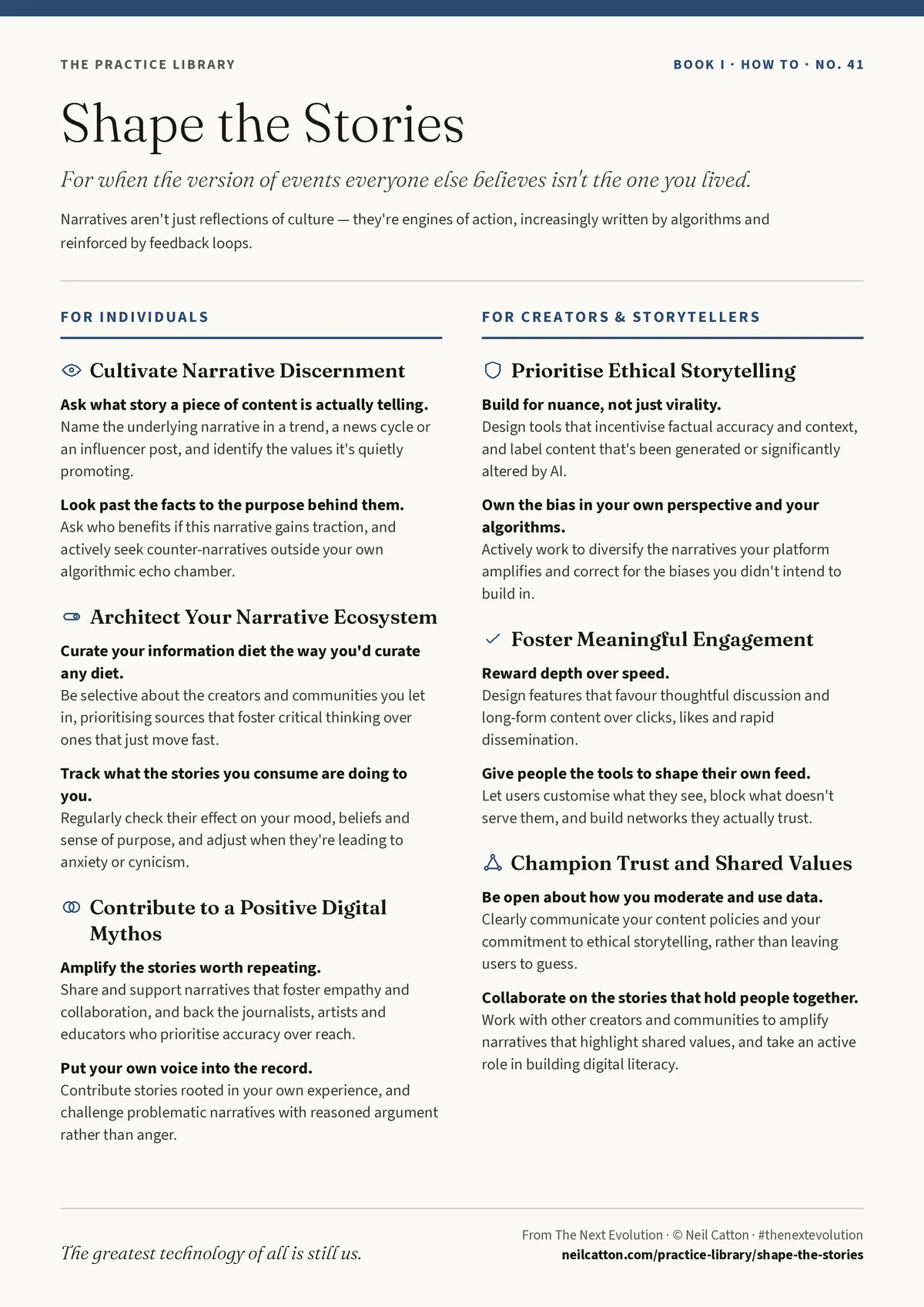
Shape the Stories
For Individuals
Cultivate Narrative Discernment
- Ask what story a piece of content is actually telling. Name the underlying narrative in a trend, a news cycle or an influencer post, and identify the values it's quietly promoting.
- Look past the facts to the purpose behind them. Ask who benefits if this narrative gains traction, and actively seek counter-narratives outside your own algorithmic echo chamber.
Architect Your Narrative Ecosystem
- Curate your information diet the way you'd curate any diet. Be selective about the creators and communities you let in, prioritising sources that foster critical thinking over ones that just move fast.
- Track what the stories you consume are doing to you. Regularly check their effect on your mood, beliefs and sense of purpose, and adjust when they're leading to anxiety or cynicism.
Contribute to a Positive Digital Mythos
- Amplify the stories worth repeating. Share and support narratives that foster empathy and collaboration, and back the journalists, artists and educators who prioritise accuracy over reach.
- Put your own voice into the record. Contribute stories rooted in your own experience, and challenge problematic narratives with reasoned argument rather than anger.
For Creators & Storytellers
Prioritise Ethical Storytelling
- Build for nuance, not just virality. Design tools that incentivise factual accuracy and context, and label content that's been generated or significantly altered by AI.
- Own the bias in your own perspective and your algorithms. Actively work to diversify the narratives your platform amplifies and correct for the biases you didn't intend to build in.
Foster Meaningful Engagement
- Reward depth over speed. Design features that favour thoughtful discussion and long-form content over clicks, likes and rapid dissemination.
- Give people the tools to shape their own feed. Let users customise what they see, block what doesn't serve them, and build networks they actually trust.
Champion Trust and Shared Values
- Be open about how you moderate and use data. Clearly communicate your content policies and your commitment to ethical storytelling, rather than leaving users to guess.
- Collaborate on the stories that hold people together. Work with other creators and communities to amplify narratives that highlight shared values, and take an active role in building digital literacy.
The greatest technology of all is still us.
From The Next Evolution · © Neil Catton · Filed under design and leadership, persuasion and information, civic and collective
Read it alongside
 Also from The Next Evolution · No. 39Design Technology for Sustainability and Ethical BoundariesFor when a product ships fast, scales well, and nobody on the team can say what it actually cost to make.
 Also from The Next Evolution · No. 43Design for the Human OSFor when a system is built around the part of a person that's easiest to measure.
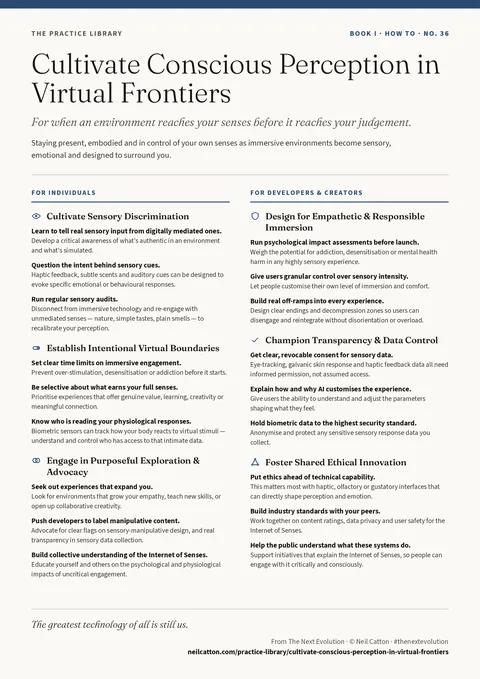 Also from The Next Evolution · No. 36Cultivate Conscious Perception in Virtual FrontiersFor when an environment reaches your senses before it reaches your judgement.